
Key Takeaways
- Senior dog training is possible and useful. Older dogs can learn basic obedience, new commands, and new tricks with patience.
- Common issues like poor recall, pulling, excessive barking, and ignoring cues can improve with refreshed obedience training.
- Keep training sessions short, low-pressure, and suited to the dog’s health, mobility, hearing, and vision.
- Structure, routine, and professional or veterinary help can improve confidence, comfort, and better manners.
Introduction: Senior Dog Training in the Real World
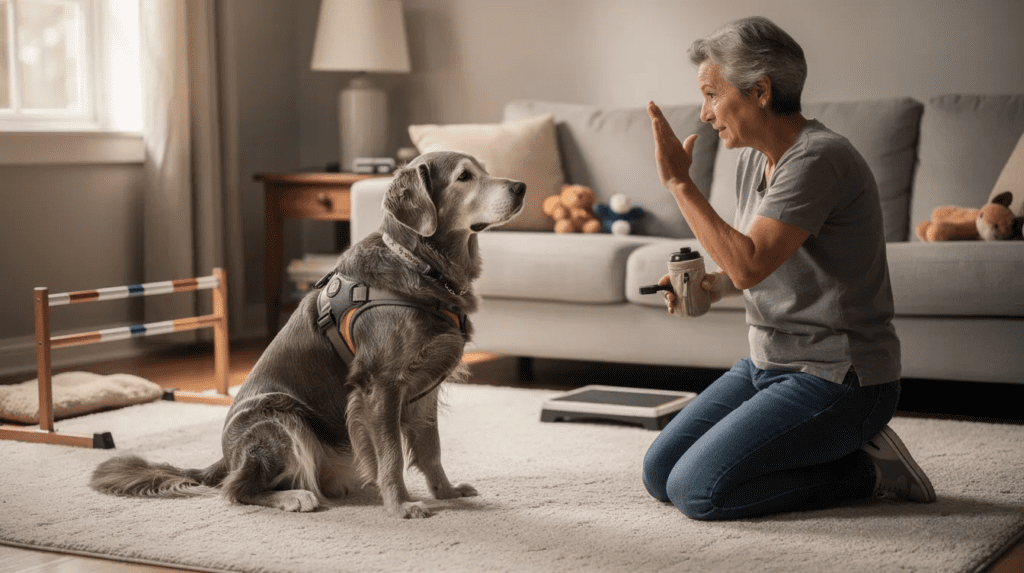
Your 10-year-old Labrador used to come when called, walk calmly, and settle on command. Recently, he has started wandering in the yard, pulling during walks, and responding less reliably to the place command.
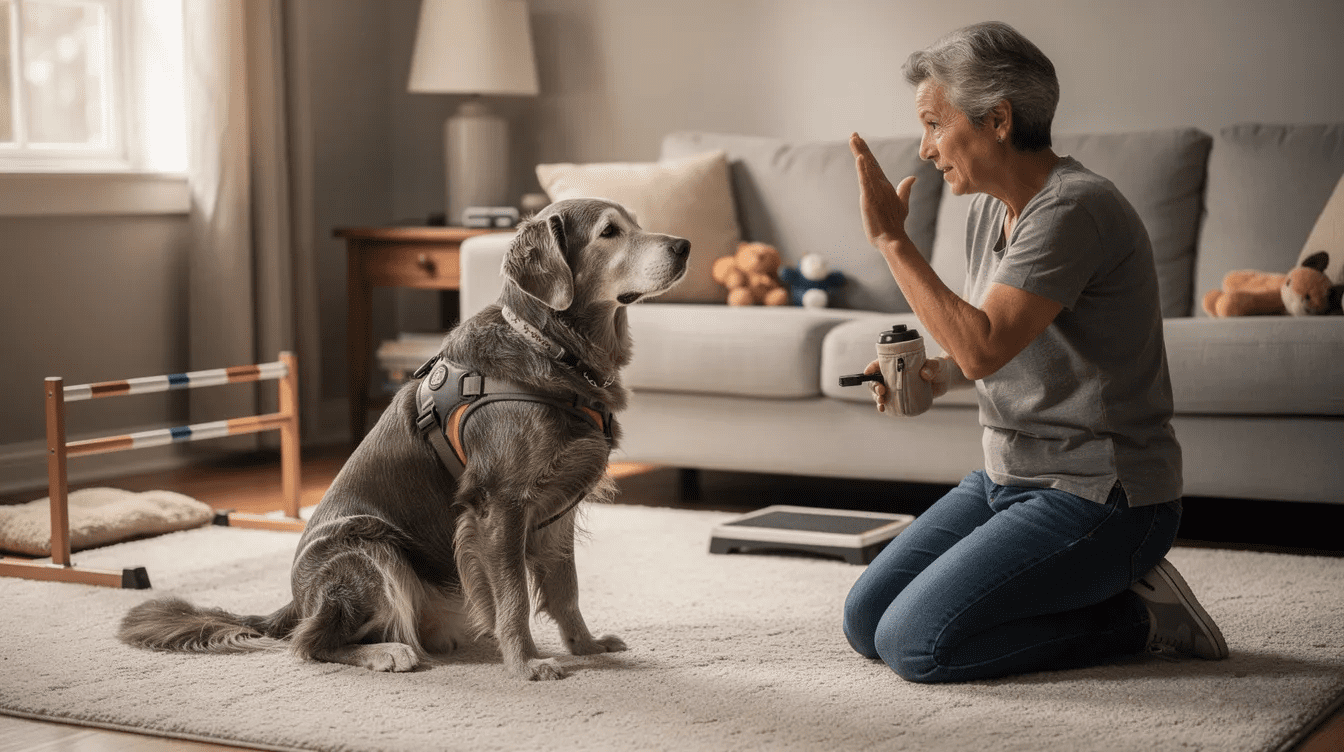
That does not mean he is too old for training. Senior dog training helps refresh basic commands, rebuild leash manners, support confidence, and create a daily routine that feels predictable for an older dog.
The phrase old dog, new tricks is more hopeful than many dog owners realize. You can teach an old dog new tricks, but the training process may need to be slower than it was with a young pup.
- Older dogs can learn new commands and tricks with patience.
- Training keeps older dogs mentally sharp and engaged.
- Positive reinforcement methods like treats and praise are effective for senior dogs.
- Training enhances the bond between older dogs and their owners.
Why Senior Dog Training Still Matters
Dogs reach their senior years at different ages depending on their breed, size, health, and expected lifespan. Larger breeds often show age-related changes earlier than smaller breeds. Rather than relying on one fixed age, veterinarians generally consider a dog senior during the final portion of its expected lifespan.
Senior dog training matters because:
- Gentle training and appropriate mental enrichment can help senior dogs stay engaged, maintain familiar skills, and enjoy regular social interaction. However, training cannot prevent or reverse every age-related cognitive change.
- Some senior dogs develop canine cognitive dysfunction, a veterinary condition that shares certain features with human dementia. Signs may include disorientation, changes in sleep, house soiling, anxiety, altered interactions, or repetitive activity. A consistent routine may help the dog cope, but suspected cognitive changes should be evaluated by a veterinarian.
- Refresher training may improve learned behaviors such as leash pulling, excessive attention-seeking, and unreliable responses to familiar cues. New pacing, nighttime restlessness, disorientation, or house soiling should be discussed with a veterinarian before being treated as a training problem.
- Training can help prevent undesirable behaviors in senior dogs before they become bad habits.
- A reliable sit, down, heel, and recall can prevent dangerous behavior near traffic, other dogs, other animals, or busy public places.
- Structured training gives older dogs predictability, which supports confidence and well-being.
- Positive reinforcement encourages good behavior in older dogs and helps dogs associate behaviors with rewards.
For many pet parents, senior dog training is less about perfection and more about communication, safety, and comfort during the dog’s golden years.
Common Obedience Issues in Older Dogs
Adult dogs can collect habits over time. A recently adopted senior dog may also arrive with unknown training needs.
Common issues include:
- Recall problems: The dog used to come, but now wanders, sniffs, or ignores the verbal cue.
- Leash manners: Pulling, lagging, weaving, or reacting to people and other dogs may require leash training.
- Slower basic obedience: Sit, down, and place may fade if foundation cues are not practiced regularly.
- Household manners: Begging, door-dashing, excessive barking, or demanding attention can return.
- Bathroom or nighttime issues: Accidents, pacing, or restlessness may involve training and the dog’s health.
- Sensory changes: What looks like stubbornness may be hearing loss, vision loss, discomfort, or cognitive changes.
Senior dogs can suffer from joint stiffness due to conditions like arthritis. Training practices should consider old dogs’ physical and sensory limitations, not just certain behaviors.
How to Refresh Basic Obedience Skills
Refresh one skill at a time. This keeps training clear and prevents an adult dog from being overwhelmed by too many tricks or new behaviors at once.
- Sit and down: Use treats at nose level, move slowly, and train on soft, non-slip surfaces. Repeat known commands to build confidence in senior dogs.
- Place command: Choose a stable mat or bed. Guide your dog onto it, mark the desired behavior, reward calm sitting or lying, then gradually increase duration.
- Heel and leash manners: Walk slowly on a 6-foot leash. Reward your dog near your side and avoid sudden turns that strain older joints.
- Recall: Start indoors or in a fenced yard. Call once with a cheerful cue, then reward with high-value treats when your dog comes.
- Reward-based practice: Ask for recall or place, mark the correct response, and provide a valued reward. This strengthens the behavior by helping the dog understand which response earns the reward. Counterconditioning is more appropriate when changing a fearful or negative emotional response to a specific trigger.
- New skills: Break them into small steps. Breaking down new behaviors into small steps is effective for older dogs.
Reward-based training can keep senior dogs motivated and make it easier to refresh familiar behaviors. Choose rewards that are safe, valuable, and appropriate for the dog’s dietary and medical needs because it keeps dogs eager to learn. Older dogs trained positively can learn new tricks effectively, especially when the reward matches the dog’s motivation.
Training Tips for Older Dogs
Training older dogs works best when the plan respects age, comfort, and physical abilities.
- Keep training sessions for senior dogs 5 to 10 minutes long. Short, frequent training sessions help avoid fatigue in senior dogs.
- Keep training sessions short, and keep sessions short enough that your dog can stay engaged.
- Train in familiar environments to minimize distractions for senior dogs.
- Use positive reinforcement, praise, and treats. Positive reinforcement helps older dogs feel secure and motivated.Reward-based training can help make sessions more comfortable and encourage willing participation. If anxiety is new, severe, or affecting sleep, appetite, movement, or normal interactions, consult a veterinarian rather than relying on obedience training alone.
- Warm up with a slow walk, then cool down. Gentle physical activity helps keep bodies active without overloading joints.
- Adjust for physical limitations. Allow a stand instead of repeated downs if your dog is sore.
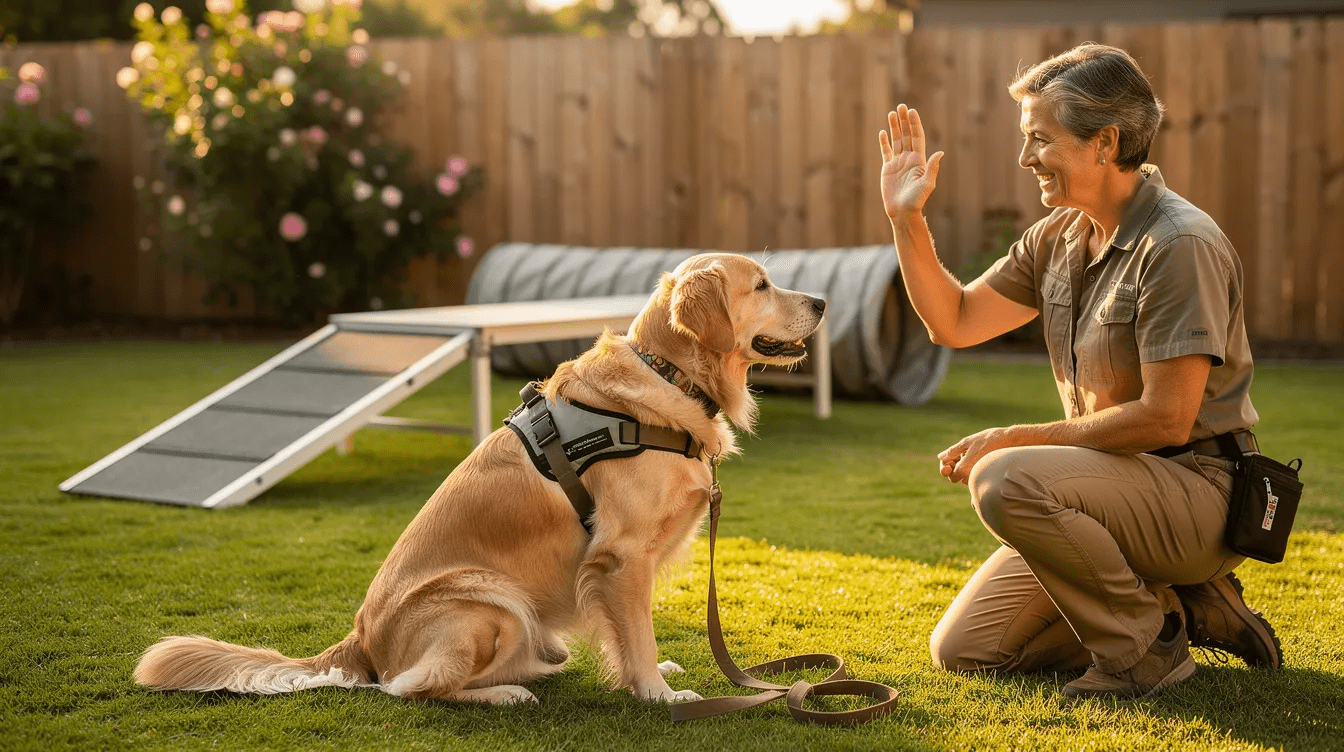
- For hearing loss, use hand signals. Adapting cues for hearing loss with visual signals improves communication.
- For vision loss, keep rooms consistent and try scent-based games. Using scent-based training is helpful for dogs with vision loss.
- Choose soft treats if dental issues are present, and follow diet guidance from your veterinarian.
- Use the same words each time. Consistency in training commands aids retention in senior dogs.
- Slowly add distractions only after success. End before fatigue, then continue in the next session.
A positive training program should fit the dog’s abilities, physical abilities, and daily routine. Good training methods help a dog learn without pressure.
Common Mistakes to Avoid With Senior Dogs
Some well-meaning habits can make senior dog training harder.
- Do not assume an older dog is stubborn. Pain, hearing loss, vision changes, or cognitive changes may be affecting the dog’s ability.
- Do not make lessons too long. Shorter training sessions help address the slowed learning pace of senior dogs.
- Do not yell, punish, or force movement. Harsh handling can create anxiety and unwanted behaviors.
- Do not train on slippery floors if your dog has arthritis, hip pain, or weakness.
- Do not let family members use different cues. Mixed signals confuse even a properly trained dog.
- Do not ignore sudden changes like growling, accidents, disorientation, or refusing walks.
- Do not expect puppy speed. Older dogs may require more time to process new commands.
Training programs should support good behavior, not push a senior dog past comfort. The goal is a confident pet, not a perfect performance.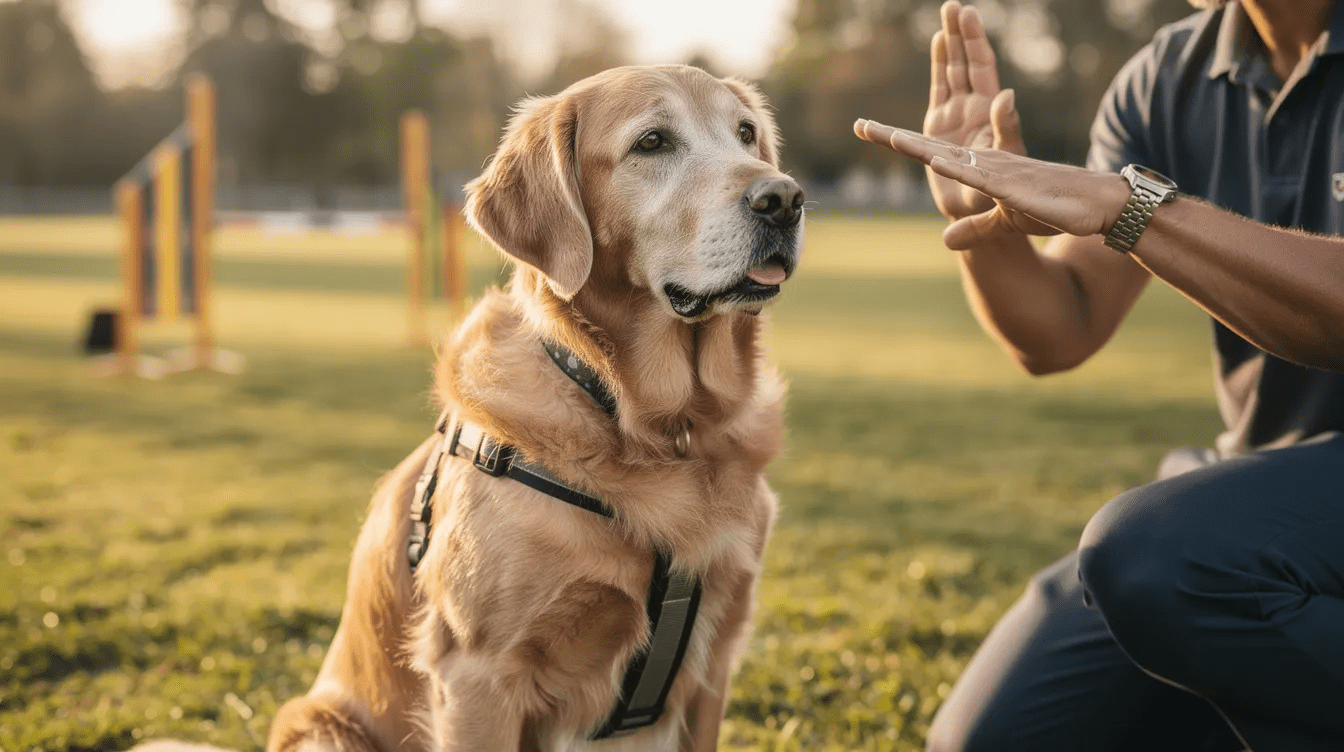
When to Seek Professional or Veterinary Help
Some situations need expert eyes.
Call a veterinarian first if you notice:
- Sudden limping, stiffness, or reluctance to move
- New house soiling
- Nighttime restlessness
- Weight, appetite, or drinking changes
- Confusion, staring, standing in corners, or seeming lost
Professional training can help with leash reactivity, unreliable recall, anxiety, crate training, or long-standing habits that affect daily life. A professional trainer can adjust private obedience lessons, leash work, or an appropriate board-and-train plan according to the senior dog’s health, comfort, and training needs.
Bring notes about medications, history, routines, and previous training programs. This helps align the training process with your dog’s health and training needs.
Final Thoughts on Senior Dog Training
Senior dog training is not about turning an older dog into a puppy. It is about helping your dog feel safe, clear, and connected in the senior years.
With patience, positive reinforcement, and consistent practice, older dogs can sharpen sit, down, place, heel, and recall. They can also learn new tricks, new cues, and low-impact games, new commands, and low-impact games that make daily life more enjoyable for humans and dogs.
- Start with one behavior to refresh this week.
- Build a simple daily routine around short practice.
- Reach out for professional training if you want help improving obedience, confidence, and everyday manners for your senior dog.
FAQ
How often should I train my senior dog each day?
Many senior dogs benefit from brief practice sessions lasting only a few minutes. Start with one short session and adjust the length and frequency according to your dog’s comfort, attention, mobility, and veterinary recommendations.
Try this simple schedule:
- Morning: quick leash manners after a walk
- Afternoon: place command refresher
- Evening: calm recall, sit, or down practice
Stop if your dog pants, slows down, wanders away, or loses focus.
Can I use crate training with an older dog who has never used a crate?
Yes, many adult dogs can learn crate training when it is introduced slowly. Start with the door open, feed meals near the crate, then reward calm choices to step inside.
Use soft bedding, a non-slip surface, and short door-closed periods. Dogs with mobility issues or incontinence may need a larger, lower-entry crate and more frequent breaks.
What if my older dog seems anxious during obedience training?
Lower the difficulty first. Use better rewards, move to a quieter room, and make the lesson shorter.
Watch for lip licking, yawning, turning away, or trying to leave. If anxiety appears suddenly, worsens, or affects sleep, eating, or normal interactions, contact a veterinarian or trainer.
Is it safe to teach new tricks to a dog over 12 years old?
Usually, yes, with adjustments. Many dogs over 12 can learn gentle new tricks like touch, mat targeting, scent games, or a wide-circle spin.
Avoid jumping, sharp turns, and repetitive movements. If your dog has not had a recent exam, ask your veterinarian before adding new physical activity.
How do I know if my senior dog’s behavior is training-related or medical?
Behavior and health are closely connected in older dogs. Sudden accidents, growling when touched, refusing walks, or seeming confused often suggest a medical component.
Keep a short log of food, movement, sleep, and behaviors. Address possible medical issues first, then use gentle training to rebuild confidence and communication.