
Bringing home a new puppy is exciting, but it can also feel like a lot to figure out at once. Between potty breaks, naps, chewing, and those first few commands, it helps to know what to focus on and when. A clear puppy training schedule takes the guesswork out of those early months and gives both you and your puppy a steady path forward.
Training needs change as your puppy grows. What a puppy can handle at 8 weeks looks very different from what they can handle at 5 months. Pacing your approach by age helps your puppy build confidence instead of getting overwhelmed, and it helps you see real progress along the way. This guide walks through what to teach at each stage between 8 weeks and 6 months, along with a sample daily routine you can adapt for your own home in Albany, NY.
Key Takeaways
- A puppy training schedule should match your puppy’s age and developmental stage, not a one-size-fits-all timeline.
- The 8 to 16 week window is a critical period for socialization and early habit-building.
- Potty training, crate training, and name recognition come first, with commands layered in gradually.
- Short, positive training sessions work better than long or repetitive ones.
- Consistency at home matters as much as the training itself.
- Professional guidance can help if you feel stuck or want a faster, more structured path.
Why a Puppy Training Schedule Matters
Puppies absorb an enormous amount of information in their first few months of life. Without some structure, it is easy for training to feel scattered, with owners trying to teach everything at once or jumping ahead before their puppy is ready.
A puppy training schedule organized by age helps in a few practical ways. It keeps expectations realistic, since an 8-week-old puppy and a 5-month-old puppy are simply not capable of the same things. It also builds habits in the right order, since skills like potty training and crate comfort need to be solid before you layer on commands and distractions. Most importantly, it reduces stress for the whole household. Puppies thrive on routine, and a predictable schedule for feeding, potty breaks, naps, and short training sessions helps your puppy feel secure.
Many Albany puppy owners search for a starting point because the early weeks move fast. Having a loose framework, rather than a rigid set of rules, makes it easier to stay consistent even on busy days.
8 to 10 Weeks: Building Trust, Potty Habits, and Routine
This is usually the age when puppies first come home. The goal during these first couple of weeks is not advanced obedience. It is building trust and laying down the basics of a daily routine.
Potty training basics should start the moment your puppy arrives. Take them out frequently, especially after waking up, eating, drinking, and playing. Reward them calmly the moment they go outside. Accidents are part of the process at this age, so consistency matters more than perfection.
Crate training can begin right away as well. Introduce the crate as a calm, comfortable space rather than a punishment. Short, positive periods in the crate help your puppy settle and also support potty training by giving them a clean space that discourages accidents.
This is also the time to start name recognition. Say your puppy’s name in a happy tone and reward them when they look at you. This simple exercise builds attention and engagement, which becomes the foundation for every command that follows.
Keep handling gentle during this stage. Get your puppy used to having their paws, ears, and mouth touched, since this makes future grooming and vet visits much easier.
10 to 12 Weeks: Introducing Basic Puppy Training
Once your puppy has settled into a routine, you can begin layering in light obedience work. Sessions should still be short, but your puppy is ready to start connecting words with actions.
This is a good time to introduce basic commands like sit and down using food rewards or a clicker. Keep cues simple and consistent, using the same word and hand signal every time.
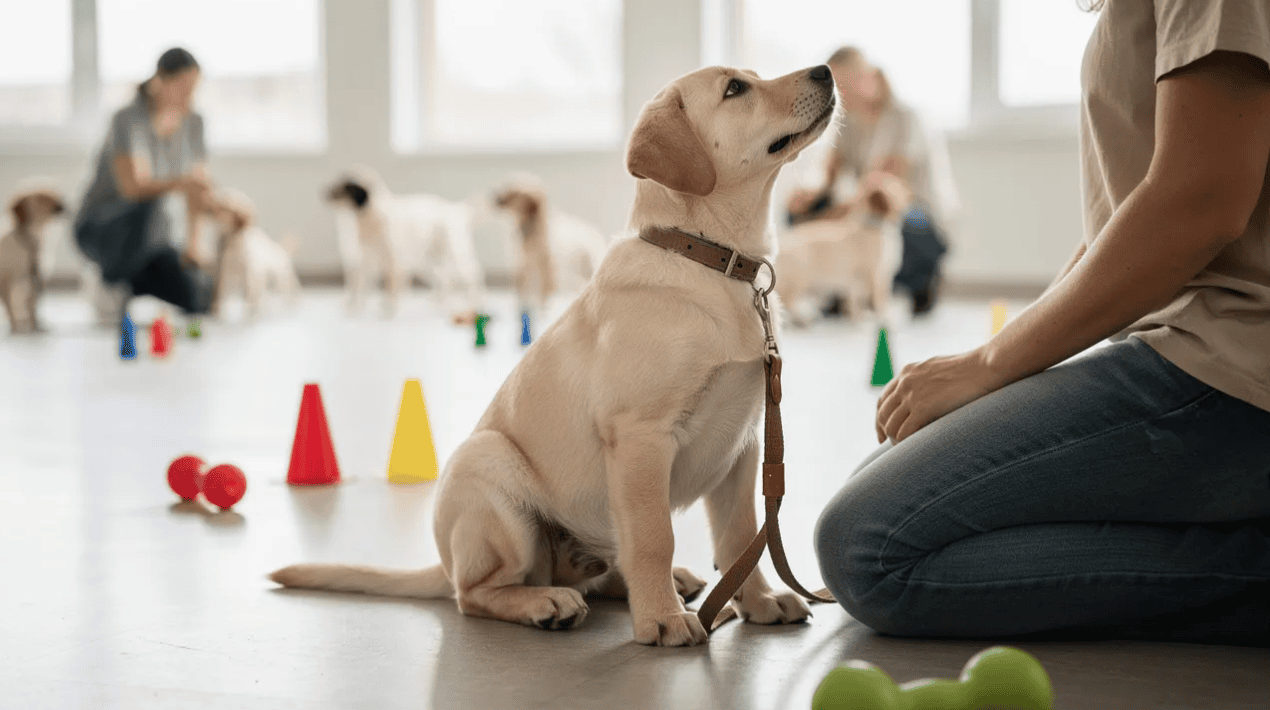
Puppy socialization becomes especially important during this window. Safe, positive exposure to new people, sounds, surfaces, and gentle dogs helps prevent fear-based behavior later on. If your puppy has not completed their full vaccination series yet, talk to your veterinarian about safe ways to socialize, such as carrying your puppy in public or hosting calm, vaccinated dogs for supervised visits.
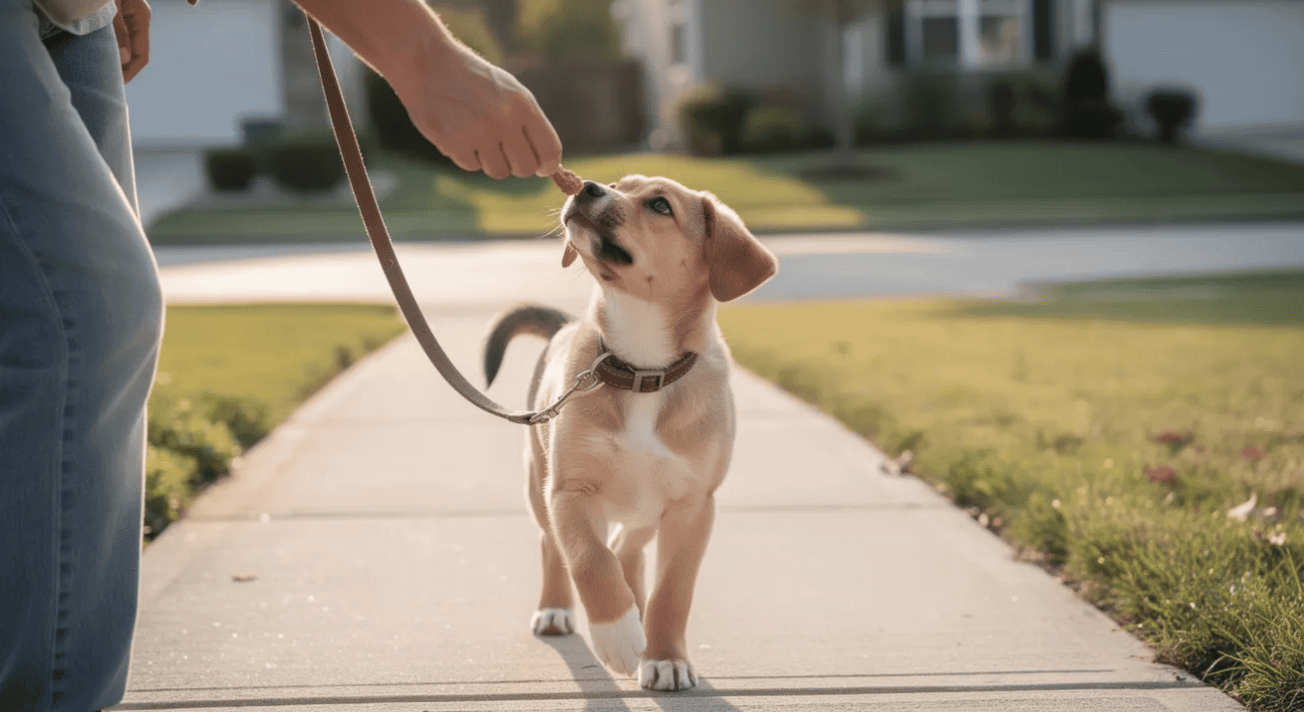
Leash introduction often starts here as well. Let your puppy wear a leash and harness around the house under supervision before you head outside. This removes some of the novelty before you add the distractions of a walk.
Continue reinforcing potty training and crate routines at this stage. These foundational habits should be getting more consistent, even if accidents still happen occasionally.
3 to 4 Months: Strengthening Commands and Socialization
By 3 to 4 months, your puppy can typically hold attention a bit longer and handle slightly more structured sessions. This is the stage to build on what you have already taught.
Continue practicing sit and down, and begin adding leash manners during short walks around your neighborhood or a quiet area near you in Albany. Loose leash walking takes repetition, so keep early walks short and reward your puppy for staying near you rather than pulling.
This is also a common age to introduce the place command, which teaches your puppy to go to a specific spot, like a mat or bed, and stay there. Place work is useful for building calm behavior, especially around mealtimes, guests, or busy moments at home.
Teething is often in full swing during this period, so redirect chewing toward appropriate toys rather than punishing the behavior. Puppies who are not given an outlet for chewing often default to furniture, shoes, or hands.
Keep up consistent socialization. New environments, mild distractions, and continued exposure to people and other dogs all support a more confident, adaptable adult dog later on.
5 to 6 Months: Building Focus, Manners, and Self-Control
Many puppies start testing boundaries around 5 to 6 months. This is sometimes called the start of the adolescent stage, and it can feel like your puppy has forgotten everything they learned. This is normal, not a setback in the bigger picture.
This stage is about strengthening impulse control and reliability, not introducing a flood of new skills. Continue reinforcing sit, down, and place, but begin practicing them in more distracting environments, such as a backyard with activity nearby or a quiet park.
Recall becomes increasingly important here. Practice coming when called in low-distraction settings first, then gradually add mild distractions as your puppy improves. Always reward generously when your puppy comes to you, even if it took them a moment.
Leash manners should also become more consistent during this window. Expect some regression as your puppy gets bigger, more confident, and more easily distracted. Staying patient and consistent matters more than pushing for perfection.
This is also a good age to reinforce calm behavior around guests, doorways, and mealtimes, since your puppy now has the attention span to understand these expectations more fully.
Sample Daily Puppy Training Schedule
Every puppy and household is different, but a simple daily structure can help you stay consistent. Here is an example you can adjust based on your puppy’s age and your own schedule:
- Morning: Potty break immediately after waking up, followed by breakfast and another potty break.
- Mid-morning: Short 5 to 10-minute training session focused on one or two skills, such as sit or name recognition.
- Midday: Potty break, rest or crate time, and a short play session.
- Afternoon: Another short training session, ideally somewhere with mild distractions as your puppy progresses.
- Evening: Potty break, dinner, calm family time, and light leash practice if appropriate for your puppy’s age.
- Before bed: Final potty break and a calm wind-down period before crate time.
The exact timing will shift as your puppy grows, but the rhythm of potty breaks, short training sessions, and rest tends to stay consistent throughout these early months.
Puppy Training Tips for Every Age
A few principles apply no matter what stage your puppy is in.
Keep training sessions short. Puppies have limited attention spans, and five to ten minutes is often more effective than a long, drawn-out session. Ending on a successful note keeps your puppy motivated for next time.
Stay consistent with words and cues. Using the same command every time, along with consistent hand signals, helps your puppy understand faster and avoid confusion.
Reward generously in the early stages. Treats, praise, and play all reinforce good behavior. As your puppy matures, you can gradually reduce food rewards in favor of praise and life rewards, like going for a walk or getting attention.
Built-in rest. Puppies need a lot of sleep, and overtired puppies often struggle to focus or behave well. A predictable nap schedule supports better training outcomes.
Common Puppy Training Mistakes to Avoid
A few patterns tend to slow down progress or create confusion for puppies.
Trying to teach too much at once is one of the most common mistakes. Puppies do better with one or two focused skills at a time rather than a long list of commands introduced all at once.
Inconsistent cues also cause confusion. If different family members use different words or allow different behaviors, your puppy will struggle to understand what is expected.
Skipping socialization, especially before 16 weeks, can lead to fear or reactivity later in life. Even small, positive exposures during this window matter.
Overdoing potty training punishment is another common issue. Puppies do not learn from being scolded after the fact. Calm cleanup and increased supervision are far more effective than correction.
Finally, expecting too much too soon can set both you and your puppy up for frustration. A 10-week-old puppy and a 5-month-old puppy are simply not working with the same attention span or impulse control.
When to Get Professional Help
Most puppies make steady progress with a consistent routine and patient, positive training at home. That said, professional puppy training can be worth considering if you feel stuck on a specific issue, want more structured guidance, or simply prefer expert support as you build your puppy’s foundation.
A trainer can help troubleshoot potty training setbacks, refine leash manners, and guide you through socialization and basic obedience in a way that fits your puppy’s temperament and your household. This can be especially helpful if you are juggling a busy schedule and want a more efficient path forward.
Final Thoughts
A thoughtful puppy training schedule does not need to be complicated. It simply needs to match your puppy’s age, stay consistent, and build gradually from trust and basic routines toward more structured commands and self-control. Potty training, crate training, socialization, and short positive sessions form the backbone of those first six months, and each stage builds naturally on the one before it.
If you want extra support along the way, puppy training services in Albany can help with obedience, potty habits, and early behavior routines, whether you are just getting started or working through a specific challenge. You can also explore private lessons for one-on-one guidance suited to your puppy’s pace, or contact a trainer directly with questions about your puppy’s training schedule.
FAQs
What age should I start training my puppy?
You can start as soon as your puppy comes home, often around 8 weeks old. Early training should focus on name recognition, potty habits, and crate comfort rather than formal commands.
How long should puppy training sessions be?
Most puppies do best with sessions of five to ten minutes, a few times a day. Short, focused sessions help maintain attention and keep training positive.
When should I start socializing my puppy?
Socialization can begin around 8 weeks, with safe, controlled exposure to new people, sounds, and environments. The window between 8 and 16 weeks is especially important for building confidence.
Why does my puppy seem to forget commands around 5 to 6 months?
This is common as puppies enter an adolescent stage and start testing boundaries. Staying patient and consistent with familiar commands usually helps your puppy regain reliability over time.
Is it normal for potty training to take a few months?
Yes. Many puppies are not fully reliable with potty habits until closer to 5 or 6 months of age. Consistent routines and supervision make a significant difference during this period.