Cavalier King Charles Spaniel Guide: History, Care, and Training
Cavalier King Charles Spaniels are affectionate companions with a playful side, but raising one takes more than simply providing a comfortable lap. Their daily routine should include training, exercise, grooming, and veterinary care. Whether you are considering a puppy or improving your adult dog’s manners, this guide explains the breed’s background and offers practical starting points for responsible ownership.
Cavalier Breed Facts and History
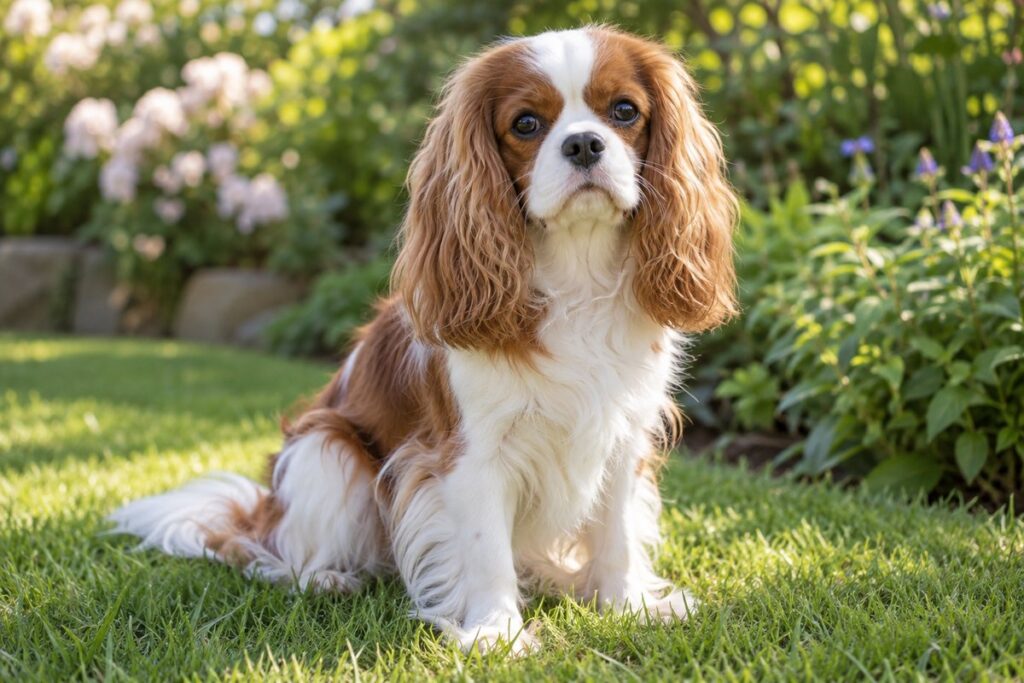
Adult Cavaliers typically stand 12 to 13 inches tall and weigh 13 to 18 pounds. Their four recognized colors are Blenheim, tricolor, black and tan, and ruby. See the American Kennel Club breed profile for additional breed information.
Their ancestry connects to the toy spaniels associated with British royalty. During the 20th century, breeders worked to restore the longer muzzle seen in older paintings. The Cavalier became a separately recognized breed in Britain in 1945. Today’s Cavalier King Charles Spaniel differs from the flatter-faced King Charles Spaniel, known in the United States as the English Toy Spaniel.
Temperament and Household Compatibility
Cavaliers often enjoy companionship, play, and family activities. However, breed tendencies do not determine every dog’s personality. Age, health, experiences, and training influence how an individual dog responds to children, visitors, and other pets.
Supervise interactions with children and provide a quiet resting space. Introduce unfamiliar animals gradually rather than assuming friendliness guarantees compatibility. Apartment living can work when owners provide regular outdoor breaks, enrichment, and opportunities to practice calm behavior.
Before bringing a Cavalier home, plan who will handle bathroom breaks, daily practice, grooming, and veterinary appointments. A realistic care schedule helps you decide whether the breed fits your household and current commitments.
How to Train a Cavalier King Charles Spaniel
Build Clear Communication
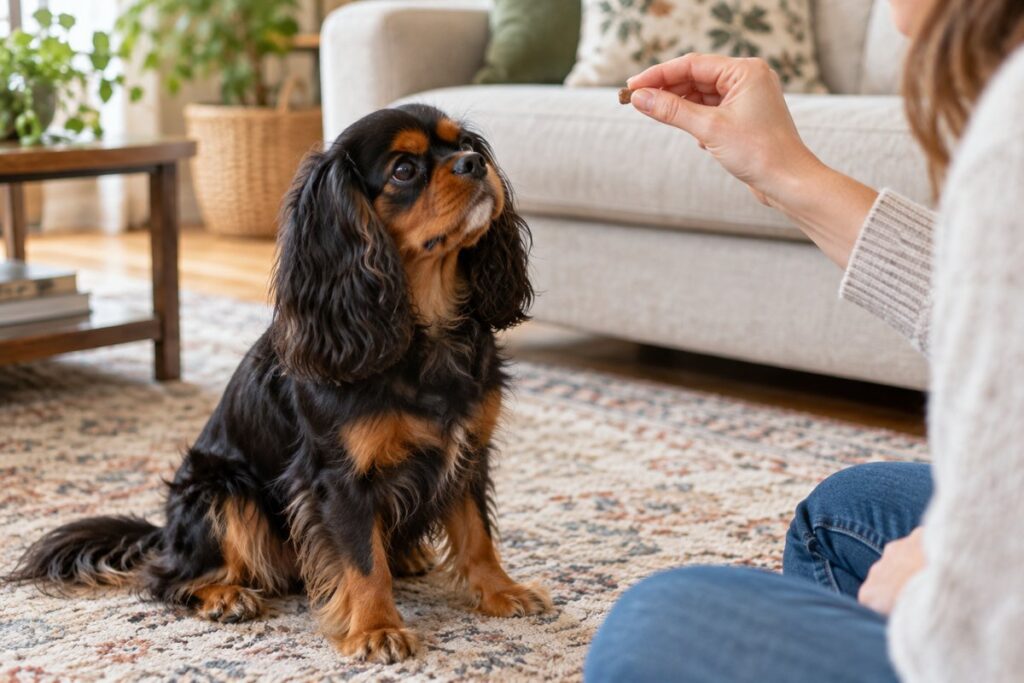
Start in a quiet room with small rewards your dog enjoys. Reward the behavior immediately, use consistent cues, and practice briefly before your dog loses interest. Teach one skill at a time, then gradually introduce distractions. Keep expectations realistic: performing a cue indoors does not automatically mean your dog understands it outside.
Establish a Potty Routine
Take puppies outside after waking, eating, and playing, with additional breaks suited to their age. Reward successful bathroom trips promptly. Supervise indoors and limit access to rooms where accidents are difficult to notice. Clean accidents thoroughly and adjust the schedule instead of punishing your puppy. The AKC potty-training guide provides additional guidance.
Introduce a Comfortable Crate
Let your dog investigate an open crate and reward voluntary entry. Build comfort gradually before closing the door briefly. Increase the duration only while your dog remains comfortable. A crate should never substitute for bathroom breaks, exercise, or companionship. Seek professional guidance if confinement causes distress.
Practice Leash Walking and Recall
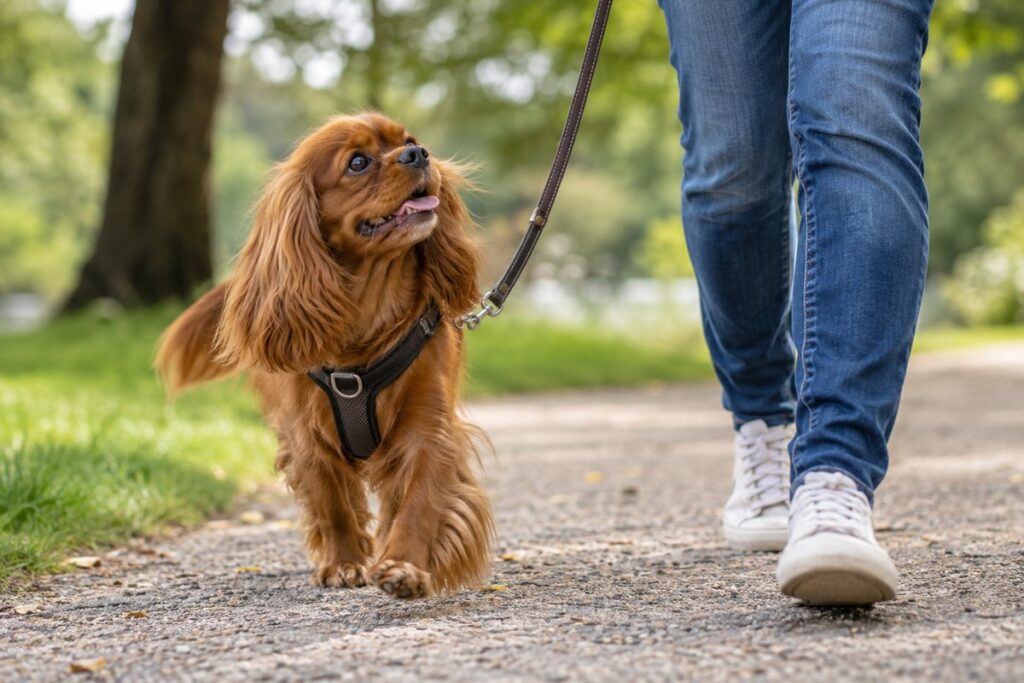
Reward your Cavalier for walking near you on a loose leash. Begin somewhere quiet, then increase distractions gradually. For recall, practice over short distances in an enclosed space and reward returning enthusiastically. Use a long line when appropriate in open areas, and avoid testing recall near traffic or wildlife.
Make Socialization Positive
Introduce new sights, sounds, surfaces, and people at a distance where your puppy remains comfortable. Pair experiences with rewards and allow breaks.
Socialization does not require greeting every dog or person. Avoid crowded settings that overwhelm your puppy, and ask your veterinarian about suitable outings based on vaccination status and local disease risks. If your puppy withdraws or becomes frightened, reduce the intensity instead of forcing interaction.
Encourage Calm Greetings and Independence
Reward four paws on the floor before visitors offer attention. Practice settling on a mat during quiet household activities. Introduce brief periods apart while your dog remains relaxed.
Persistent distress, destructive behavior, or difficulty settling when alone deserves professional assessment rather than increasingly long absences.
Albany owners seeking professional support can explore puppy training or dog obedience training.
Exercise, Enrichment, and Feeding
Combine walks with sniffing opportunities, supervised play, and short training sessions. Adjust activity to your dog’s age, fitness, and veterinary recommendations. Food puzzles and simple search games provide additional engagement without requiring intense exercise.
Choose a complete diet appropriate for your dog’s life stage. Measure portions, account for training treats, and monitor body condition. Ask your veterinarian about suitable portions rather than using one feeding amount for every Cavalier.
Grooming and Routine Care
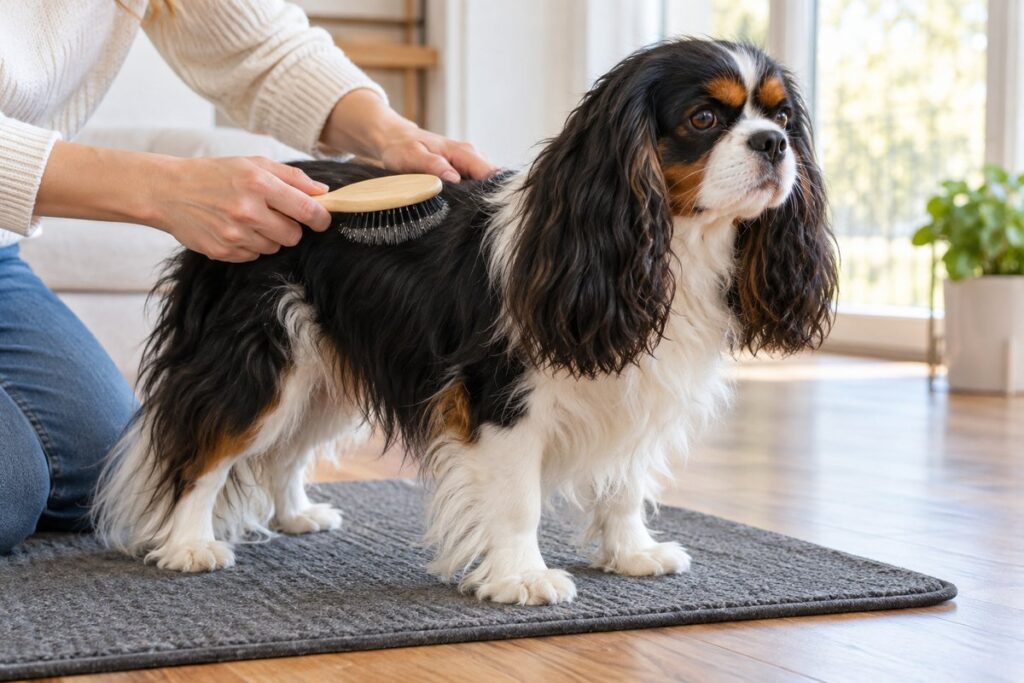
Brush regularly, paying attention to feathering and areas prone to tangles. Introduce brushing and handling gradually with rewards. Maintain nail and dental care, and inspect the ears for redness, odor, or discomfort.
Ask your veterinarian about appropriate cleaning products and frequency. The AKC Cavalier grooming guide explains additional coat-care considerations.
Health Concerns and Responsible Selection
Cavaliers have important breed health considerations. Mitral valve disease can develop earlier in Cavaliers than in many other breeds, according to the Royal Kennel Club breed profile.
Cornell’s veterinary explanation identifies possible signs such as coughing, breathing difficulty, increased breathing rate, exercise intolerance, weakness, or collapse. Schedule regular veterinary examinations and promptly report concerning changes.
Chiari-like malformation and syringomyelia are related neurological concerns. Syringomyelia involves fluid-filled cavities within the spinal cord. Possible signs include neck or back pain, reluctance to jump or climb, unusual sensitivity, and “phantom scratching” near the neck or shoulder. The British Veterinary Association screening scheme provides additional information.
When evaluating breeders, request documented parental health screening and discuss those records with your veterinarian. Screening informs selection but cannot guarantee that a puppy will remain free of disease. Ask rescue organizations about available medical and behavioral history.
Frequently Asked Questions
Are Cavaliers Easy to Train?
Many Cavaliers respond well to rewards and enjoy learning with their owners. Progress depends on the individual dog, clear communication, and consistent practice. Start with short sessions and simple skills, then gradually introduce distractions.
Can Cavaliers Be Left Alone?
Some Cavaliers tolerate time alone comfortably, while others find it difficult. Build independence gradually and arrange care that meets your dog’s needs during longer absences. If your Cavalier shows persistent distress, consult your veterinarian or a qualified behavior professional.
Do Cavaliers Shed?
Yes, Cavaliers shed, so expect some loose hair around your home. Regular brushing helps remove loose hair and prevent tangles, especially around the ears, legs, and tail. Grooming can make shedding more manageable, but it will not eliminate it.
Can Adult Cavaliers Learn New Commands?
Yes, adult Cavaliers can learn new commands and improve existing habits. Use clear cues, rewards, and consistent practice to help them understand what you expect. Keep sessions manageable and adjust the pace to your dog’s needs.
How Do I Teach My Cavalier to Walk Politely on a Leash?
Start in a quiet area and reward your Cavalier for walking beside you with a loose leash. Keep practice sessions short and gradually introduce distractions as your dog improves. Use consistent cues so everyone walking your dog follows the same approach.
Cavalier Training Support in Albany
Alex, Albany Off Leash K9 Training’s co-owner and head trainer, has trained with OLK9 since 2014. Her published biography describes experience with dogs of different ages, breeds, and sizes, with an emphasis on communication and consistency.
Meet the Albany team or contact the trainers to discuss your Cavalier’s age, behavior, training history, and goals.