
If your dog struggles to settle during busy times or reacts to every sound and movement in the house, learning how to teach the place command can be a game-changer. This simple exercise gives your dog a clear job: go to a designated spot, stay there, and remain calm until you say otherwise. Below is a practical guide to help you start training today.
Key Takeaways
- The place command means your dog goes to a defined spot like a mat, cot, or dog bed and stays there until you give a release cue, building calm behavior and focus.
- Place training gives your dog a predictable job during daily distractions like doorbells, meals, and guests entering the house.
- Start with easy, short training sessions, then layer in duration, distance, and distractions at your dog’s pace.
- Professional help is especially helpful for dogs with anxiety, reactivity, or strong impulse control issues around visitors or food.
What Is the Place Command?
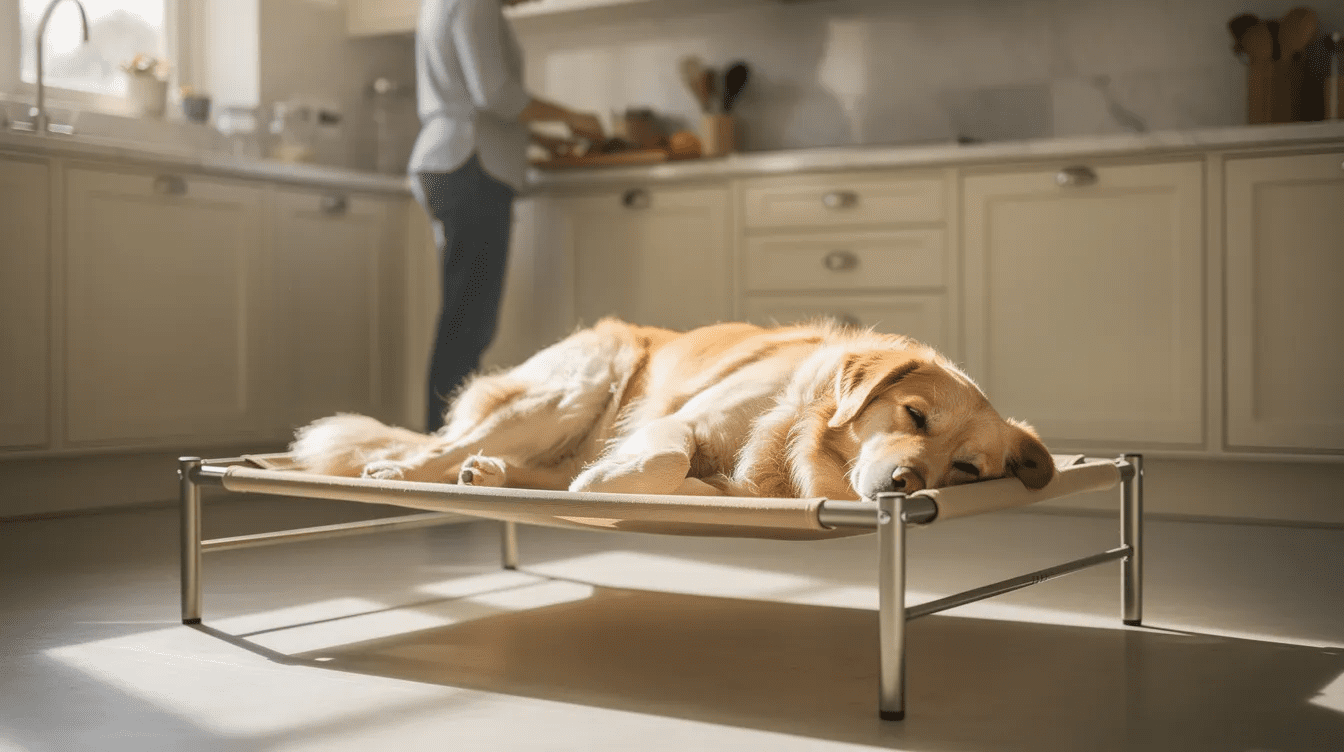
The place command teaches your dog to go to a specific, visible target and remain there until you release them. That target can be a raised cot, a mat on the floor, or a bed in the corner of a room. The dog can sit, lie down, or stand, but the rule is simple: all four paws stay on the designated area.
This is different from a basic sit or down command. Those ask the dog to hold a position. Place asks the dog to hold a location through normal household movement, sounds, and activity. For example, picture your dog calmly resting on a mat near the kitchen while your family prepares dinner, or settling by the front door when packages arrive. That is what a reliable place command looks like in daily life.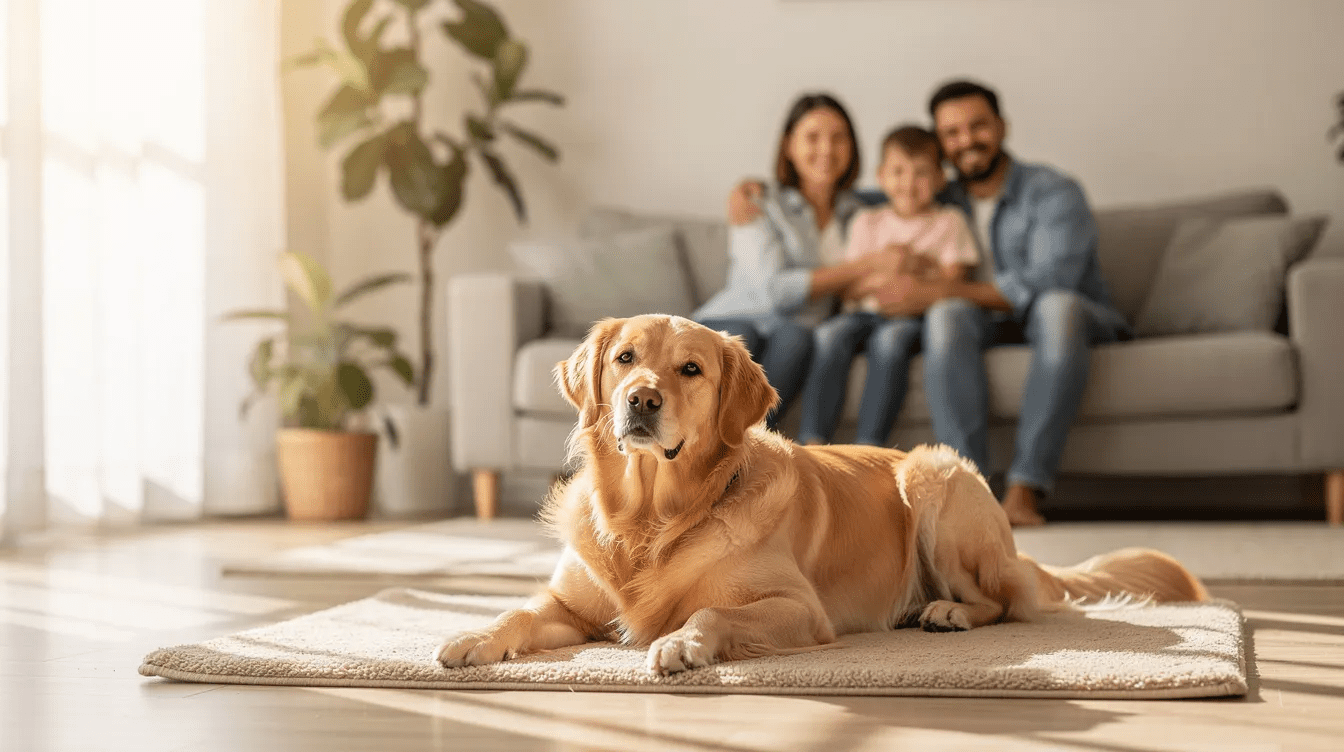
How to Teach the Place Command Step by Step
This is a beginner-friendly plan that most families can start using today. It helps if your dog already knows how to lie down, since a down position is often the goal once the dog is on the mat. If your dog does not know down yet, you can still start by rewarding interest in the mat and build the down position gradually.
Step 1: Choose a place object. Pick a defined, non-slippery surface like a rectangular mat, cot, or bed large enough for the dog to lie down comfortably. Using a raised bed can help better define the boundary for a dog in training, making it easier for the dog to understand where the designated spot begins and ends. Set up the Place object in a quiet room with minimal distractions.
Step 2: Introduce the mat without a cue. Set the mat on the floor near the center of a quiet space. Reward any interest your dog shows, whether it is sniffing, pawing, or stepping on. No word needed yet. You want the dog to build a positive association with this location.
Step 3: Lure the dog onto place. Stand close to the mat and use a treat to lure your dog onto it. The moment all four paws land on the mat, mark the behavior with a marker word like “yes” or a click, and reward immediately on the mat. Use high-value treats to encourage the place command during this stage, especially if your dog loves food.
Step 4: Add the verbal cue. Once the dog reliably steps onto the mat with help, begin saying “place” or “bed” just before you guide them on. Repeat in short, successful reps, then gradually fade the food lure so the dog learns to respond to the cue and your body guidance without needing a treat in front of their nose.
Step 5: Build a short stay and a release word. Now ask the dog to wait a few seconds on the mat before you release them. Use the consistent release command “Break.” Say “Break” only when your dog is allowed to leave the designated place. Using the same release command every time helps your dog understand that the Place command remains active until formally released.
Step 6: Increase duration, then distance, then distractions. Gradually increase the time your dog stays in place. Start with 5 to 10 seconds, then work toward longer periods. Once duration is solid, add a step or two of distance. Only then should you begin to add distractions like walking past, opening a cabinet, or dropping something on the floor.
Keep sessions short to maintain your dog’s focus. Aim for 3 to 5 minute sessions, two to four times a day. Make the place command a positive experience for your dog by ending on success and keeping things fun.
How Place Training Builds Calm Behavior
Place training does more than identify where a dog should stand or lie. When practiced consistently, it can give the dog a predictable behavior to perform during familiar household activities and distractions.
Staying on a defined spot during normal household activity helps dogs practice self-control. They learn to wait through movement, sounds, and mild excitement instead of immediately reacting or leaving the designated area.
Research supports the value of structured mat or platform training around door distractions. A 2008 study published in Applied Animal Behaviour Science evaluated a structured positive-reinforcement protocol for dogs that barked, jumped, or crowded the door when visitors arrived. Dogs were trained to go to a rug or platform, lie down, and remain there while their owners answered the door. The trained dogs showed significant reductions in barking and jumping. Although the study used a specific multi-step protocol and remote food-reward dispenser, it demonstrates how a carefully taught Place-style behavior can provide dogs with a more appropriate response to door-related distractions. This supports the idea that a well-taught place-style behavior can help dogs practice listening, pausing, and staying calmer during busy moments.
With repetition, the dog’s behavior shifts. With consistent practice, some dogs may begin settling more quickly when sent to Place because the cue and location have become familiar and predictable. Using a place can support calmer settling by giving your dog a predictable spot and a clear job. For anxious or reactive dogs, place training works best as part of a broader plan that includes calm routines, fair expectations, and professional guidance when needed. Concrete examples include using a place while children do homework, while someone cooks, or when the doorbell rings and guests enter.
Place training can complement a broader obedience program by helping dogs practice waiting, responding to cues, and working around distractions. However, recall and leash manners must also be trained and practiced as separate skills in appropriate environments.
How to Build Duration, Distance, and Distractions
Once a dog understands the basics, you can gradually increase difficulty to create a reliable, real-life place command. Trainers often refer to this as the “Three D’s” framework.
Duration. Begin with 5 to 10 seconds of calm on the mat, then add duration in small increments. Reward periodically during the stay so the dog learns that remaining is worthwhile. With steady practice, many dogs can build from a few seconds to one minute, then gradually work toward longer stays as their focus improves. Increase time in small steps and reward often enough that your dog stays successful.
Distance. Take one or two steps back from the mat, return, and reward. Gradually increasing the distance from the training spot helps reinforce the command. Eventually, you can move around the room, leave the space briefly, or send the dog to go to their place from across the house.
Distractions. Start mild. Sit down, pick up a glass of water, open a cabinet. Then practice when the doorbell rings, with TV noise, or during family activity. Introduce distractions while dogs are in place to build reliability in real scenarios.
Location changes. Practice in different areas of your home, on a porch, and eventually in a quiet park or outdoor setting. Each new location may require stepping back to an easier level. This is how the dog learns to generalize the behavior.
If the dog breaks often, do not push forward. Step back to a level where the dog can succeed and be rewarded. Feeling overwhelmed leads to frustration for both dog and owner.
Common Place Command Mistakes to Avoid
Mistakes are normal. The goal is to recognize them early and make small adjustments instead of giving up.
- Moving too fast. Combining duration, distance, and distractions at the same time often leads to repeated failures and a much harder time for the dog. Increase one variable at a time.
- Using a place as punishment. If the dog only hears “place” after being scolded, the mat becomes negative. The dog may avoid or resist going there. Keep it positive.
- Inconsistent release cues. Allowing the dog to wander off without hearing a release word, or using many different words, weakens the command. Consistency is crucial in dog training to avoid confusion.
- Forgetting real-life practice. Only training in a quiet room means the dog never learns to handle real distractions. Practice during meals, when guests arrive, and in different rooms.
- Over-long sessions. Tired dogs lose focus and make more errors. Several short, successful sessions per day work far better than one long, stressful attempt.
How Place Supports Better Manners at Home and Around Guests
The Place cue is a practical tool for daily manners and a calmer household.
Position your dog’s Place object a comfortable distance from the entrance so your dog is not directly in the path of arriving guests. Begin with controlled practice using mild door sounds before working with actual visitors. Dogs with intense fear, aggression, or reactivity may also need a leash, gate, or other management tool and guidance from a professional trainer.
Place also helps during mealtimes. Instead of begging under the table, the dog has a clear, rewarded job in a designated place away from food and busy feet. For nervous dogs, having a safe, predictable zone during gatherings can support calmer behavior and give them a place to settle. With consistent practice, many dogs may begin going to their place more naturally because they understand what is expected.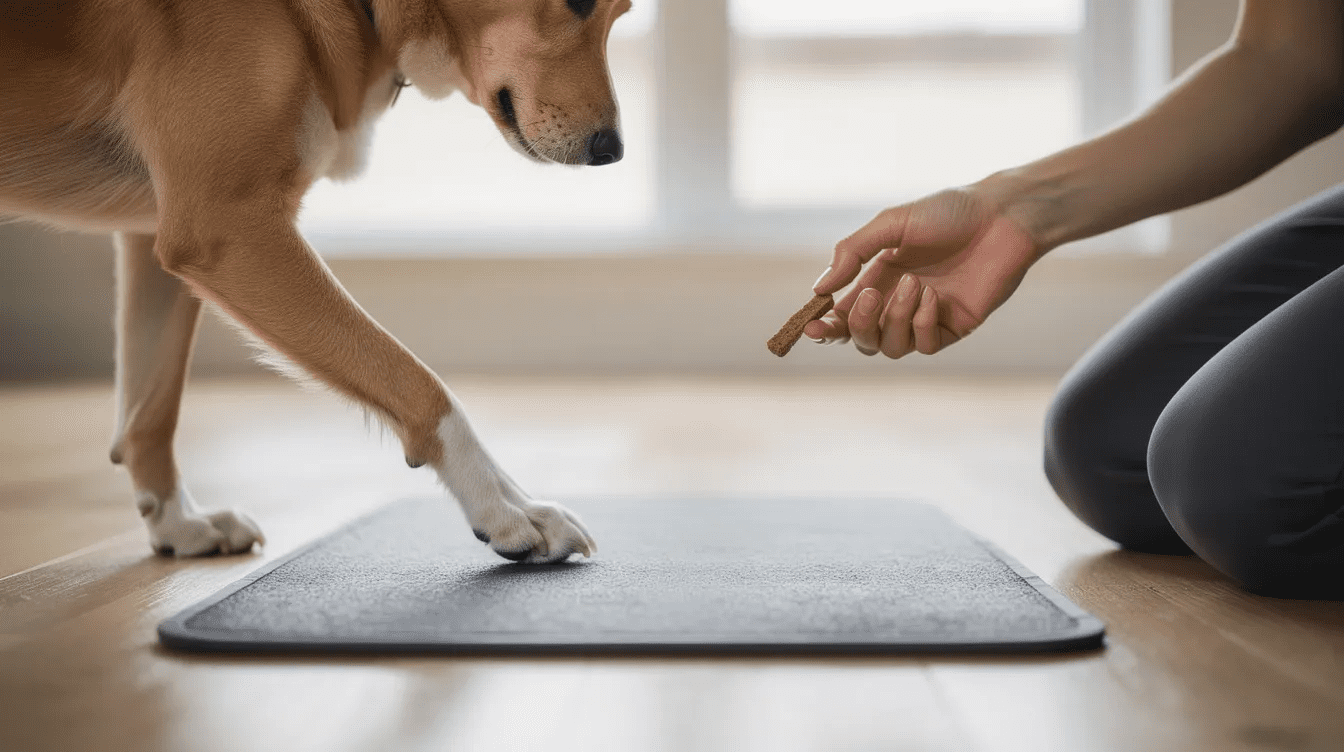
When Professional Training May Help
Some dogs need extra guidance, and that is nothing to feel bad about. If your dog shows intense anxiety, aggression, or reactivity when people enter the house, approach the mat, or move around, professional support can make a real difference.
A trainer can help you choose the right reward system, refine your timing, and address leash manners, recall, or other obedience skills alongside place. Structured training support can help busy families or dogs with complex behavior cases by giving owners a clearer plan, better timing, and more consistent practice at home.
Look for qualified trainers who focus on clear communication, fair expectations, safe handling, and realistic home practice plans. A good trainer will help your dog learn in a way that carries across different areas and real-world situations.
Final Thoughts
Learning how to teach the place command is one of the most practical ways to bring structure, calm, and focus into your dog’s routine. Whether you are managing a quiet evening at home or navigating a busy holiday visit, a reliable place command gives you and your dog a shared language for what is expected.
If you are feeling stuck or want faster progress with obedience, focus, and calm behavior at home, consider professional training support. You can review available training options and pricing or reach out for personalized training support to get help choosing the right next step.
FAQ
Here are answers to common questions that come up when owners start working on place training.
What age can I start teaching my puppy the place command?
Puppies can begin simple Place training at around 8 weeks old. At this age, keep sessions brief, positive, and appropriate for the puppy’s attention span. Focus on building a positive association with the mat or cot rather than expecting a long-duration Place command.
How many training sessions per day are ideal for place work?
Two to four short sessions of 3 to 5 minutes each day tend to work best. This keeps the dog engaged and prevents frustration. Try pairing one session with a naturally calm moment, like before dinner, and another with a mild distraction, like someone arriving home from work. This helps the dog practice in both easy and slightly challenging conditions.
Can I use different objects for place, like a crate and a mat?
After your dog understands Place on one mat or cot, you can gradually practice the same cue with similar beds or mats in other locations. Use a separate cue such as “crate” or “kennel” for entering the crate. Keeping the crate cue separate makes each behavior clearer and allows the crate to remain a positive resting and management space.
What should I do if my dog keeps breaking the place command?
Step back to an easier level. Reduce the duration, distance, or distractions so the dog can succeed and earn a reward more often. Calmly guide the dog back to the mat when they step off, then reward a shorter, successful stay before ending the session on a positive note. If this pattern continues over many sessions, consider whether a qualified professional trainer could help identify what your dog needs.
Can two dogs share the same place at the same time?
Give each dog a separate Place object. Train the dogs individually first, then practice with both dogs in the room once each dog reliably understands the command. Separate locations provide clearer boundaries and reduce crowding, competition, and confusion.