
Puppy biting training helps owners turn sharp, frustrating nipping into safer, calmer habits. If your new puppy is chewing hands, grabbing sleeves, or chasing ankles, you are not alone.
Puppy biting is a normal behavior, but it still needs early guidance. With structure, redirection, and consistency, you can teach your puppy how to mouth gently and choose a toy instead of human skin. For extra support, Off Leash K9 Dog Training Albany can help build better habits early through professional puppy training.
Key Takeaways
Puppies naturally nip during play, teething, and exploration. The goal is not to scare a biting puppy into stopping, but to teach better choices.
- Puppy nipping, chewing, and puppy mouthing are common in most puppies, especially while puppy teeth are needle sharp.
- Puppy bite inhibition helps reduce the risk of accidental injuries to people, children, and other pets.
- Redirection to an appropriate chew toy, tug toy, or food puzzle teaches your puppy what to bite instead.
- Rough play, inconsistent rules, and jerking hands away can make biting behavior worse.
- Repeated bouts of intense, scary, or skin-breaking puppy bites may need help from a qualified professional.
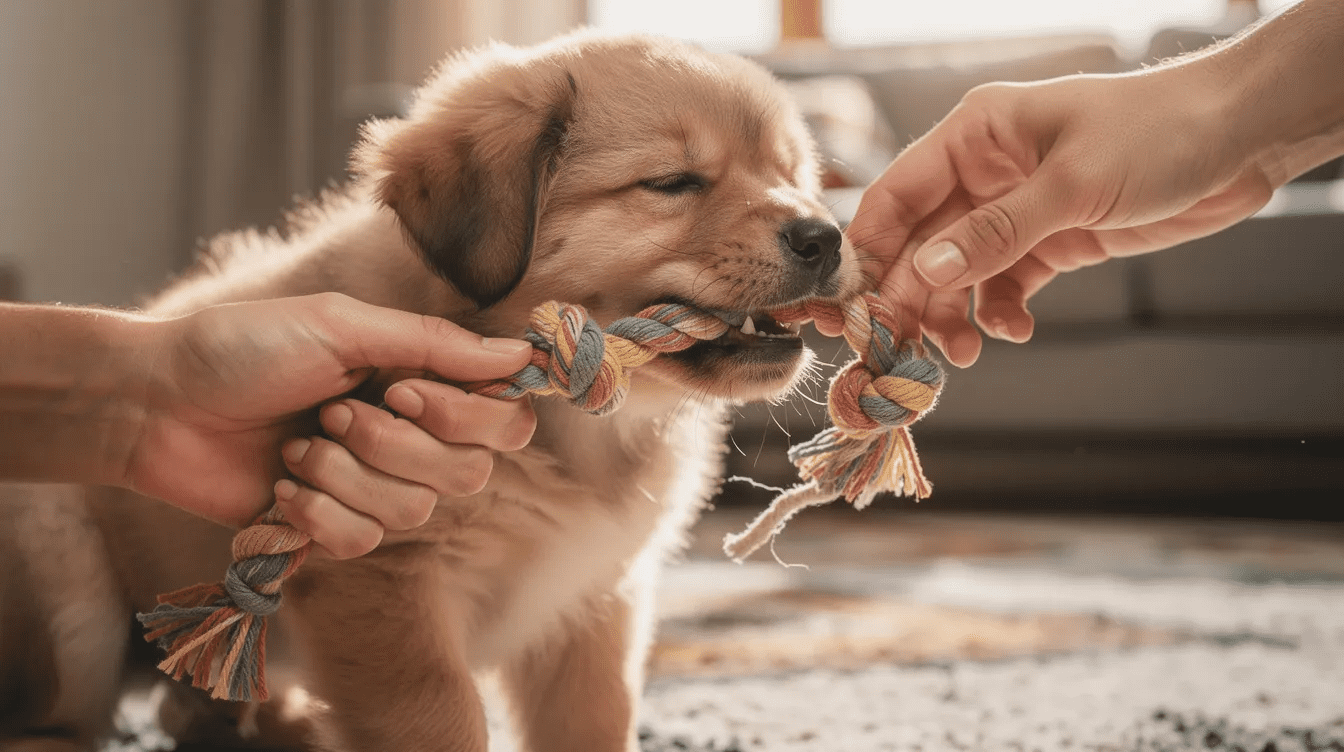
Why Puppies Bite and Nip
Puppy biting is usually not future aggression. It is often normal mouthing, curiosity, play biting, and the need to soothe sore gums during teething.
Puppies play with their mouths. In a litter, puppies play by wrestling, chasing, grabbing, and biting. Puppies learn important social skills through play with their littermates, which helps them understand bite inhibition and the appropriate force of their bites during interactions.
Puppies learn bite inhibition through play with their littermates, where they receive feedback when they bite too hard, which helps them understand how to moderate their bite strength. If one puppy bites too hard, the other may make a loud yelp sound and stop play.
This is the foundation of learned bite inhibition. Puppy bite inhibition learning matters because your puppy does not automatically know that human skin is sensitive.
Teething also plays a major role. Puppies usually have their baby teeth by about 8 weeks, and adult teeth come in over the next several months. Teething-related chewing often improves as adult teeth come in, but play biting can continue if a puppy keeps learning that nipping hands, sleeves, or ankles gets attention.
Many puppies bite more when they are overtired, overstimulated, hungry, or need a potty break. Young puppies often need up to 18 to 20 hours of sleep daily, so a wild nipping episode may be less of a training failure and more of a sign that your puppy needs a calm break, a nap, or a reset.
How Puppy Biting Training Helps
Puppy biting training is a simple system for teaching safer mouth use. The goal is not to stop all playful mouthing overnight, but to build calm behavior, better choices, and reliable bite inhibition over time.
Structure helps. Setting play times, nap times, feeding routines, and quiet breaks reduces the chaotic energy that often leads to biting. A playful puppy with no routine may grab hands, clothing, or feet simply because movement is exciting.
Redirection also matters. Redirecting your puppy’s biting behavior can be achieved by providing them with appropriate chew toys whenever they start to nibble on you or furniture. Keep a chew toy, frozen chew, or treat-stuffed toy nearby so you can immediately redirect before the puppy grabs your sleeve.
Consistency is the part that many families miss. Every family member should teach the same lesson: teeth on skin ends fun, teeth on a toy earns attention. If one person allows nipping and another scolds it, the puppy’s behavior becomes harder to change.
Good puppy training also supports leash manners, greetings, children, and safer play around another dog. Owners who want more structure can explore available puppy training programs for early obedience, crate training, socialization, and bite inhibition support. Well-matched, supervised play with friendly puppies or calm adult dogs can help some puppies learn better social skills, but it should be controlled, positive, and interrupted before play becomes too rough.
Simple Ways to Stop Puppy Biting
Use clear, calm steps. Your puppy will learn faster when your response is immediate and predictable.
First, teach your puppy bite inhibition. This helps your puppy learn to control the strength of their mouth and reduce the risk of accidental injuries. If your puppy bites too hard, use a simple verbal cue such as “ouch” or “too bad.”
A common method to teach bite inhibition is to mark the hard bite with a short cue such as “ouch” or “too bad,” then briefly pause the interaction. Some puppies get more excited by high-pitched sounds or loud noises, so keep your response calm and avoid yelping if it makes your puppy jump harder or bite more.
Then stop playing. If your puppy bites during play, calmly pause the interaction and withdraw your attention. This teaches your puppy that biting makes the fun stop.
This works because the puppy briefly loses the attention or play they wanted. A short time-out does not need to be harsh. It can be as simple as turning quietly away for a few seconds, stepping behind a baby gate, or pausing the play session until your puppy calms down.
Do not jerk your hands away. Jerking your hands away from a puppy can trigger their natural chase-and-bite instinct. Instead, freeze, use your cue, and offer a toy.
Redirection is your daily tool. If your puppy grabs your pants or fingers, immediately redirect to a tug toy, chew, or appropriate chew toy. When the puppy releases your hand or clothing and grabs the toy, use verbal praise such as “good dog.”
Reward calm choices. Treat and praise when your puppy lets you pet the puppy’s face without biting, sits with a relaxed body, or chooses to chew a toy instead of skin.
Use structured games. Fetch, tug, and other toy-based games can help redirect your puppy’s biting away from human hands and toward appropriate toys. These games also give your puppy a better outlet for energy in a controlled way.
You can play tug safely by teaching drop, pausing if teeth touch skin, and restarting only when the puppy is calm. During supervised indoor training, a light leash can help you guide your puppy without grabbing at the mouth, but it should not be left on when the puppy is unsupervised.
Add mental stimulation with puzzle feeders, scent games, and short puppy classes. Calm guidance, predictable routines, and appropriate outlets can help reduce play biting while giving your puppy better ways to use their energy.
Common Mistakes to Avoid
Well-meaning habits can make unwanted behavior worse, especially when everyone in the home responds differently.
Avoid rough play with hands. Wrestling, chasing, and letting a puppy bite sleeves can teach your puppy that human skin and clothing are part of the game. Use toys instead so your puppy learns what is appropriate to bite.
Do not punish a puppy for biting. Punishing a puppy for biting can backfire and cause fear or aggression. Yelling, smacking the muzzle, pinning, or grabbing the mouth can make many dogs defensive or more excited.
Do not use fingers as toys, even once. Puppies do not understand “sometimes.” If skin starts the game on Monday, the puppy may try the same thing on Tuesday.
Watch for stress signals. A temper tantrum during play may include wild jumping and nipping, but stiff posture, hard staring, guarding, or growling around food or toys deserves closer attention.
Keep play short. Puppies often bite more when they are overtired or overstimulated. Stop biting problems before they spiral by adding naps, calm handling, and quiet time between active games.
Frequently Asked Questions
These answers cover common concerns about puppy biting, nipping, teething, and training timelines.
How long does the puppy biting stage usually last?
Most puppies bite and nip frequently between 8 and 16 weeks. The most intense teething and chewing often improve as adult teeth come in by around 6 months.
Consistent redirection and bite inhibition practice can reduce intensity sooner. If biting is not improving at all by 5 to 6 months, an individual puppy training plan may be needed.
Is puppy nipping on hands and ankles normal, or a sign of aggression?
Most puppy mouthing on hands, sleeves, and ankles is normal behavior, especially when a puppy is excited. Moving feet and hands trigger chase, grab, and playful biting.
Concern signs include stiff posture, deep growling, hard staring, guarding, or bites that break skin repeatedly. Any biting that feels intense or scary should be discussed with a qualified professional.
How can I stop my puppy from biting my kids?
Children move quickly and often squeal, which can increase nipping. Keep interactions short, supervised, and calm, with children seated when possible.
Have kids offer a toy instead of their hands. Baby gates, pens, and a leash attached can prevent the puppy from rehearsing ankle chasing.
Should I let my puppy play with other dogs to help with bite inhibition?
Well-matched play with friendly puppies or tolerant adult dogs can help teach softer mouth use. Choose controlled puppy classes or safe playdates instead of dog parks with unknown dogs.
Watch for one-sided or overly rough play. Step in for breaks when one dog looks overwhelmed or when play gets too intense.
When should I seek professional help for puppy biting?
Get help if the puppy bites break skin often, seem fear-based, involve guarding, or keep getting worse despite calm training. Sudden changes in biting behavior can also point to pain, so a veterinary check may be wise.
Professional support is also helpful if family members feel overwhelmed or unsure how to keep everyone safe.
Final Thoughts
Puppy biting is a normal phase, but early, calm puppy biting training can reduce the risk of long-term problems. Consistent structure, redirection to appropriate chew toys, and rewarding calm behavior help your puppy learn bite inhibition and make better choices. Avoid rough play and jerking hands away, as these can worsen biting. If biting becomes intense or difficult to manage, professional support can provide the guidance needed to keep everyone safer and build a stronger bond with your puppy.