Key Takeaways
- Trick training for dogs goes beyond cute trick performances. It builds focus, confidence, and everyday manners through structured, reward-based learning.
- Simple dog tricks like spin, paw, touch, crawl, sit pretty, and play dead can support better dog obedience and impulse control.
- Short, positive reinforcement sessions prevent frustration and help dogs stay engaged in training, whether they are puppies or seniors.
- Trick training can make core skills like sit, down, place command, and recall stronger and more reliable across different environments.
- Professional help is useful when focus, reactivity, or behavior challenges get in the way of learning tricks and progressing in obedience.
Trick Training for Dogs Is More Than Just Fun
Most owners think of trick training as a way to impress friends or capture cute videos for YouTube. But trick training for dogs is a fantastic way to build focus, confidence, and better manners in everyday life. Dogs of all ages can learn new tricks, and the process of learning itself is what creates lasting change. Tricks can make the learning process more enjoyable and mentally engaging for dogs. Whether you are working on spin, paw, sit pretty, or play dead, each trick teaches your dog how to pay attention, try new behaviors, and enjoy the process of working with you.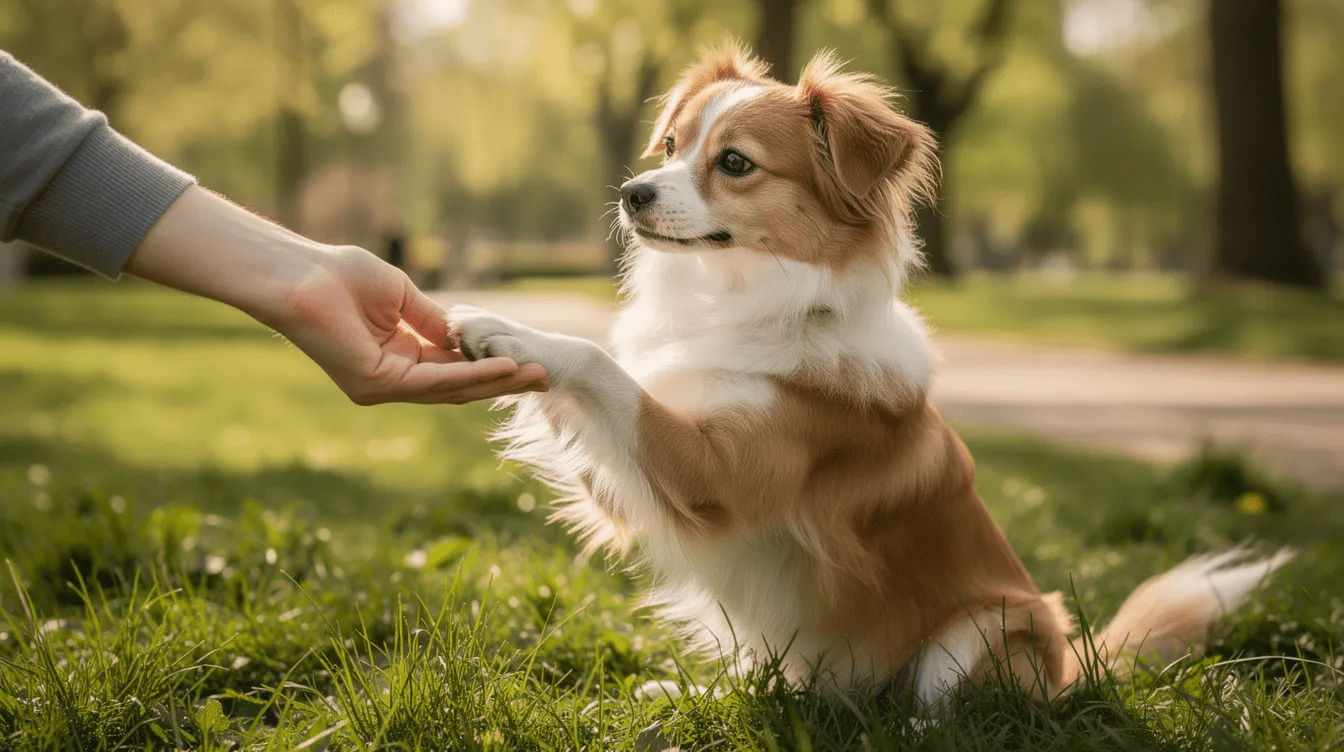
Why Trick Training for Dogs Builds Better Focus
Teaching tricks can improve a dog’s focus and recall because tricks ask dogs to watch, listen, and think before acting. Every time you introduce a new behavior, your dog has to tune in to your voice, your hands, and your position. This naturally strengthens engagement over time.
Using treats, toys, and praise as rewards helps dogs learn to check in with their handler instead of getting lost in distractions. High-value rewards can keep your dog motivated during training, especially when the environment is a bit challenging. A clicker or a marker word like “Yes!” can mark the exact moment your dog performs the correct behavior. The reward should follow right away so your dog understands what it earned. This timing helps your dog connect the cue, the action, and the payoff more clearly.
Teaching tricks helps dogs learn how to learn. When you break each trick into tiny steps, dogs learn to work through problems calmly rather than giving up or reacting with frustration. Shaping involves rewarding incremental movements towards a final action, so your dog builds patience and problem-solving skills one small win at a time.
Dogs learn better in a fun, low-pressure environment. Positive reinforcement, clear timing, and consistent cues help your dog understand what you want more easily. Regular practice sessions, even just a few minutes at a time, can make it easier for dogs to focus in busier environments over time. Keep verbal cues simple and consistent so your dog is not confused by extra words or mixed signals.
Simple Tricks That Support Confidence and Manners
Easy, low-pressure tricks are ideal for building a dog’s confidence and everyday manners. The goal is not to prepare your dog for a performance routine. It is to give them small wins that make them braver and more willing to try.
Here are some of the best tricks to start with and why they help:
- Spin: Teaching dogs to spin can be done with a treat lure. Luring uses the treat to guide your dog’s movement without pushing or forcing their body, and spin is a great starter trick because many dogs can complete it quickly and feel successful right away.
- Paw or shake: Many dogs can learn paw or shake relatively quickly, although progress depends on the dog’s experience, motivation, and comfort with handling.
- Nose touch or target: You can teach dogs to touch specific objects using targeting training. Guide your dog’s nose to your hand or a target stick. This redirect is useful when you need your dog to focus away from a distraction during a walk or at home
- Crawl: This trick builds body awareness and encourages calm, low movement. It involves getting your dog to lie down and inch forward with their front legs on the ground.
- Sit pretty: When your dog raises up with their front paws off the ground, it can build balance and body awareness, but it should be introduced carefully. Start slowly, keep reps low, use stable footing, and avoid this trick for puppies, senior dogs, or dogs with back, hip, or joint concerns unless your veterinarian says it is appropriate.
- Play dead: The play dead trick is popular and entertaining, and it can help your dog practice settling on their side when taught gently. Never force the position, and reward small steps so your dog stays comfortable.
- Roll over: Teaching dogs to roll over is a classic trick that builds body awareness, but it should be taught slowly on a soft surface. Skip this trick if your dog seems uncomfortable, stiff, fearful, or has back or joint concerns.
- Wave: Dogs can learn to wave hello or goodbye easily once they know paw, making it a cute trick to show friends.
Dogs can learn tricks such as spin, paw, touch, and play dead through positive reinforcement techniques. Tricks that use the hindquarters, like backing up or pivoting around a perch, can help dogs feel more coordinated and aware of their legs and body.
Trick training provides valuable mental enrichment, and some tricks also add light physical movement. It should complement, rather than replace, appropriate daily exercise. Success with simple dog tricks helps shy or unsure pets feel braver around new people, surfaces, and environments. Good manners are reinforced when dogs learn to wait for a cue, respond gently, and stay polite while working for rewards.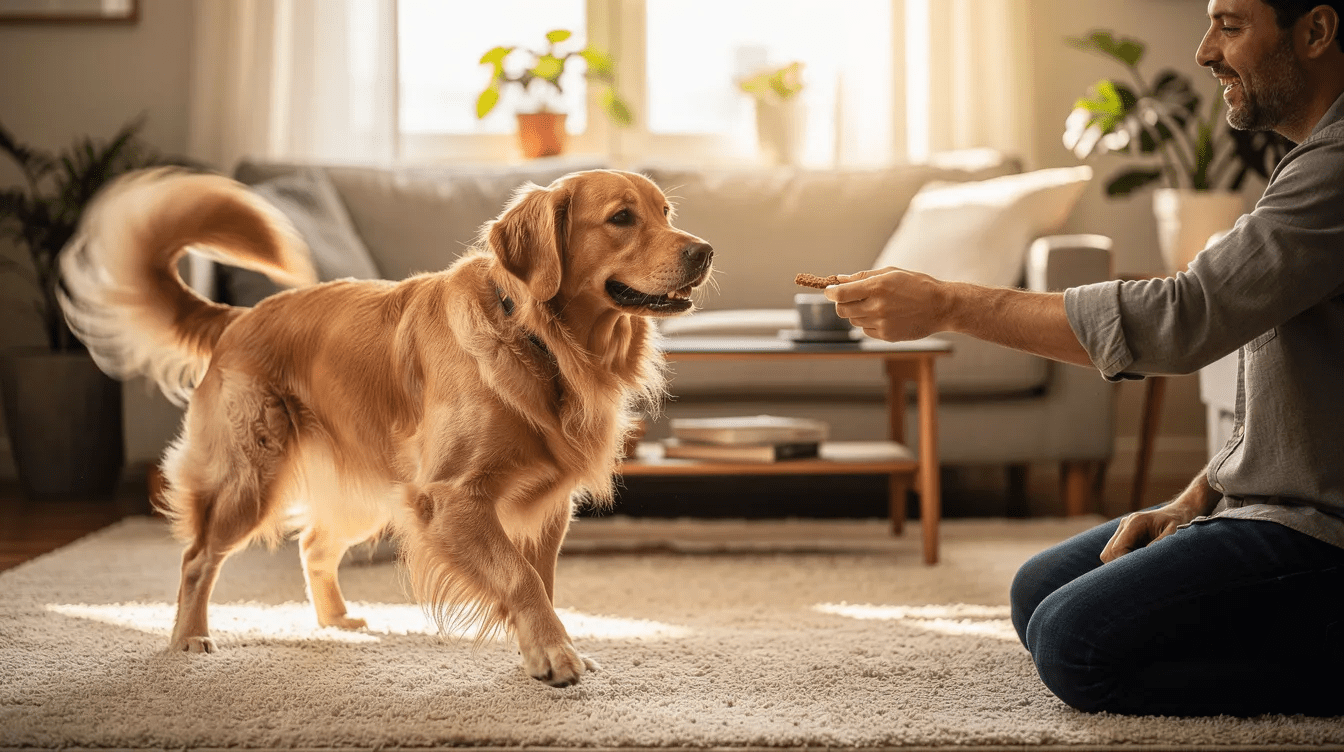
How Trick Training Connects to Obedience
Dog tricks and dog obedience are closely linked and often use the same practical skills. Effective dog training techniques focus on positive reinforcement and clear communication, and trick training is one of the best ways to practice both.
Tricks can strengthen basic commands like sit and down by asking the dog to hold or return to those positions during a routine. For example, a short trick sequence might ask your dog to sit, then spin, then lie down, then stand, and then sit again. This repetition under varied conditions makes those behaviors more reliable.
The place command is especially useful here. Teaching your dog to go to a designated spot and stay there builds impulse control and calm settling. You can use tricks as a game between place reps, so your dog associates the command with both structure and fun. Short, consistent sessions and clear communication can help dogs make steady progress without becoming overwhelmed.
Recall gets stronger when it is part of a reward-rich sequence. Call your dog to you, ask for a trick, reward, and then release them to fetch a ball or play. The dog learns that coming when called leads to good things, not the end of the game. Teaching tricks helps dogs learn how to learn effectively, which means they pick up new cues faster over time.
Positive reinforcement training uses rewards to encourage desired behaviors, and positive reinforcement builds a strong bond between dog and owner. Trick training enhances the bond between dog and owner because both are actively engaged, communicating, and having fun together. Trick training can support engagement and communication, which may complement recall, leash-manner, and obedience training. Each behavior still needs to be practiced directly and gradually around appropriate distractions.
Common Mistakes to Avoid
Progress in trick training comes from keeping sessions clear, calm, and fair for the dog. Training sessions should be short and enjoyable for dogs. Pushing too hard or too fast is the quickest way to create trouble.
Here are common mistakes to watch for:
- Keep sessions short and adjust them to your dog’s attention span. Puppies, senior dogs, and easily distracted dogs may benefit from sessions lasting only a few minutes. End the session while your dog is still engaged and comfortable.
- Repeating the command over and over: If your dog does not respond, the cue is not clear enough, or the step is too big. Go back a bit and help them succeed.
- Changing too many things at once: Only increase one factor at a time, whether that is distance, duration, or distraction level. Changing all three leads to confusion.
- Physically demanding tricks too early: Pushing dogs into sit pretty, hind legs balancing, or advanced tricks before they have the strength or coordination can cause stress or discomfort. Build up gradually.
- Ending on a bad note: If your dog is struggling, ask for something easy they already know. Let them win before you stop. This keeps the learning experience positive so they want to train again.
The process of trick training should feel like a conversation, not a lecture. Patience and clear feedback matter far more than speed.
Final Thoughts: Making Trick Training for Dogs Part of Everyday Life
Trick training for dogs is a practical tool to build focus, confidence, dog obedience, and better manners at home and in public. Mix tricks like spin, paw, touch, sit, down, and place into daily routines. Practice during walks, before mealtimes, or during quiet evenings at home. Many dogs enjoy structured activities and interaction, and even a few minutes of trick work each day an support better engagement and strengthen your relationship.
Trick training builds a strong bond between dog and owner. Short, consistent, positive reinforcement sessions are more effective than occasional, long, or high-pressure training blocks. Keep it simple, keep the feedback clear, and stay consistent so your dog can build confidence one small success at a time.
If you need help with focus, manners, or building reliable obedience through tricks, working with a professional trainer can give you and your dog a clear path forward. The right support can help you choose safe exercises, build better timing, and make training more productive for your dog’s needs.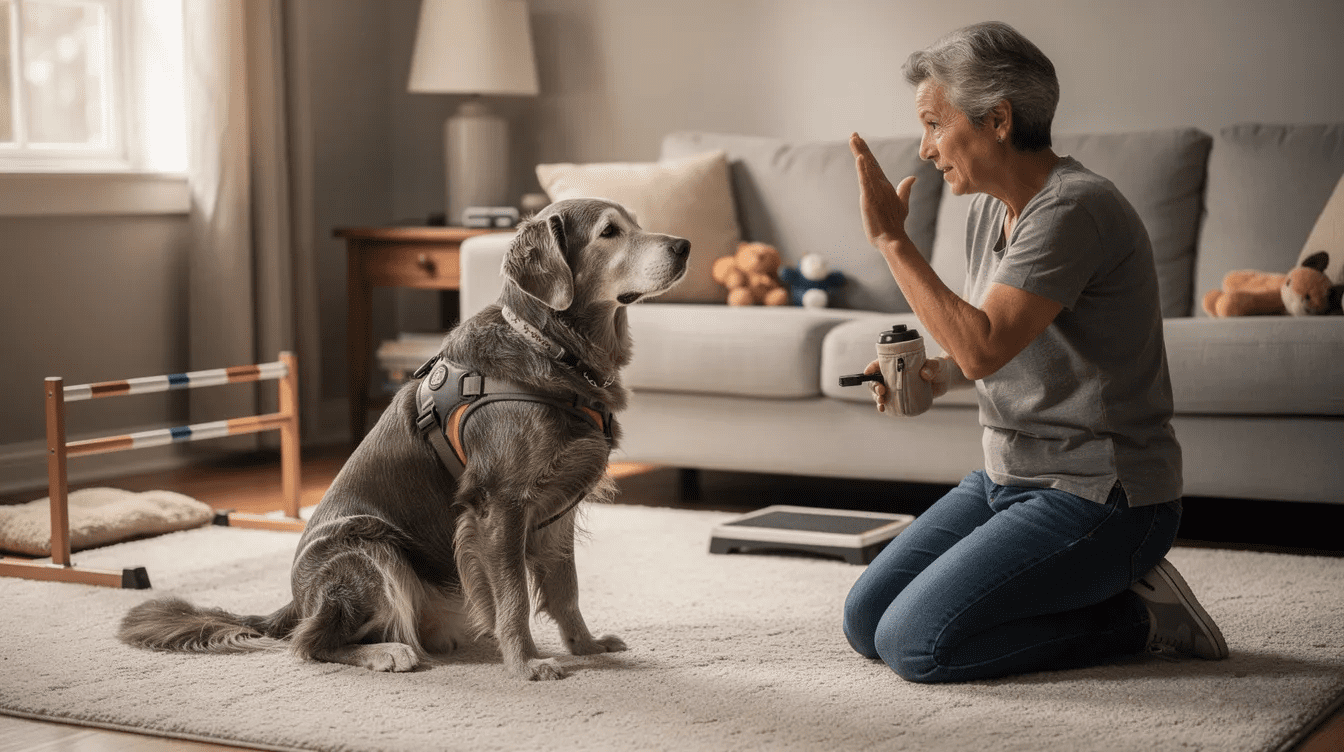
FAQ
How often should I practice dog tricks with my dog?
Most dogs do best with very short training sessions of 3 to 10 minutes, repeated a few times per day, rather than one long block. Puppies and easily distracted dogs may need even shorter sessions with more play breaks in between. Consistent daily practice builds stronger habits than only working on weekends. Think of it like learning a language: a little every day goes further than cramming once a week.
Can older dogs still learn new tricks?
Senior dogs can absolutely learn new tricks, as long as you adapt to their physical ability and comfort level. Gentle options may include a stationary nose touch, chin rest, object targeting, paw, or simple scent games. Ask your veterinarian before introducing turning, balancing, jumping, or repeated position changes if your dog has mobility concerns.
What if my dog gets too excited or distracted during trick training?
Start in a quiet indoor space with few distractions before trying tricks outdoors or in busy areas. Use high-value treats, frequent breaks, and easy wins to keep your dog engaged. If your dog cannot focus long enough to complete even simple behaviors, there may be underlying issues with impulse control or arousal. Dogs with big focus struggles may benefit from professional support to build attention before moving to more complex tricks.
Is it okay to use food for every trick training session?
Using treats is a normal and effective part of positive reinforcement, especially when teaching brand-new behaviors. As your dog becomes more reliable, gradually mix in praise, toys, and real-life rewards like a game of fetch so the dog learns to work for a variety of payoffs. Once a trick is solid, you can reward less often while still paying well for the best efforts. The goal is not to eliminate food entirely but to build a dog that works happily without needing a treat for every single repetition.
When should I consider professional help for trick training?
Professional help is useful if your dog shows fear, frustration, reactivity, or aggression during training. Trick training may provide enrichment, but it should not replace professional behavior support. Dogs showing aggression, severe fear, or intense reactivity should be evaluated by an appropriately qualified behavior professional. A veterinarian should also rule out pain or medical conditions that may affect behavior.