
Why Dogs Look Out Windows and When It Becomes Stressful
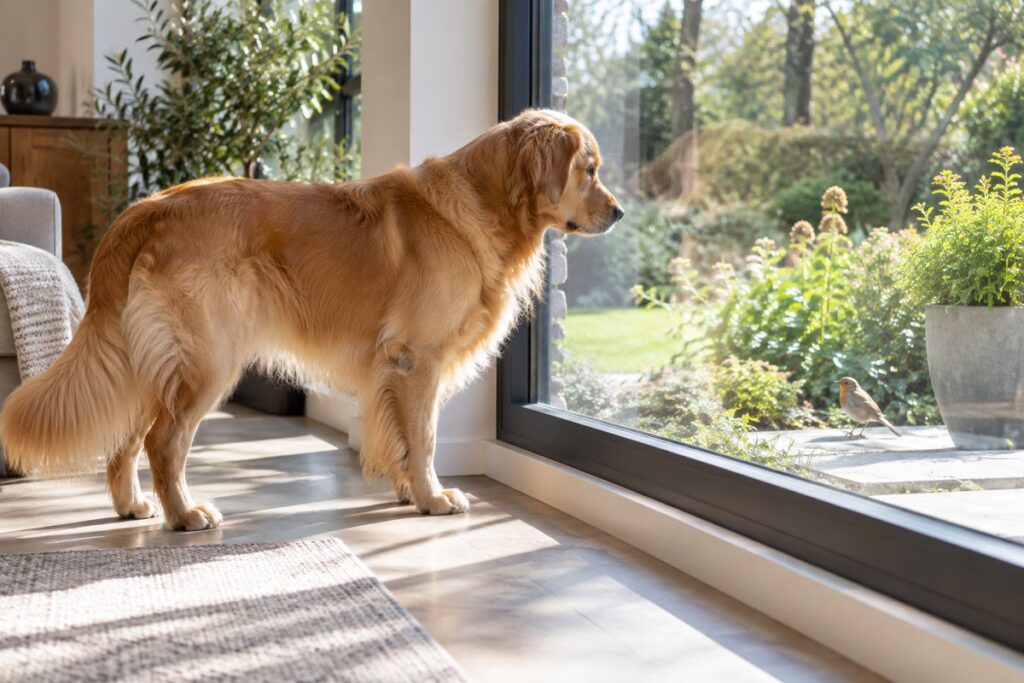
Dogs look out windows because movement, sounds, and sometimes outdoor scents capture their attention. A passing squirrel, delivery vehicle, or neighbor can give a dog something interesting to investigate. However, window watching is not automatically relaxing. Some dogs observe quietly, while others become frustrated, frightened, or increasingly alert.
Understanding your dog’s window obsession starts with watching the whole behavior: how your dog responds, whether they can disengage, and how quickly they settle afterward. Those details matter more than how long they spend watching the view.
Why Windows Capture Your Dog’s Attention
Movement and Everyday Activity
People, animals, and vehicles create changing visual information. Your dog may watch because something moves, approaches the house, or predicts a familiar event. Looking alone does not tell you whether the dog feels curious, excited, or worried. Consider what happens before and after the observation.
Sounds and Outdoor Scents
Dogs may notice footsteps, barking, or vehicle sounds through a closed window. An open window also allows outdoor odors to enter. Research on canine sniffing and nasal airflow explains how dogs collect odor information. An open window may therefore provide scent information alongside the activity your dog sees and hears happening outside.
Learned Responses
Window behavior can become a familiar routine. A dog that repeatedly barks as someone approaches and then leaves may learn that barking appears to work. Excitement, fear, and frustration can also contribute. Avoid assuming your dog is protecting the household or simply being stubborn.
Is Window Watching Enrichment or Stress?
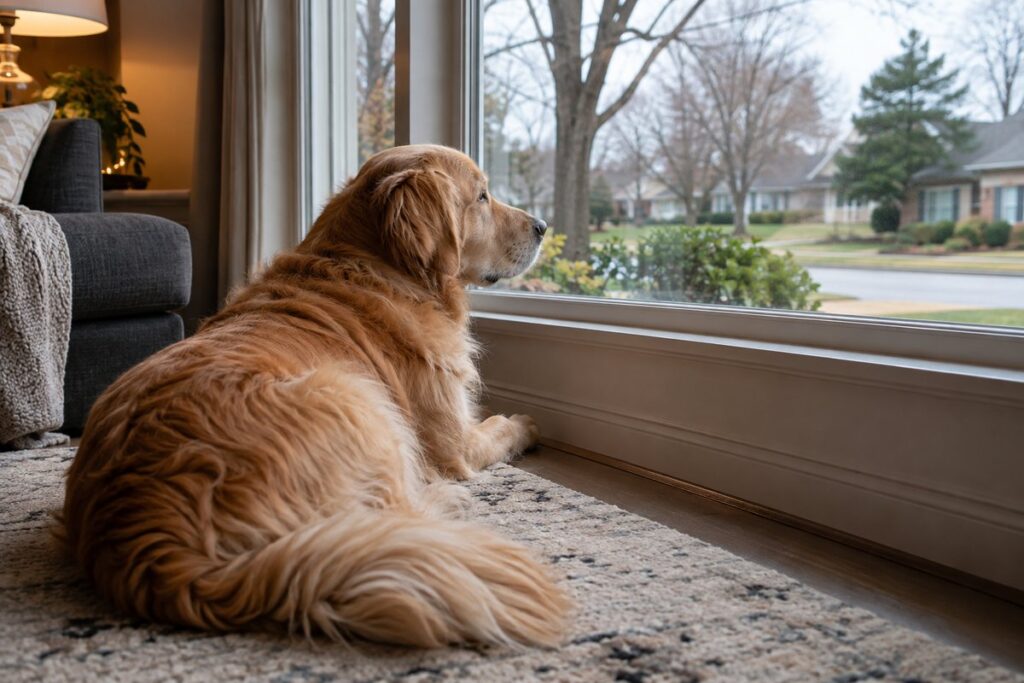
A dog that watches briefly, rests comfortably, and returns to other activities may tolerate the view well. A dog that repeatedly paces, whines, stiffens, or barks may need a different setup.
Look for patterns rather than diagnosing emotion from one signal. Lip licking, panting, or yawning can have several explanations. Context, posture, and changes from your dog’s usual behavior help you interpret them. VCA’s stress guidance explains this distinction.
Notice whether your dog can respond to a familiar cue and settle after the trigger disappears. Difficulty disengaging suggests the situation may be too demanding. Window access should support comfortable daily life rather than repeatedly interrupt rest.
Why Dogs Bark Through Windows
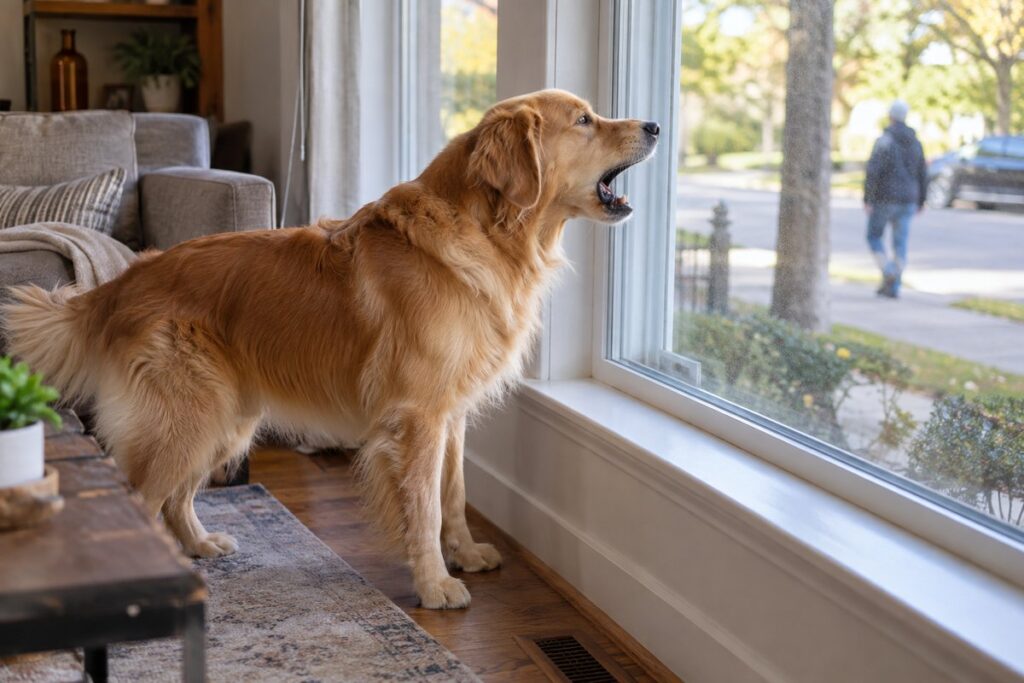
A window allows your dog to see activity without approaching it. For some dogs, that barrier creates frustration. Others may react because an unfamiliar person or dog feels threatening. Similar barking can have different motivations, so the training plan should fit the individual.
Repeated exposure is not automatically helpful socialization. Leaving a dog to bark at passing traffic does not reliably teach calm responses. VCA’s guidance for dogs reacting near their property recommends reducing opportunities to practice the behavior and teaching alternative responses.
For several days, record what your dog notices, how long reactions last, and what helps them recover. Include the time of day and whether curtains were open. This simple log can reveal predictable busy periods and help you prepare before a delivery or school traffic begins. Share your notes with a trainer rather than relying on a single difficult incident.
How to Reduce Window Barking
Manage the View First
Close curtains, use suitable privacy film, or restrict access to busy windows with a gate. Move your dog’s resting area away from street activity. If outside sounds trigger barking, background noise may help reduce their impact. Management creates space for calmer practice; it does not replace training.
Teach a Comfortable Alternative
Practice going to a mat or bed when nothing exciting is happening. Reward your dog for approaching, remaining there briefly, and settling. Build the skill gradually before expecting it during deliveries or passing dogs. Explore dog obedience training in Albany for help developing everyday cues.
Reward Manageable Responses
Begin far enough from the window that your dog can notice mild activity without escalating. Reward calm observation or attention toward you. Keep sessions short and return to an easier setup if your dog becomes distressed. Learn about reward timing in our clicker training guide.
Increase Difficulty Gradually
Practice during quieter periods before introducing busier situations. Change one challenge at a time, such as distance or duration. Avoid repeatedly calling a cue your dog cannot follow. Our proofing dog training guide explains how to practice established skills around distractions.
Avoid shouting at your dog during a barking episode. Added noise or confrontation can increase arousal and may worsen fear. Create distance from the trigger, allow recovery, and adjust the next practice session to make success easier.
Safe Access and Alternative Enrichment
Keep window access secure and supervise open windows. Do not rely on an insect screen to contain your dog. Prevent climbing or leaning through openings, and provide a stable resting area if observation remains comfortable.
Balance quiet observation with walks, sniffing opportunities, appropriate food puzzles, play, and rest. Choose activities suited to your dog’s health and preferences. Window watching should supplement this routine rather than replace it.
Car windows involve different risks. Keep dogs properly restrained, and keep their heads inside the vehicle instead of treating an open window as unrestricted entertainment.
Frequently Asked Questions
Should I Stop My Dog From Looking Outside?
Not necessarily. Calm observation may be fine. Restrict access when the view repeatedly triggers barking, distress, or difficulty settling.
Will Closing the Curtains Fix Barking?
It may reduce visual triggers, but sounds and learned responses can remain. Combine management with appropriate training and enrichment.
Does Window Watching Treat Separation Anxiety?
No. Window access is not a treatment plan for separation anxiety. Seek professional assessment when your dog shows distress during absences.
Training Support for Albany Dog Owners
Seek veterinary advice for sudden behavior changes, persistent distress, or possible pain. Get qualified help when reactions escalate or create safety concerns.
Alex, co-owner and head trainer at Albany Off Leash K9 Training, has trained with OLK9 since 2014. Her published biography describes experience with dogs of different ages, breeds, and sizes, emphasizing communication and consistency. Meet the Albany team or contact the trainers to discuss your dog’s behavior and suitable training options.