
Introduction
Cooperative care training teaches dogs to willingly participate in their own care, including grooming and veterinary procedures, through positive reinforcement and consent-based handling rather than force or physical restraint. Vet visits can cause anxiety for many dogs, leading to fear-based behaviors like growling, snapping, or shutting down. Cooperative care replaces that cycle with a structured process where the dog actively participates and retains the ability to opt out.
This guide covers techniques from foundational handling exercises through advanced methods like chin rest training and muzzle conditioning. It addresses dogs of all ages and temperaments, including puppies, adult dogs with no prior training, and reactive or fear-aggressive dogs. If you’re a dog owner in the Albany, NY area looking for professional guidance to make veterinary visits and grooming less stressful, this content maps directly to what we teach at Albany Off Leash K9 Training.
Cooperative care training helps dogs willingly participate in unpleasant events, from nail trims to injections, by giving them a sense of control and clear communication about what happens next. Dogs trained in cooperative care show lower cortisol levels during vet visits and pose less risk to veterinary staff and handlers.
After reading this guide, you will understand:
- How consent-based handling builds trust and cooperation in dogs
- Specific desensitization and counterconditioning protocols for veterinary and grooming settings
- Step-by-step chin rest and muzzle training procedures
- How training timelines differ for puppies, adult dogs, and reactive dogs
- When to seek professional support and how to handle emergency veterinary situations
Understanding Cooperative Care Training
Cooperative care training means the dog voluntarily participates in handling, grooming, and veterinary procedures. The dog is never pinned, scruffed, or physically forced into compliance. Instead, the dog learns specific behaviors (like placing a chin on a handler’s hand) that serve as consent signals. If the dog breaks position, the handler stops the procedure. This approach originated in zoological and marine mammal training, where animals like dolphins and elephants were taught to voluntarily present body parts for blood draws and exams instead of being sedated.
For pet owners dealing with a dog that trembles at the vet clinic or snaps during nail trims, cooperative care offers a concrete alternative. Bodily autonomy gives dogs a sense of control that builds psychological resilience and confidence, rather than learned helplessness.
Core Principles of Cooperative Care
Consent-based handling is the foundation. The dog learns a start button behavior, such as a chin rest or stepping onto a mat, that communicates readiness. The dog’s “no” is respected: if the dog feels uncomfortable and lifts its chin or steps off the mat, the procedure pauses. Dogs learn to signal they are uncomfortable with clear opt-out options like lifting a paw. Owners are encouraged to recognize signs of discomfort, including lip licking, freezing, whale eye, and avoidance, to adjust procedures accordingly.
At Albany Off Leash K9 Training, we integrate cooperative care into our balanced training approach. Positive reinforcement drives the teaching process for handling and husbandry work. We focus on clear communication between dog and handler, giving the dog agency while maintaining structure.
Benefits Over Traditional Restraint Methods
A controlled study with 28 dogs across four veterinary visits over eight weeks compared standard care against low-stress collaborative handling. Dogs in the cooperative care group showed a statistically measurable decrease in serum cortisol between first and last visits (composite stress index improvement, p = 0.03), while the control group did not show comparable change (p = 0.288), according to research published in PMC.
Traditional restraint, where a dog is held in place by force during procedures, creates several problems. Dogs associate the clinic with fear, making each subsequent visit worse. Veterinary staff face bite risk from panicked animals. Veterinarians working on a struggling dog may miss diagnostic signs because the exam is rushed or incomplete. Training improves diagnostic accuracy during veterinary exams because the dog remains calm enough for thorough assessment.
Cooperative care reduces stress for dogs during vet visits, improves safety for pets and caregivers, and strengthens the bond between dog and owner. These aren’t abstract benefits; they translate to fewer missed appointments, fewer sedation events, and lower risk of injury for everyone involved.
With these principles established, the next step is learning the specific techniques that make cooperative care work in practice.
Essential Cooperative Care Techniques
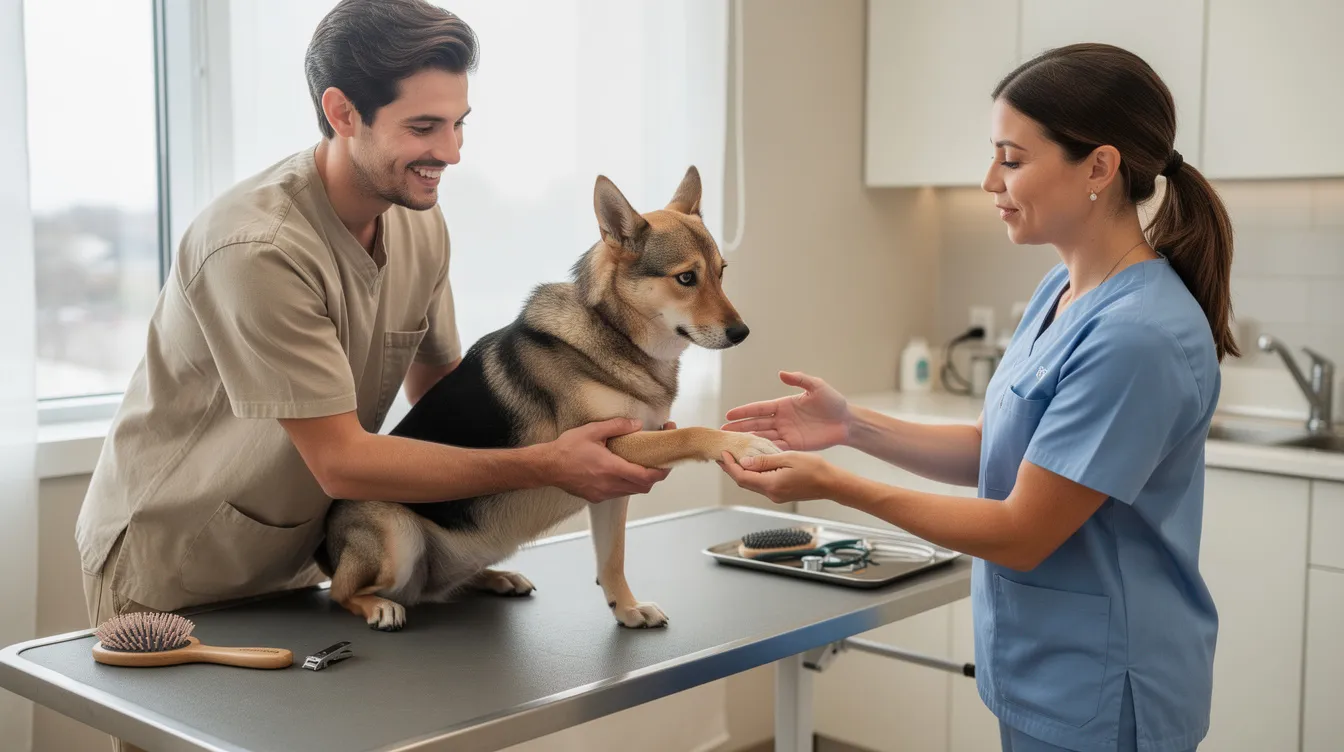
Building on the consent-based framework above, this section covers the three foundational skills every dog owner should practice before moving to advanced methods. Each technique layers onto the previous one, creating a progression from passive tolerance to active participation.
Desensitization Training
Desensitization reduces anxiety by familiarizing dogs with vet experiences in controlled, low-intensity doses. The process starts well below the dog’s stress threshold and builds gradually.
Mock veterinary visits can help dogs build positive associations with clinic environments. Schedule “happy visits” where you walk into the clinic lobby, let the dog sniff, offer treats, and leave. No exam happens. Over six to twelve sessions, progress to entering the exam room, stepping on the scale, and standing on the table. Gradual intensity means slowly increasing the exposure only when the dog remains relaxed.
At home, introduce veterinary tools like stethoscopes, nail clippers, and ear examination instruments at a distance. Let the dog investigate at its own pace. Move tools closer across multiple sessions. Play recordings of clinic sounds (buzzing clippers, other dogs barking) at low volume, pairing the sounds with food. For a fearful dog, this process may take weeks. A confident puppy in its socialization window may adapt in a handful of sessions.
Counterconditioning Methods
Where desensitization changes the intensity of exposure, counterconditioning changes the emotional response. The goal is to pair previously stressful stimuli with something the dog values, typically high-value treats like cheese, liver, or freeze-dried meat.
Timing matters. Present the treat just before or simultaneously with the stimulus, not after the dog has already reacted. If you’re conditioning the dog to accept ear exams, offer the treat as your hand approaches the ear, not after the dog flinches. Positive reinforcement builds a dog’s trust during handling exercises when the reward consistently predicts a manageable level of challenge.
Counterconditioning and desensitization work together. First lower the intensity (desensitization), then pair it with something the dog loves (counterconditioning). The combination creates positive associations with veterinary tools and handling that replace the previous fear response. Positive reinforcement encourages calm behavior during handling across repeated sessions.
Basic Handling Exercises
Practice these at home before attempting them in a clinic or grooming setting. Training should consist of brief sessions that maintain dog comfort and enthusiasm; three to five minutes, several times per week.
Break handling tasks into small steps with rewards. For paw handling and nail trims, start by touching the dog’s shoulder, then move to the elbow, then the paw, then individual toes. Reward each step. Only introduce nail clippers once the dog tolerates toe manipulation calmly. Some trainers recommend starting with one nail per session rather than attempting all at once.
For mouth and teeth exams, begin by touching the outside of the muzzle. Progress to lifting a lip. Then touching a canine tooth. Build toward opening the jaw gently. The same incremental approach applies to ear exams, eye drops, and body palpation. Regular handling exercises reduce stress during veterinary visits because the dog has already experienced each type of touch in a safe, rewarded context.
These foundational exercises prepare the dog for the advanced consent-based methods covered next.
Advanced Cooperative Care Methods and Implementation
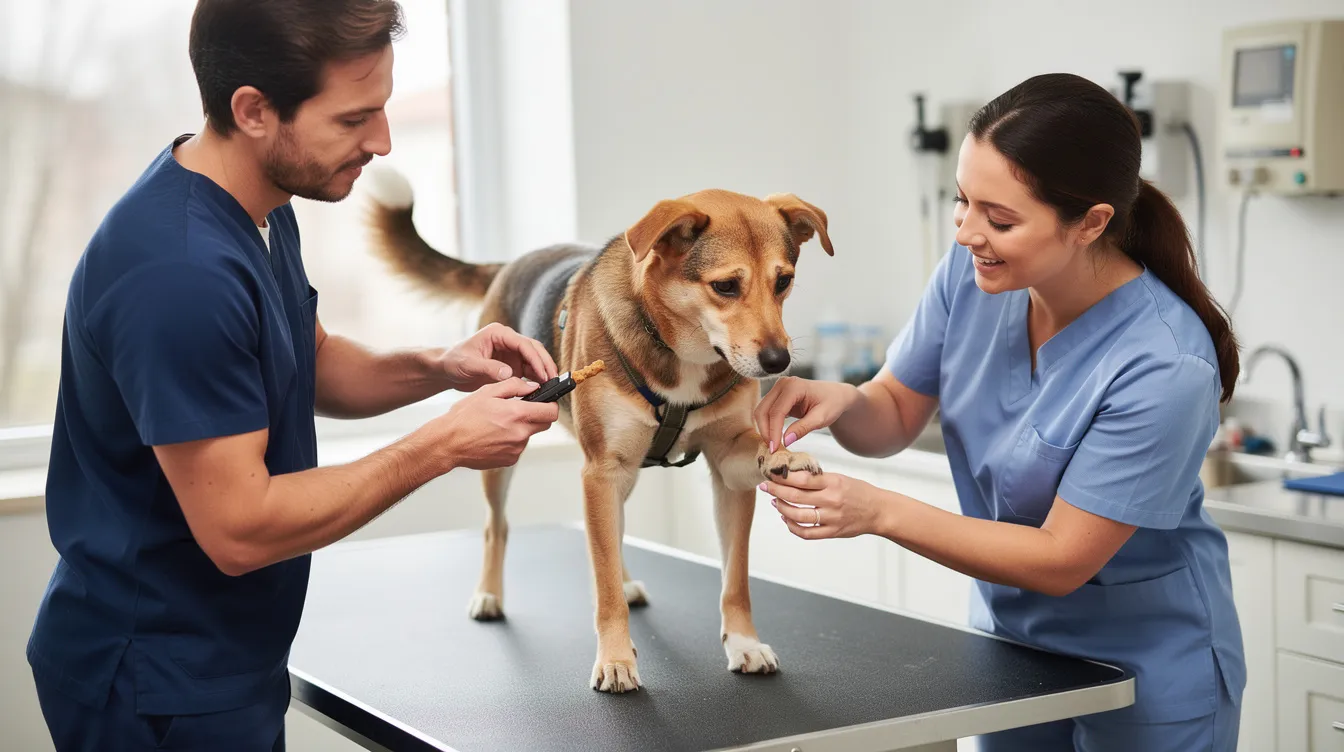
Once your dog tolerates basic handling with consistent training at home, you can introduce formal consent signals and conditioning protocols that transfer directly to veterinary and grooming environments.
Chin Rest Behavior Training
A chin rest is a start button behavior where the dog places its chin on the handler’s hand, a surface, or the owner’s lap and holds position while handling occurs. The chin staying in place means “yes, continue.” Lifting the chin means “stop.” Chin rest training gives dogs a sense of control during exams, which reduces panic and builds cooperation.
Training includes establishing consent signals like placing a chin on a mat to indicate readiness. Here is the step-by-step procedure:
- Introduce the target. In a quiet, familiar room, hold your open palm (or place a folded towel) where the dog’s chin naturally rests. Reward any nose contact with a treat. Repeat until the dog reliably touches chin to target.
- Shape duration. Once chin contact is consistent, delay the reward by two seconds. Then three. Then five. If the dog lifts its chin, reset without punishment and try again. Build toward 10 to 20 seconds of sustained contact over one to two weeks.
- Add a verbal cue. Say “chin” (or another consistent word) just before offering the target. Pair the cue with the behavior across 20 to 30 repetitions until the dog responds to the word alone.
- Layer in handling. With the chin resting, lightly touch the dog’s ear. If the chin stays, reward. Gradually progress to handling ears, neck, and head more thoroughly. For eye drops or injections, the chin rest keeps the dog still and communicating consent simultaneously.
- Generalize the behavior. Practice on different surfaces (grooming table, clinic exam table), with different people handling the dog, and in new environments. A University of Vienna study with 40 dogs found that behaviors practiced only in training environments transferred less reliably to real clinic settings, which means deliberate generalization practice is essential.
Building a solid chin rest foundation typically takes four to eight weeks with daily short sessions. Adding handling layers and generalization may require two to three additional months. Chin rest training helps dogs feel more comfortable during exams because they retain control over whether the procedure continues.
Muzzle Training Protocols
Muzzle training can reduce stress during veterinary procedures when done through positive conditioning rather than forced application. A basket muzzle is the appropriate type because it allows panting, eating treats, and drinking water. Restrictive sleeve-style muzzles should be avoided for training purposes.
The conditioning process:
- Place the basket muzzle on the ground near the dog. Scatter treats around it. Reward any investigation, sniffing, or looking at the muzzle.
- Hold treats near the muzzle opening so the dog pushes its nose inside to eat. Repeat across multiple sessions until the dog eagerly puts its nose into the muzzle.
- Once nose entry is reliable, loosely fasten the straps for two to three seconds. Reward immediately through the muzzle basket. Remove and repeat.
- Gradually increase wearing duration from seconds to minutes, first at home, then in progressively more distracting settings. Continue feeding treats through the muzzle throughout.
Never force the muzzle onto the dog. If the dog has a history of severe fear or aggression, consult a certified behavior professional before starting. For dogs with underlying pain, medical assessment should come first since physical discomfort can override any training progress.
Tailored handling methods should be discussed with vets to promote cooperative care during procedures, and muzzle conditioning fits naturally into that conversation.
Training Comparison by Dog Type
| Criterion | Puppies (8-24 weeks) | Adult Non-Reactive Dogs | Reactive / Fear-Aggressive Dogs |
|---|---|---|---|
| Training duration | Rapid; foundational behaviors in 2-4 weeks with daily 5-10 min sessions | Moderate; more sessions needed if no prior cooperative care history | Slowest; weeks to months; may require medication support |
| Key challenges | Sensory overload; short attention span; inconsistent owner handling | Fixed fear responses; prior negative vet experiences; trust deficits | Severe fear or aggression; bite risk; possible pain-driven behavior |
| Recommended techniques | Early socialization with handling; puppy-appropriate play and food rewards; quiet environments first | Desensitization and counterconditioning; clear consent cues; incremental steps | Medical pain assessment first; smaller increments; anxiolytic medication when indicated; certified behaviorist involvement |
| Expected outcomes | Comfort with general handling; positive view of vet and grooming environments | Greater tolerance; reduced anxiety; safer exams | Ability to tolerate minimal-restraint procedures; partial recovery of trust |
A case study from AAHA Trends Magazine illustrates the reactive dog timeline. “Dash,” a terrier mix with severe fear of vet visits, underwent six months of combined intervention: anxiolytic medications (alprazolam, clonidine), weekly happy visits to the clinic, and cooperative care training at home under behaviorist supervision. By the end, Dash tolerated stethoscope exams, body handling, and standing on the exam table.
A 2020 meta-analysis of caregiver training programs found a large average effect size (Hedges’ g = 0.88, 95% CI 0.68-1.07) across behavior-change interventions in human-canine dyads, supporting that structured owner training produces measurable results regardless of the dog’s starting point.
Common Challenges and Solutions
Even with consistent training, cooperative care hits obstacles. Here are the three most common issues Albany area clients bring to us and what to do about each.
Dog Refuses to Participate in Training
Some dogs won’t engage with the target hand, won’t approach the muzzle, or shut down entirely. This usually means the starting criteria are too high. Drop back to a step the dog can succeed at. If the dog won’t touch your palm, reward a glance toward your hand. If food isn’t motivating enough, switch to a higher-value option (real meat, not kibble) or try play as a reinforcer.
If refusal persists after two weeks of adjusted criteria, the dog may have underlying anxiety or pain requiring veterinary assessment. Physical health maintenance is facilitated by ensuring necessary medical care occurs without trauma, but sometimes that medical care needs to come before training can begin. Our team at Albany Off Leash K9 Training can evaluate whether a behavioral modification program is the right starting point.
Progress Stalls After Initial Success
Dogs sometimes plateau after learning foundational behaviors. They’ll do a chin rest at home for 15 seconds but refuse at the grooming salon. This is a generalization problem. The University of Vienna study found that dogs completing 8-12 cooperative care sessions showed improvement in training ratings but did not demonstrate reduced stress behaviors during actual vet exams, suggesting that practice must happen in the environments where the skills will be used.
The fix: take the training on the road. Practice chin rest in the car, at a friend’s house, in a pet store, and in the vet clinic lobby during non-appointment visits. Each new environment requires returning to shorter durations and easier criteria before rebuilding. Cooperative care helps prevent fear-based behaviors like growling, but only when the training generalizes beyond the living room.
Emergency Veterinary Situations
Cooperative care training takes weeks to months. If your dog needs emergency veterinary care tomorrow, you won’t have time to condition a chin rest or desensitize to an IV catheter. In emergencies, discuss sedation or chemical restraint options with your veterinarian. These are legitimate tools when the dog’s well being depends on immediate treatment.
The long-term investment in cooperative care pays off by reducing the number of situations where forced restraint or sedation is necessary. It enhances the quality of care provided to pets because veterinary staff can perform thorough exams on a cooperative patient rather than a panicking one.
Conclusion and Next Steps
Cooperative care training replaces the cycle of fear, restraint, and avoidance with a process where the dog actively participates in its own physical care. The evidence supports measurable reductions in stress hormones, improved safety during handling, and better diagnostic outcomes when dogs learn to willingly participate through consent signals and positive reinforcement.
Start here:
- Begin basic handling exercises at home this week. Touch ears, paws, and teeth in short periods of two to three minutes, rewarding each step with high-value treats.
- Introduce chin rest training using the five-step protocol above. Aim for daily sessions.
- Schedule a “happy visit” to your vet clinic where nothing medical happens; just treats and exploration.
- Contact Albany Off Leash K9 Training for a consultation if your dog shows fear, anxiety, or reactivity during handling.
If you’re working through related challenges, you may find our resources on handling fear of strangers and dog socialization useful as companion material.
Additional Resources
- Albany Off Leash K9 Training services: We offer private lessons, board-and-train programs, and behavioral consultations that can include cooperative care protocols tailored to your dog’s needs. Programs like Fear Free certification and Low Stress Handling certificate programs are shaping how animal trainers and veterinary staff approach handling across the industry.
- Local veterinary support: Ask your Albany-area veterinarian whether they follow Low Stress Handling or Fear Free protocols. Clinics that support these methods will coordinate with your trainer to maintain consistency between home practice and clinic visits.
- Home training equipment: A basket muzzle (properly fitted to allow panting), high-value treats, a chin rest target (towel or small platform), and basic grooming tools (nail clippers, ear cleaning solution, soft brush) are all you need to start. Deborah Jones (Deb Jones), a researcher and trainer who has written extensively on cooperative care for dogs and cats, offers additional published resources for owners wanting to deepen their understanding of consent-based training with animals.