
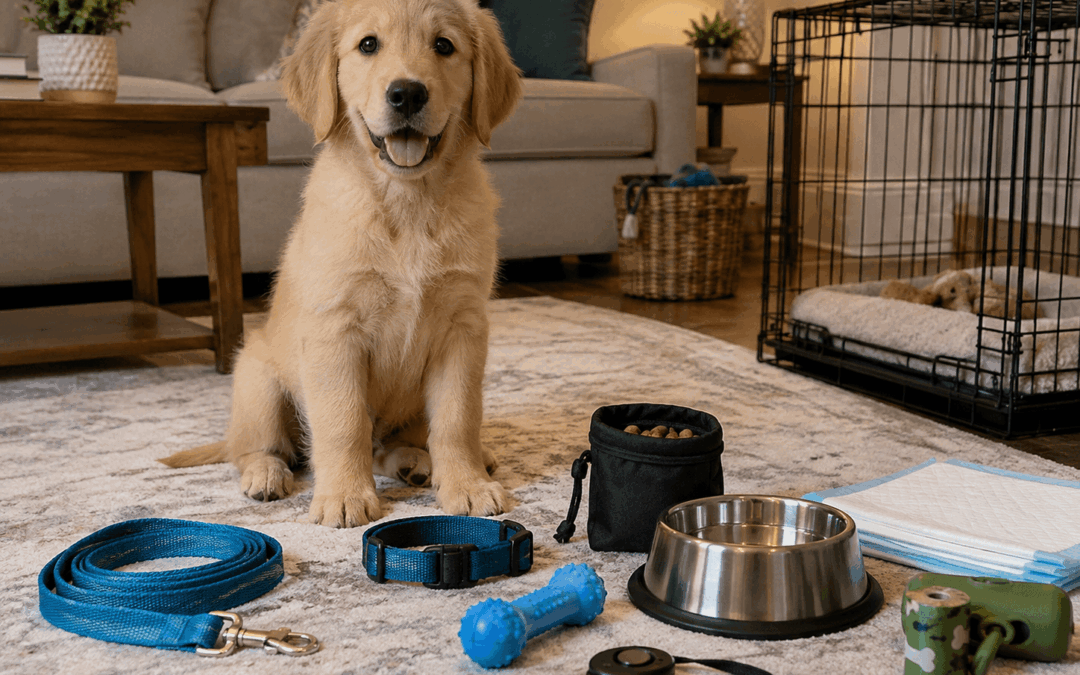
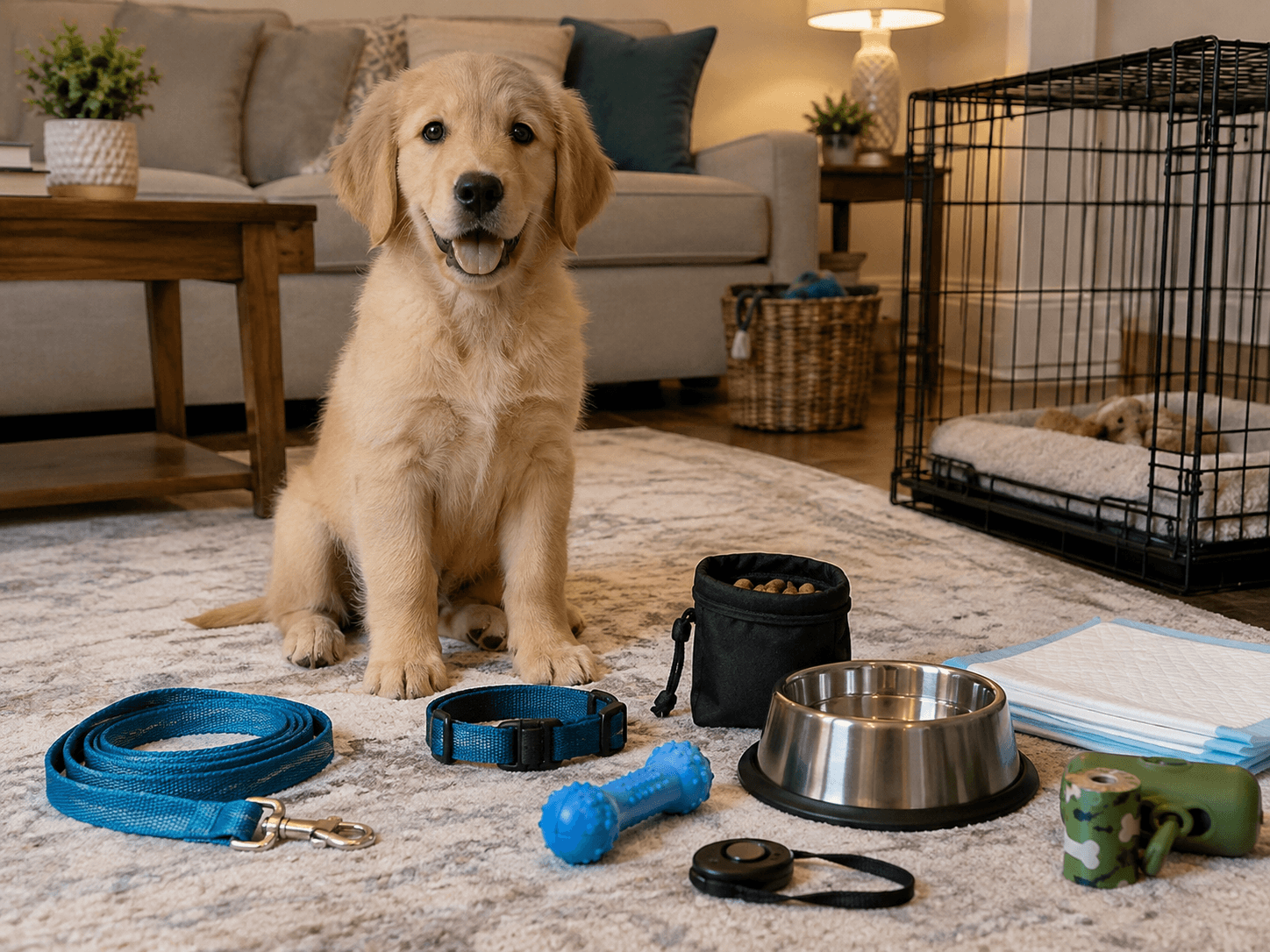
A practical puppy training timeline gives you a clear roadmap for the foundational skills to work on between 8 weeks and 6 months of age. Early experiences during the first months of life can influence how a puppy responds to people, animals, environments, and training. Puppy training can begin as soon as your puppy comes home, often around 8 weeks old, so planning can start before your new pup walks through the door.
This guide covers socialization, basic obedience, house training, crate training, and foundational behavior skills using reward-based training and structured routines. It’s designed for new puppy owners in the Albany, NY region who want practical direction without guesswork. Puppy training encompasses foundational house manners, early socialization, and obedience cues, while a successful training plan also includes safety management and consistent routines.
Owners who want additional professional guidance can also review Albany’s puppy training options.
The essential first steps are to begin crate training and potty training on day one, start safe socialization immediately, and introduce simple cues such as “sit” and “come” as soon as your puppy is comfortable and able to focus. Leash skills can also begin gradually in a controlled environment. Training a puppy requires consistency, patience, and positive reinforcement.
By following this timeline, you can work toward:
- A puppy that is increasingly comfortable around people, appropriate dogs, and new environments
- A reliable foundation in basic cues such as sit, stay, come, and down
- Consistent house-training habits with fewer accidents over time
- Better leash manners and age-appropriate impulse control
- Early management of common puppy behaviors such as biting, barking, chewing, and difficulty being alone
Understanding Critical Puppy Development Periods
Your puppy’s behavior and learning develop quickly during the first months of life. The first three months are considered the primary socialization period, although learning and social development continue throughout puppyhood and adulthood. Rather than treating exact ages as hard deadlines, use developmental stages as flexible guides for deciding what to prioritize.
Early Socialization: The First Three Months
From the time your puppy comes home through roughly 12 to 14 weeks, prioritize safe, positive exposure to different people, sounds, surfaces, handling, environments, and appropriate dogs. Early socialization can help reduce the risk of later fear and avoidance, and socialization plays an important role in behavioral development.
UC Davis notes that dogs can be socialized at any age, but the process generally becomes slower after about 14 weeks. Starting early with brief, controlled, positive experiences gives your puppy opportunities to build confidence without overwhelming them.
Managing Fear During Early Puppyhood
Puppies can become more sensitive to unfamiliar experiences during parts of early puppyhood. Some puppy-development guidance describes a first fear period around 8 to 11 weeks, but the exact timing and intensity vary by individual puppy. Avoid forcing your puppy into frightening situations, and do not treat a fixed age range as a deadline for overcoming fear.
Continue introducing new experiences gradually and pair them with treats, play, praise, or comfortable distance when appropriate. Watch your puppy’s body language for signs of stress and reduce the intensity of an experience if your puppy appears overwhelmed. If fear is intense, persistent, or worsening, discuss it with your veterinarian or an appropriate behavior professional.
Essential Training Foundations
The developmental stages above tell you when to prioritize certain experiences. The foundations below tell you what to work on. Each skill contributes to your puppy’s household manners, communication, safety, and confidence.
House Training and Crate Setup
Potty training can take several months to complete, so establishing a consistent potty schedule is important from day one. The first thing to do when you bring your puppy home is to designate a specific elimination area outdoors and take your pup there after naps, meals, and play sessions. Supervision is crucial for reducing accidents indoors during potty training. Putting “go potty” on cue can save time during training, and owners who choose to use pee pads may find them helpful for temporary indoor management during Albany’s cold winter months.
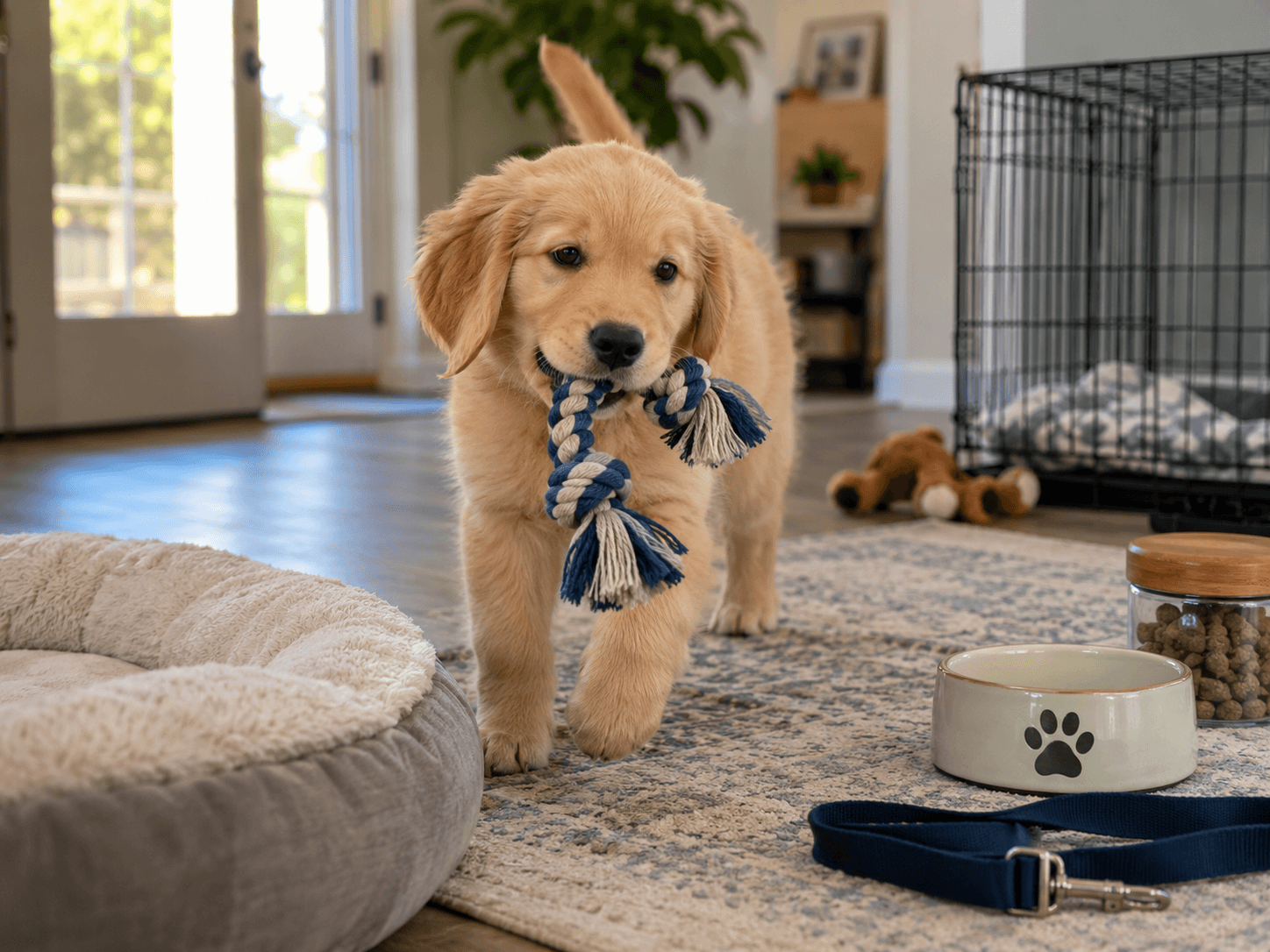
Crate training can support both potty and sleep routines. Start with positive associations from day one: feed meals in or near the crate, make the space comfortable and safe, and initially allow your puppy to explore it with the door open. Crate games can help puppies become comfortable with their crate. The crate should allow your puppy to stand, turn around, and lie down comfortably without being excessively large during housetraining. Alone-time and bathroom needs vary by age and individual puppy, so build duration gradually rather than relying on one rigid formula.
Basic Obedience Commands
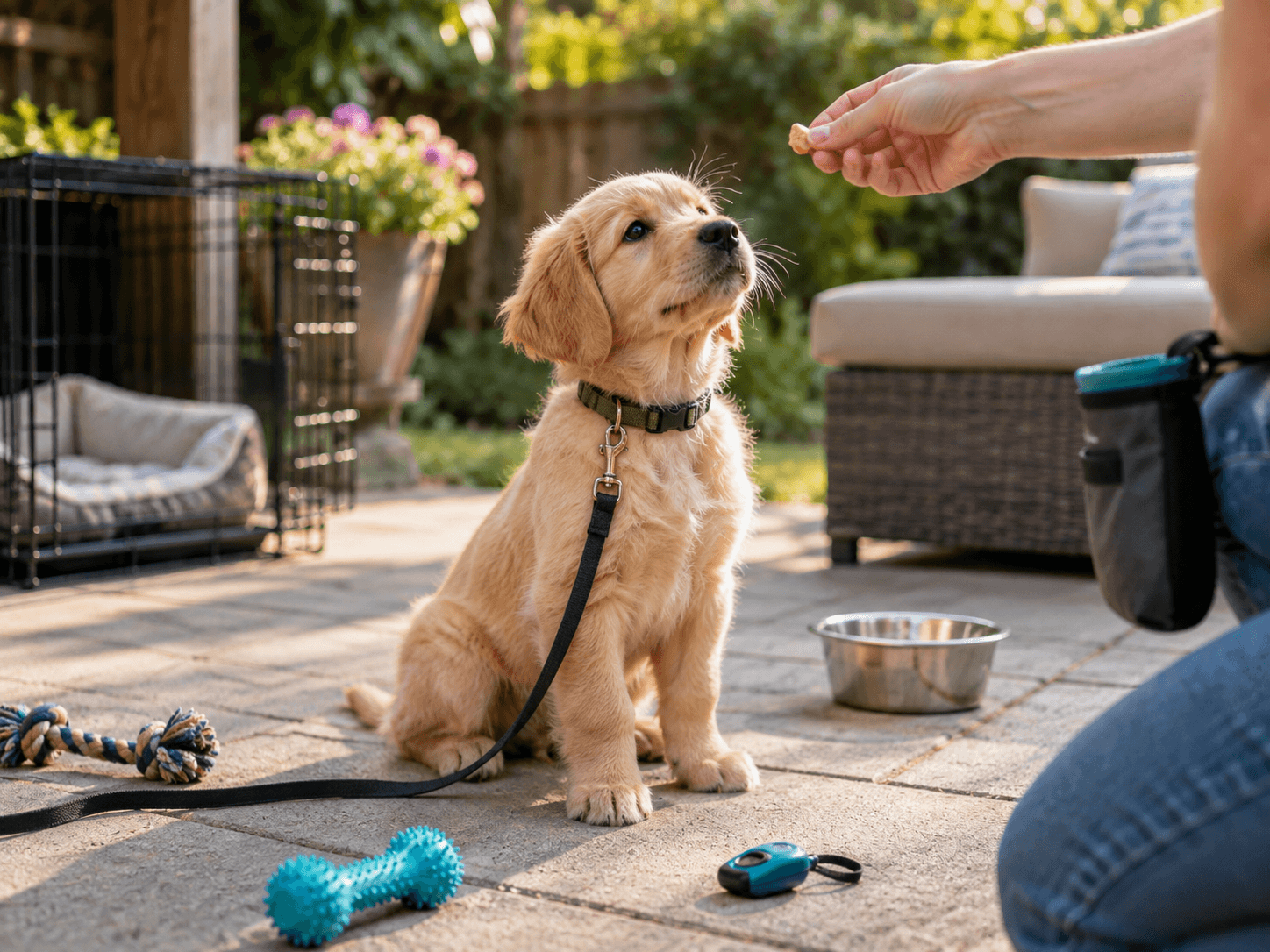
Basic cues can include “sit,” “stay,” “come,” and “down.” You can begin introducing simple behaviors as soon as your puppy comes home and is comfortable enough to engage. Use reward-based methods and keep sessions brief—a few minutes may be enough for a very young puppy, with longer sessions only while your puppy remains engaged.
As your puppy matures, these early skills can provide the foundation for more structured dog obedience training in Albany.
Impulse-control exercises can begin with simple behaviors such as waiting briefly or sitting before getting something your puppy wants. Use treats, praise, toys, or play to reinforce desired responses. Teaching “drop it” and “leave it” can also improve safety. Recall should be rewarded generously because coming when called is an important safety skill. Continue developing these skills throughout puppyhood rather than expecting every puppy to reach mastery by a fixed age.
Socialization Protocol
Systematic socialization means giving your puppy varied, positive experiences with people of different ages and appearances, appropriate dogs, household and outdoor sounds, different surfaces, handling, transportation, and new environments. There is no need to chase an arbitrary numerical quota. The goal is to create positive, manageable experiences while watching your puppy’s response.
Before your puppy’s vaccination series is complete, follow your veterinarian’s guidance and choose lower-risk forms of exposure. AVSAB’s puppy socialization guidance supports appropriately managed puppy classes with vaccination and sanitation precautions. Visits with known healthy dogs and controlled exposure to the world can also provide valuable experiences. Avoid highly trafficked areas used by dogs of unknown health or vaccination status.
Regular handling of the paws, ears, and mouth can also prepare puppies for vet visits and grooming. Socialization should continue beyond 16 weeks and into adulthood.
Weekly Training Schedule and Implementation
With your foundation skills established, a structured weekly schedule can help you maintain consistent progress without trying to teach too much too quickly. Treat the timeline as a flexible guide rather than a series of strict developmental deadlines.
Week-by-Week Training Progression
Every puppy develops at a different pace. Breed characteristics, temperament, previous experiences, health, and individual confidence levels can all affect progress. Some puppies need more repetition or structure, while others benefit from additional confidence-building time. Adapt this schedule to your puppy’s needs:
- Weeks 8–10: Focus on helping your puppy settle into their new home. Prioritize crate comfort, house-training routines, name recognition, gentle handling, and safe socialization. Keep formal training sessions very short and positive.
- Weeks 10–12: Continue socialization while introducing or reinforcing cues such as “sit,” “down,” “come,” and “leave it.” Begin supervised leash practice and gradually expand exposure to appropriate environments while following your veterinarian’s health guidance.
- Weeks 12–14: Gradually add duration and mild distractions to familiar cues. Practice recall in secure areas or with appropriate leash or long-line management. Continue handling exercises, loose-leash foundations, crate training, and short periods of comfortable alone time.
- Weeks 14–16: Continue building obedience around manageable distractions. Practice short stays, leash manners, calm behavior, and age-appropriate impulse control. Keep socialization positive and ongoing rather than treating 16 weeks as the end of the process.
- Weeks 16–24: Continue proofing familiar skills in progressively more distracting environments. Practice recall with safe management, strengthen leash manners, and work on jumping, chewing, greetings, and calm settling as needed. Off-leash activity should occur only where it is legal and safe and where your puppy’s training and the environment make it appropriate.
Young puppies need plenty of sleep, so always balance training with adequate rest, play, and naps. Good training develops through many short, successful interactions rather than marathon sessions. Keep training enjoyable and adjust the difficulty when your puppy becomes tired, distracted, or frustrated.
Training Method Guidance
Training methods can vary among trainers and programs, so it is important to understand what methods and tools are being used when comparing puppy training options.
The American Veterinary Society of Animal Behavior’s current humane dog training guidance recommends reward-based methods for dog training and behavior modification and advises against aversive methods. Research cited by the organization also identifies welfare concerns associated with aversive-based approaches.
For a young puppy, focus on rewarding desired behavior, preventing unwanted behavior through management, maintaining predictable routines, and increasing difficulty gradually. If you work with a professional trainer, ask how the training plan and equipment are selected for your puppy’s age, health, temperament, and specific needs.
Common Puppy Training Challenges and Solutions
Nearly every puppy owner encounters challenges during the first six months of puppyhood. A 2026 reanalysis of behavioral data from 43,517 U.S. dogs estimated that moderate-to-severe fear or anxiety ranged from 14.1% to 28.2%, depending on the specific fear category measured, while 9.3% showed separation-related behavior at the study’s defined threshold. The researchers also cautioned that classifications of behavior problems depend partly on how owners perceive and report behavior.
Early positive socialization and training can help reduce the risk of later behavior problems, but no training plan can guarantee prevention.
House Training Accidents and Setbacks
House training may take several months to complete. Accidents are normal during the early stages because your puppy is still developing physically and learning the household routine. Expect occasional setbacks, especially after schedule or environmental changes. Take your puppy outside frequently while awake, supervise closely indoors, and use an appropriate crate or puppy-safe confinement area when direct supervision is not possible. Reward successful outdoor elimination immediately.
If accidents suddenly increase, are accompanied by signs of illness or discomfort, or remain concerning despite a consistent routine, consult your veterinarian. For a detailed daily approach, see our guide on how to potty train a puppy with a daily routine.
Puppy Biting and Mouthing
Biting and mouthing are developmentally normal because puppies explore and play with their mouths. The initial goal is not necessarily to eliminate every instance of mouthing but to teach appropriate play and help your puppy develop better control.
If your puppy bites too hard, calmly pause the interaction for a few seconds and redirect them to an appropriate chew or toy. Resume interaction once your puppy is calmer. Consistency from everyone in the household is important. If nipping becomes intense, appears fearful or aggressive, or does not improve with consistent management, professional guidance through puppy biting training may help.
Leash Pulling and Walking Issues
Start leash training early in a low-distraction environment. Reward your puppy for staying near you and for creating slack in the leash. If the leash becomes tight, pause or change direction rather than allowing pulling to become the way your puppy reaches something they want.
Use secure, properly fitted equipment appropriate for your puppy’s size and development, and avoid relying on retractable leashes for early loose-leash training. Practice in progressively more distracting environments as your puppy develops the ability to focus. For additional technique guidance, review these effective tips for training a dog to walk on leash without pulling.
Separation Anxiety and Excessive Barking
Learning to spend short periods alone is an important puppy skill, but separation anxiety has multiple contributing factors and is not simply caused by an owner spending too much time with a puppy. Begin with very short, comfortable separations and gradually increase the duration while your puppy remains relaxed. Safe enrichment can help some puppies settle, but do not assume barking during separation is merely attention-seeking.
If your puppy shows sustained distress, frantic escape attempts, destructive behavior around exits, excessive salivation, or an inability to settle when alone, consult your veterinarian or an appropriate behavior professional. Separation-related distress is typically addressed through individualized management and gradual behavior modification. A board-and-train stay should not be presented as a general treatment for separation anxiety.
Conclusion and Next Steps
Puppy-proofing your home supports safety and helps prevent your puppy from repeatedly practicing unwanted behavior. This timeline gives you a structured way to build house manners, confidence, and foundational skills from the beginning. The key takeaway is that early, consistent training between 8 weeks and 6 months can provide a strong foundation, but development continues well beyond this period.
Start by assessing where your puppy currently falls on the timeline:
- Identify your puppy’s current developmental stage and focus on the skills that are most appropriate now.
- Establish or strengthen your house-training, crate-training, socialization, and basic obedience routines.
- Consider professional puppy training in Albany if you are struggling with a specific behavior or need help creating an individualized training plan. If your puppy shows persistent fear or distress, consult your veterinarian or an appropriate behavior professional.
As your puppy matures, you can continue building recall, leash skills, distraction training, and more advanced obedience. Why starting puppy training early sets your dog up for a lifetime of success offers additional guidance for continuing that foundation as your dog grows.
Albany-area owners who want to discuss their dog’s individual training needs can also contact the Albany training team.
Frequently Asked Questions
When should I start training my puppy?
You can begin simple training as soon as your puppy comes home, often around 8 weeks old. Start with name recognition, house-training routines, crate comfort, handling, and easy reward-based behaviors.
How long should puppy training sessions last?
Keep training sessions short and frequent. A few minutes may be enough for a very young puppy, while some puppies can remain engaged for 5 to 10 minutes. Stop or take a break when your puppy becomes tired, distracted, or frustrated.
What is the best way to potty train a puppy?
Establish a consistent schedule for taking your puppy outside, supervise closely indoors, and reward your puppy immediately after they eliminate in the correct location. Frequent opportunities and consistent management are more effective than punishing accidents.
How do I socialize my puppy safely?
Introduce your puppy gradually to different people, sounds, surfaces, environments, and appropriate dogs without overwhelming them. Before the vaccination series is complete, follow your veterinarian’s guidance, use controlled lower-risk environments, and avoid highly trafficked dog areas where health status is unknown. The AVSAB puppy socialization statement provides additional guidance on balancing early socialization with disease-risk precautions.
How long can I leave my puppy alone?
Alone-time tolerance varies by age, bladder capacity, routine, and the individual puppy. Very young puppies need frequent bathroom and social breaks. Start with short, comfortable periods and increase them gradually rather than relying on a strict one-hour-per-month rule.
What should I do if my puppy bites or nips?
Calmly interrupt overly hard biting, briefly pause interaction if needed, and redirect your puppy to an appropriate chew or toy. Reinforce calmer play consistently. Seek professional guidance if biting becomes unusually intense, fearful, aggressive, or difficult to manage.