
Introduction
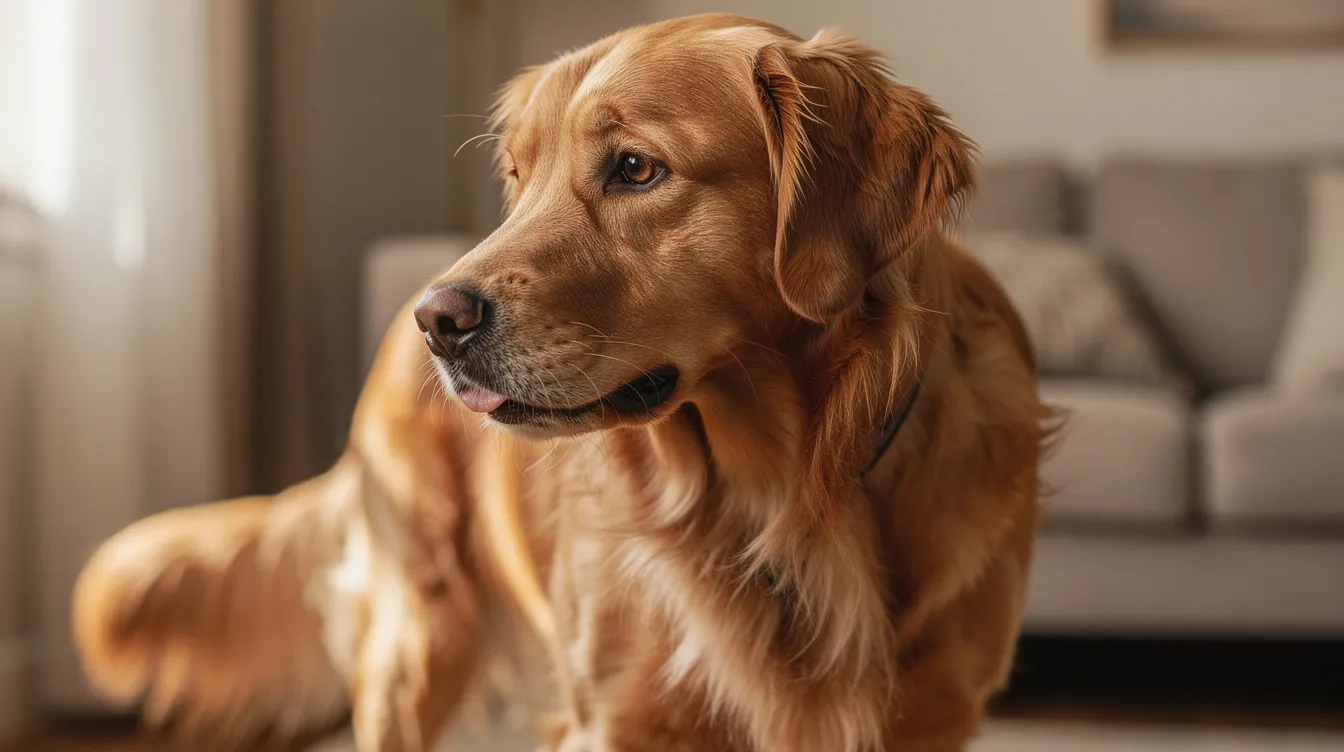
Dog calming signals are subtle body language cues that can appear when dogs experience stress, uncertainty, social pressure, or a desire to avoid conflict. Behaviors such as yawning, lip licking, turning the head away, sniffing the ground, and changing body position can provide useful clues about how a dog is responding to a situation. Understanding these behaviors can help you communicate more effectively with your dog and recognize potential discomfort before an interaction becomes more intense.
This guide covers how to identify, interpret, and respond to canine calming signals in everyday life and during training sessions. Whether you’re a first-time dog owner in the Albany, NY area, someone considering professional dog training, or simply among the many dog lovers wanting to deepen your bond with your companion, this resource provides a practical framework you can use. We focus on observable behaviors, their context-dependent meanings, and how to apply this knowledge whether you’re working on your own or alongside a professional dog trainer.
Here’s the direct answer: dogs use a wide range of body language behaviors that can communicate discomfort, stress, uncertainty, or peaceful intentions during social interactions. Common examples include yawning, lip licking, turning the head away, freezing, and changing body position. Many of these behaviors are commonly described as calming or appeasement signals, but their meaning depends heavily on context. Recognizing these signals can help owners respond earlier to signs of discomfort and make more informed decisions during training and everyday interactions.
By the end of this guide, you will be able to:
- Recognize common calming signals and understand what they may indicate
- Distinguish between stress-related signals and normal behaviors using contextual clues
- Adjust your training approach based on real-time canine body language
- Respond appropriately to early signs of discomfort before behavior escalates
- Build clearer communication with your dog through better observation
Understanding Canine Communication Signals
Dogs use a sophisticated combination of body posture, facial expression, movement, vocalization, and scent to communicate with other dogs and humans. Their communication has been shaped by both their evolutionary history and thousands of years of domestication alongside people. Today, subtle behaviors such as gaze aversion, lip licking, head turning, freezing, and changes in body posture can provide useful information about how a dog is responding to a social interaction or training situation.
Because canine body language is highly context-dependent, no single behavior should automatically be interpreted as stress, fear, or peaceful intent. Instead, owners should consider the dog’s complete body posture, surrounding environment, recent events, and changes from the dog’s normal behavior.
What Are Calming Signals?
Calming signals are facial gestures, body postures, movements, and displacement behaviors that may appear when dogs experience social pressure, uncertainty, or stress. Depending on the context, some of these behaviors may communicate non-threatening intentions or help de-escalate an interaction.
Because many of the same behaviors can occur for other reasons, they should always be interpreted alongside the dog’s overall body language and the situation in which they appear. A yawn, for example, could indicate tiredness in one situation and appear alongside other signs of discomfort in another.
The term “calming signals” was popularized by Norwegian dog trainer and author Turid Rugaas through her observations of canine interactions and her book On Talking Terms with Dogs: Calming Signals. Rugaas described a broad range of behaviors she interpreted as ways dogs may reduce social tension or communicate peaceful intentions. Her work helped bring greater attention to subtle canine body language, while later research has examined several of these behaviors and reinforced the importance of interpreting them in context.
Understanding calming signals can provide useful information during obedience training and behavior modification. When a trainer notices possible signs of stress or uncertainty, they can consider the dog’s overall body language and adjust the pace, environment, distance, or training approach when appropriate. This helps keep training responsive to the individual dog rather than relying on a one-size-fits-all interpretation of behavior.
Why Dogs Use Calming Signals
Some calming or appeasement behaviors appear to play a role in social interactions between dogs. Research examining dog-to-dog communication has found that behaviors such as looking away, lip licking, and yawning can occur during social encounters and may sometimes be associated with a reduction in aggressive behavior.
However, scientists continue to study exactly how individual behaviors function, and not every signal has one universal meaning. Individual temperament, familiarity between dogs, distance, environment, and previous experiences can all influence what a particular behavior means.
Several behaviors commonly classified as calming signals are also associated with stress or emotional arousal. For example, yawning, lip licking, gaze aversion, and freezing may appear when a dog is uncomfortable or uncertain, but each behavior can also have other explanations. A yawn may simply reflect tiredness, while lip licking can occur around food or because of physical discomfort. This is why context and the dog’s complete behavioral picture are essential.
Social context can influence these behaviors as well. Dogs may change their facial expressions, movements, and other signals depending on whether they are interacting with another dog, a familiar person, or an unfamiliar individual. Rather than viewing each signal as a fixed word in a canine language, it is more useful to treat body language as part of a larger pattern.
Recognizing how and why dogs communicate through these behaviors is the foundation for reading them accurately, which brings us to the specific signals you need to know.
Common Dog Calming Signals and Their Meanings
With a foundational understanding of canine communication, you can begin identifying the observable behaviors that may appear during social interactions, unfamiliar situations, and dog training sessions.
Visual Calming Signals
Eye-related behaviors can provide important clues about a dog’s emotional state. “Whale eye,” where the whites of a dog’s eyes become visible as the dog turns its head or eyes away, may appear when a dog is uncomfortable, tense, or trying to monitor something without facing it directly. Changes such as squinting, blinking, or gaze aversion can also occur during social interactions.
When one dog looks away from another, the behavior may reduce the intensity of direct eye contact. When your dog avoids looking directly at you during a stressful interaction, consider what else is happening rather than immediately interpreting the behavior as defiance.
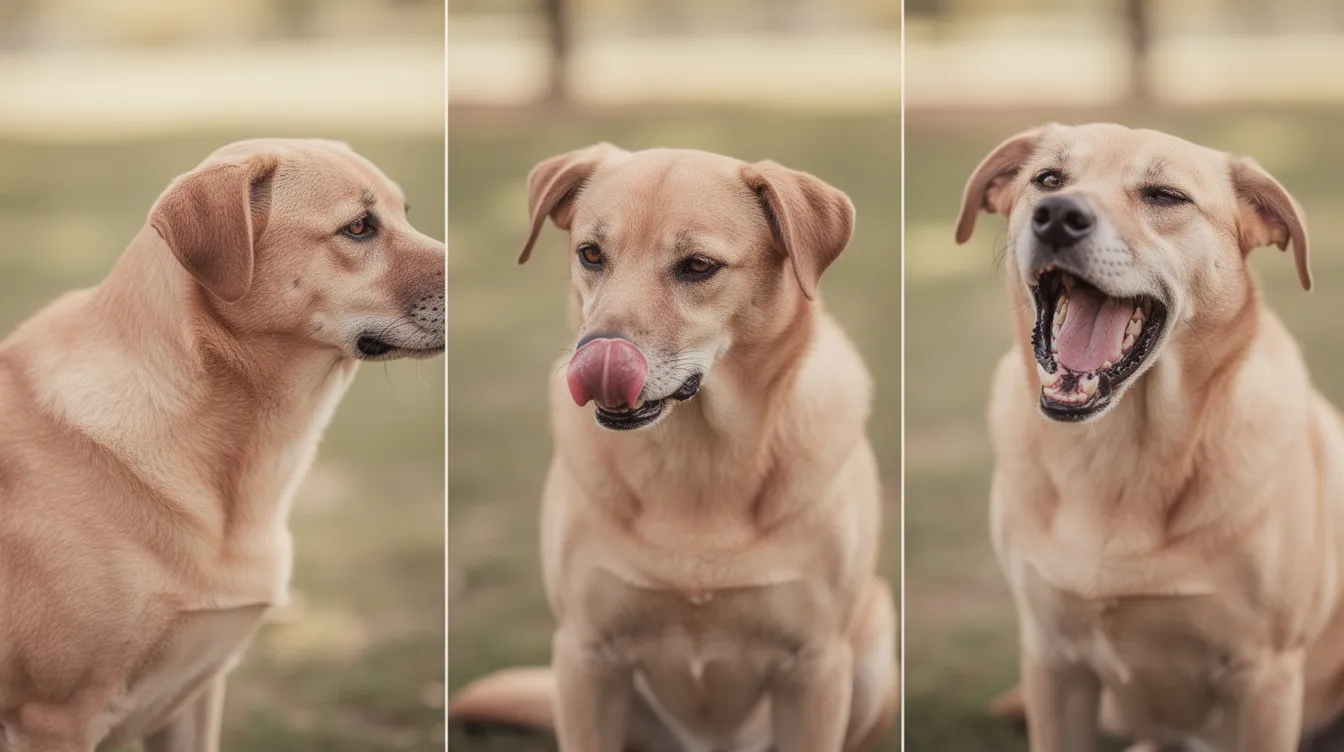
Head and facial signals are also commonly observed. Turning the head away, licking the lips, nose licking, or producing a quick tongue flick can appear when a dog experiences uncertainty or social pressure. These same behaviors can also occur for ordinary reasons, including eating, anticipation of food, physical discomfort, or fatigue.
Yawning is another good example of why context matters. A dog yawning while settling down for bed is likely tired. Repeated yawning combined with a tense posture, attempts to move away, or other changes in body language during an unfamiliar interaction deserves closer attention.
Body positioning rounds out the visual category. A dog may turn sideways, turn its back, lower its body posture, lean away, or freeze. Freezing or sudden stiffening can indicate uncertainty or discomfort, particularly when it occurs alongside other changes in posture or attempts to avoid interaction.
Behavioral Calming Signals
Movement-based behaviors can also provide clues about a dog’s emotional state. Slowing down, curving an approach, changing direction, or altering body posture may appear during social interactions. Behaviors such as play bows can also have different meanings depending on the surrounding interaction.
Rather than assigning one fixed interpretation to a movement, observe what happened immediately before the behavior and what the dog does next.
Displacement behaviors can include sniffing, scratching, licking, yawning, shaking off, or other actions that appear somewhat out of place for the immediate situation. These behaviors may occur when a dog is experiencing uncertainty, conflict, or arousal, but they can also have completely ordinary explanations.
A dog sniffing intensely while passing another dog, for example, might be exploring an interesting scent, responding to the social situation, or doing both. Avoid assuming that every sudden sniff is deliberate communication.
Interaction-based behaviors can include sitting or lying down, lifting one paw, increasing distance, slowing an approach, or turning away. Submissive urination may also occur in some dogs during highly emotional or socially challenging situations.
If a dog suddenly sits during an off-leash recall exercise, don’t automatically label the behavior as stubbornness or stress. Look at the surrounding environment, the dog’s posture, previous repetitions, distractions, and other signals before deciding how to respond.
Contextual Signals
Context is crucial for interpreting dog calming signals accurately. The same behavior, including yawning, sniffing, licking, or stretching, can mean completely different things depending on the dog’s environment, recent experiences, physical condition, and social situation.
A yawn at bedtime may simply indicate tiredness. Repeated yawning while someone unfamiliar leans over the dog may deserve more attention, especially when combined with turning away, tense posture, or attempts to increase distance.
Distance can also affect a dog’s response. A dog that appears relatively comfortable when a stranger enters a room may begin lip licking, turning away, stiffening, or moving away as that person approaches. The important detail is not simply the presence of one behavior, but how the dog’s overall body language changes as the interaction develops.
Identifying clusters of body language signals can provide clearer insight than relying on a single behavior. One lip lick might be incidental, while repeated lip licking combined with head turning, freezing, a tense posture, or attempts to increase distance deserves closer attention.
Multiple changes in body language may indicate increasing discomfort, but the number of signals alone does not determine a dog’s exact stress level. The dog’s individual behavior, intensity of the signals, and surrounding situation all matter.
Understanding these patterns prepares you to apply calming signal knowledge where it matters most: during active training and daily interactions.
Applying Calming Signal Knowledge in Dog Training
Recognizing canine body language can provide useful information during training. Trainers and owners can use changes in posture, facial expression, movement, and attention to evaluate how a dog is responding to a particular exercise or environment.
Albany Off Leash K9 Training uses a balanced and personalized approach that can include treat training, clicker training, and e-collar training depending on the dog and program. As with any structured training approach, observing the individual dog’s responses can help determine when the pace, environment, or training setup needs adjustment.
Signal Recognition During Training Sessions
Behaviors commonly described as calming or stress signals may appear during training when dogs encounter new demands, unfamiliar environments, distractions, or increased difficulty. Recognizing changes in body language gives trainers and owners additional information when deciding how to proceed.
Here’s a practical process for identifying possible stress signals during training:
- Establish a behavioral baseline: Before active training begins, note your dog’s normal posture, facial expression, tail position, ear carriage, and movement patterns when relaxed.
- Monitor for subtle changes: Watch for changes in facial expression and body posture, including repeated lip licking, yawning, gaze aversion, stiffening, or attempts to increase distance.
- Note changes in movement patterns: Sudden sniffing, scratching, shaking off, slowing down, or disengaging can be worth noting, particularly when several behaviors appear together.
- Assess the complete situation: Consider the intensity and combination of behaviors, environmental distractions, physical distance from triggers, and how quickly your dog returns to its normal behavior.
Training Environment Applications
Different behaviors may call for different responses depending on their context. The table below offers a practical framework without assigning fixed stress levels to individual signals:
| Behavior Observed | Possible Interpretation | Practical Response |
| Single lip lick or yawn | Could reflect mild stress, tiredness, anticipation, food-related behavior, or another cause | Observe what happens next and look for additional changes |
| Head turning or looking away | May indicate avoidance, uncertainty, distraction, or an attempt to reduce social pressure | Avoid forcing interaction and reassess the situation |
| Freezing, stiffening, or whale eye | Can indicate significant discomfort or uncertainty, especially when signs occur together | Create more space and reassess the exercise |
| Several repeated signals with attempts to retreat | May indicate that the situation is becoming too difficult or uncomfortable | Reduce intensity, increase distance, or pause |
| Growling, snapping, or escalating defensive behavior | Indicates a situation that requires careful management | Stop the interaction, create safe distance, and consider professional guidance |
The key is to observe first and respond to the complete behavioral picture. Not every yawn, lip lick, or head turn requires ending a training session. At the same time, repeated signs of discomfort should not simply be ignored.
A professional trainer can evaluate these behaviors alongside the dog’s training history, environment, temperament, and response to exercises before deciding whether to continue, simplify the task, increase distance, or change the approach.
Human body language also influences dog-human interactions. Relaxed movements, turning slightly sideways, avoiding looming over a nervous dog, and giving adequate space may reduce social pressure for some dogs. Dogs are highly responsive to human visual, vocal, and other environmental cues, but there is limited evidence that deliberately copying a particular behavior such as yawning functions as a reliable calming signal from humans to dogs.
Focus less on trying to “speak dog” by copying individual behaviors and more on creating clear, predictable, and appropriately paced interactions.
Common Challenges and Solutions
Even with a solid understanding of canine calming signals, dog owners can encounter predictable challenges when applying this knowledge. Misinterpretation can lead owners either to overlook genuine discomfort or to label completely normal behaviors as stress.
Misreading Normal Behaviors as Stress Signals
Not every yawn means anxiety, and not every instance of sniffing the ground signals distress. The distinction lies in context, timing, frequency, and the complete behavioral picture.
A dog that yawns after waking from a nap is probably tired. A dog that yawns repeatedly while someone leans over it, while also turning away and trying to create distance, may be responding to social pressure.
Ask yourself: does this behavior fit the situation, or does it seem unusual for this dog at this moment?
Many dogs yawn, sniff, scratch, lick, or stretch as part of normal routines. Overinterpreting isolated behaviors can lead to unnecessary interventions. Instead, look for changes from the dog’s normal behavior and clusters of signals that appear in response to a particular situation.
Missing Subtle Early Warning Signs
Defensive or aggressive behavior can sometimes be preceded by subtle signs of stress, avoidance, or discomfort, but there is no universal sequence that every dog follows.
One dog may look away or freeze before growling. Another may try to retreat, stiffen, vocalize, or show a completely different combination of behaviors. Some dogs may escalate more rapidly than others.
Paying attention to early changes in body language can help owners respond before a situation becomes more intense, but every dog and situation should be evaluated individually.
The solution is proactive observation and environmental management. During walks or social situations, avoid allowing unfamiliar people or dogs to crowd your dog when signs of discomfort are appearing. In new environments, watch for repeated changes such as lip licking, gaze aversion, stiffening, freezing, or attempts to increase distance, and adjust the situation when needed.
For dogs with persistent reactivity, aggression, or intense anxiety, Albany Off Leash K9 Training offers Aggression-Focused Lessons and a 3-Week Behavioral Modification Board & Train program. These specialized options combine obedience work with strategies for managing and improving challenging behavior.
Responding Inappropriately to Calming Signals
One mistake dog owners can make is continuing to force an interaction when a dog is showing clear signs of discomfort. Hugging a dog that repeatedly turns away, pulling a cautious dog toward an unfamiliar dog it is trying to avoid, or continuing an interaction while the dog becomes increasingly stiff can add social pressure.
Continuing to apply pressure when a dog is showing clear signs of discomfort may increase stress and, in some situations, increase the risk of defensive behavior. Giving the dog appropriate space and reassessing the interaction is generally safer than forcing continued contact.
The solution is to pay attention to your dog’s body language while considering the full context. If your dog repeatedly turns away from another dog, you don’t need to force the greeting. If your dog freezes or becomes tense during a training exercise, assess what changed before deciding how to continue.
Responding thoughtfully to canine body language can support clearer communication between dogs and their owners. It also gives you more information for determining when to continue an interaction, reduce pressure, increase distance, or seek professional guidance.
Conclusion and Next Steps
Dog calming signals are one useful part of the larger canine communication picture. Learning to recognize possible signs of stress, uncertainty, avoidance, and peaceful intent can help you better understand how your dog is responding to training and everyday interactions.
The most important lesson is not to memorize a rigid list of signals and assign each behavior one meaning. Instead, learn your dog’s normal behavior, observe changes, consider the surrounding situation, and look at multiple aspects of body language together.
To start applying this knowledge immediately:
- Practice daily observation: Spend 5 to 10 minutes watching your dog in different environments. Note how their posture, facial expression, movement, and attention change depending on what is happening around them.
- Document patterns in a training log: Track behaviors that appear repeatedly, what happened immediately beforehand, and how your dog responded when the environment or interaction changed.
- Consult with a professional dog trainer: If your dog regularly shows signs of significant discomfort, reactivity, aggression, or difficulty coping with everyday situations, professional guidance can help you determine an appropriate training and management plan.
For dogs displaying persistent reactivity or aggression, explore Albany Off Leash K9 Training’s dog aggression training and behavior modification services. Owners looking for help with general manners, communication, recall, and real-world reliability can also learn more about professional dog obedience training in Albany.
Frequently Asked Questions
What are dog calming signals?
Dog calming signals are body language behaviors that may appear when dogs experience stress, uncertainty, social pressure, or a desire to avoid conflict. Examples can include lip licking, looking away, yawning, slowing down, or changing body position, but each behavior should be interpreted in context.
How can I tell if my dog is using calming signals?
Common behaviors associated with calming or appeasement signals include yawning, lip licking, turning the head away, sniffing, slowing down, freezing, and gaze aversion. Look at the dog’s full body language, environment, and changes from their normal behavior rather than relying on one signal alone.
Why is it important to recognize calming signals?
Recognizing changes in your dog’s body language can help you identify possible discomfort or uncertainty earlier. This gives you more information when deciding whether to continue an interaction, give your dog additional space, adjust training, or seek professional help.
Can humans use calming signals to communicate with dogs?
Dogs are sensitive to human body language, so relaxed movements, turning slightly sideways, avoiding looming, and giving adequate space may reduce social pressure for some dogs. However, there is limited scientific evidence that deliberately copying behaviors such as yawning works as a specific calming signal from humans to dogs.
What should I do if my dog shows calming signals during training?
Consider the complete situation before deciding how to respond. If you notice repeated signs of discomfort, increasing tension, freezing, or attempts to move away, reduce the difficulty or intensity, create more space, or pause the exercise. If these behaviors happen frequently or are accompanied by aggression or severe reactivity, professional guidance may be appropriate.