
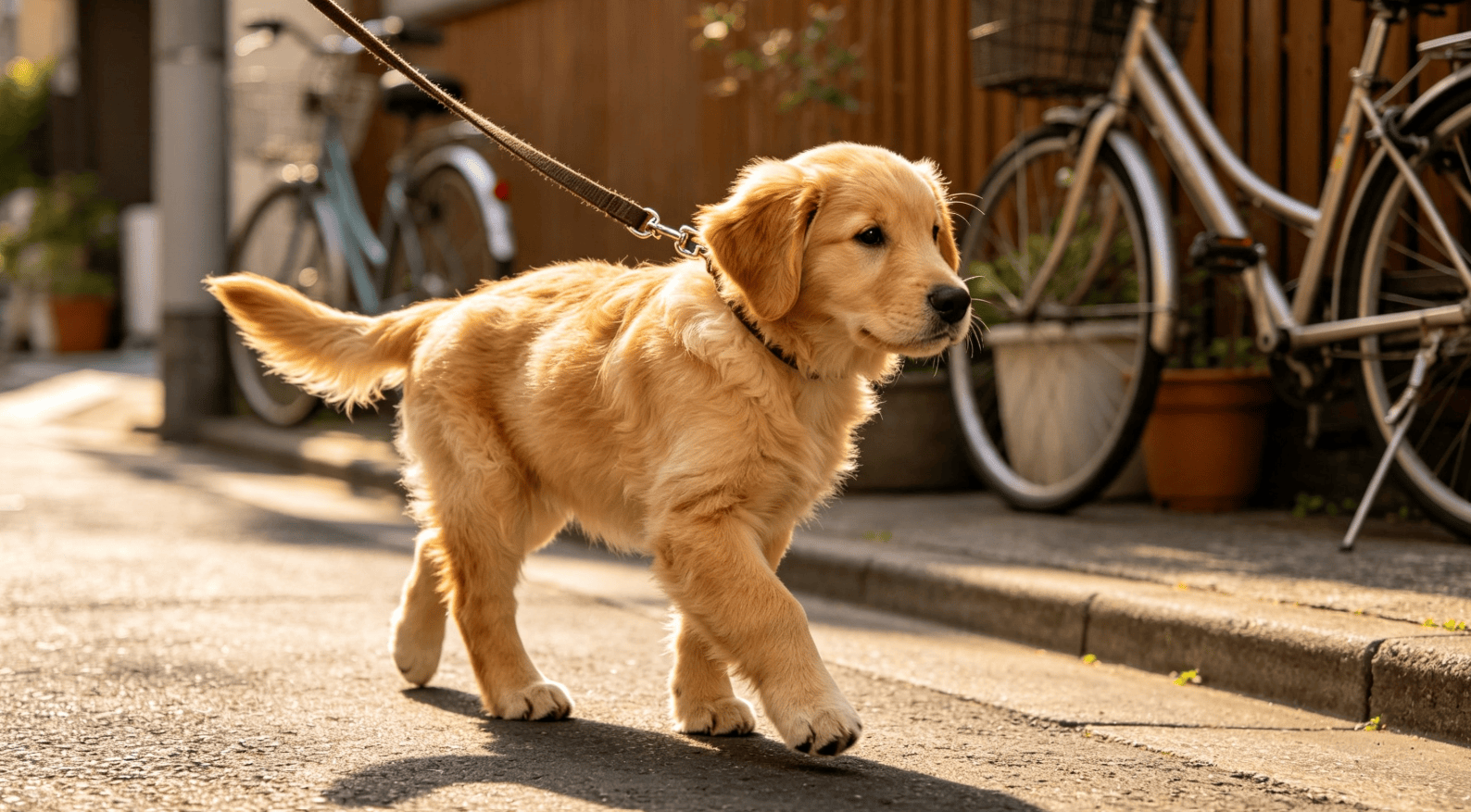
A Calmer Way to Introduce Your Puppy to the World
Bringing a new puppy home comes with a long list of advice, and “get them socialized” is usually at the top of it. It’s good advice, but it’s often misunderstood. Many owners assume socialization means exposing their puppy to as many people, dogs, and places as possible, as quickly as possible. In reality, that approach can backfire.
Puppy socialization isn’t about volume. It’s about helping a young dog build a calm, confident relationship with the world through short, positive experiences. Done well, it shapes a dog who can handle new situations without fear. Done too fast, it can create the very anxiety owners are trying to prevent.
This guide walks through what puppy socialization actually means, why timing matters, and how to introduce new people, dogs, sounds, and places in a way that builds confidence instead of stress.
Key Takeaways
- Puppy socialization is about quality, calm exposure, not the number of new experiences.
- The socialization period (roughly 3 to 16 weeks) is the best window, but learning continues well beyond it.
- Short sessions, distance, and positive reinforcement prevent a puppy from becoming overwhelmed.
- Reading stress signals early lets you adjust before a bad experience sticks.
- Vaccination status affects where it’s safe to expose a puppy to unfamiliar dogs.
- Flooding a puppy with too much too soon is one of the most common and most damaging mistakes.
What Puppy Socialization Really Means
At its core, socialization is teaching a puppy that new people, animals, sounds, surfaces, and environments are nothing to worry about. It’s not about forcing interaction. A puppy can be well socialized simply by observing something new from a safe distance and staying relaxed.
The goal is a puppy who can encounter the unfamiliar (a skateboard, a stranger in a hat, a crowded sidewalk) and respond with curiosity or indifference rather than fear. That outcome depends far more on how an experience feels to the puppy than on how many experiences they’ve had.
This is an important distinction for new owners. A puppy who’s been dragged past twenty strangers and cowered the whole time hasn’t been socialized. A puppy who calmly watched five strangers from across the yard while eating treats has made real progress.
Why Early Puppy Socialization Matters
Puppies go through a developmental window, often described as the socialization period, when their brains are especially open to new experiences without automatically labeling them as threats. This window generally runs from about 3 to 16 weeks of age, though individual puppies vary.
Experiences during this period tend to have a lasting effect on adult temperament. A puppy who has calm, positive exposure to children, other dogs, traffic sounds, and different surfaces during this stage is more likely to grow into an adult dog who takes those same things in stride.
This doesn’t mean the opportunity disappears at 16 weeks. Dogs continue learning and adjusting to new experiences throughout their first year and beyond. But the early months offer the most efficient window for building a foundation of confidence, which is why so many training conversations with new owners start here.
How to Socialize a Puppy Without Overwhelming Them
The safest approach to puppy socialization follows a simple pattern: introduce something new at a low intensity, keep the puppy under threshold (meaning calm and able to think, not reacting out of fear), and end on a positive note.
A few principles make this manageable:
Start with distance. If a puppy is nervous about a passing bicycle, there’s no need to walk toward it. Standing farther away, where the puppy notices it but stays relaxed, is still valuable exposure.
Keep sessions short. Ten to fifteen minutes of focused, positive exposure is usually more effective than an hour-long outing. Puppies tire quickly, and fatigue lowers their ability to cope with anything new.
Let the puppy set the pace. Some puppies want to approach a new person immediately. Others need a minute to observe first. Both are normal. Forcing an interaction before a puppy is ready teaches them that new things happen to them, not that new things are safe to explore.
Pair new experiences with something good. Treats, calm praise, or a favorite toy help a puppy build a positive association with whatever they’re encountering, whether it’s a vacuum cleaner or a friendly stranger.
One new thing at a time. A quiet walk with one new sound is easier to process than a busy street with dogs, children, traffic, and loud noises all at once.
This kind of calm exposure, repeated consistently, does more for long-term puppy confidence than any single big outing ever will.
Safe Socialization Ideas for New Puppies
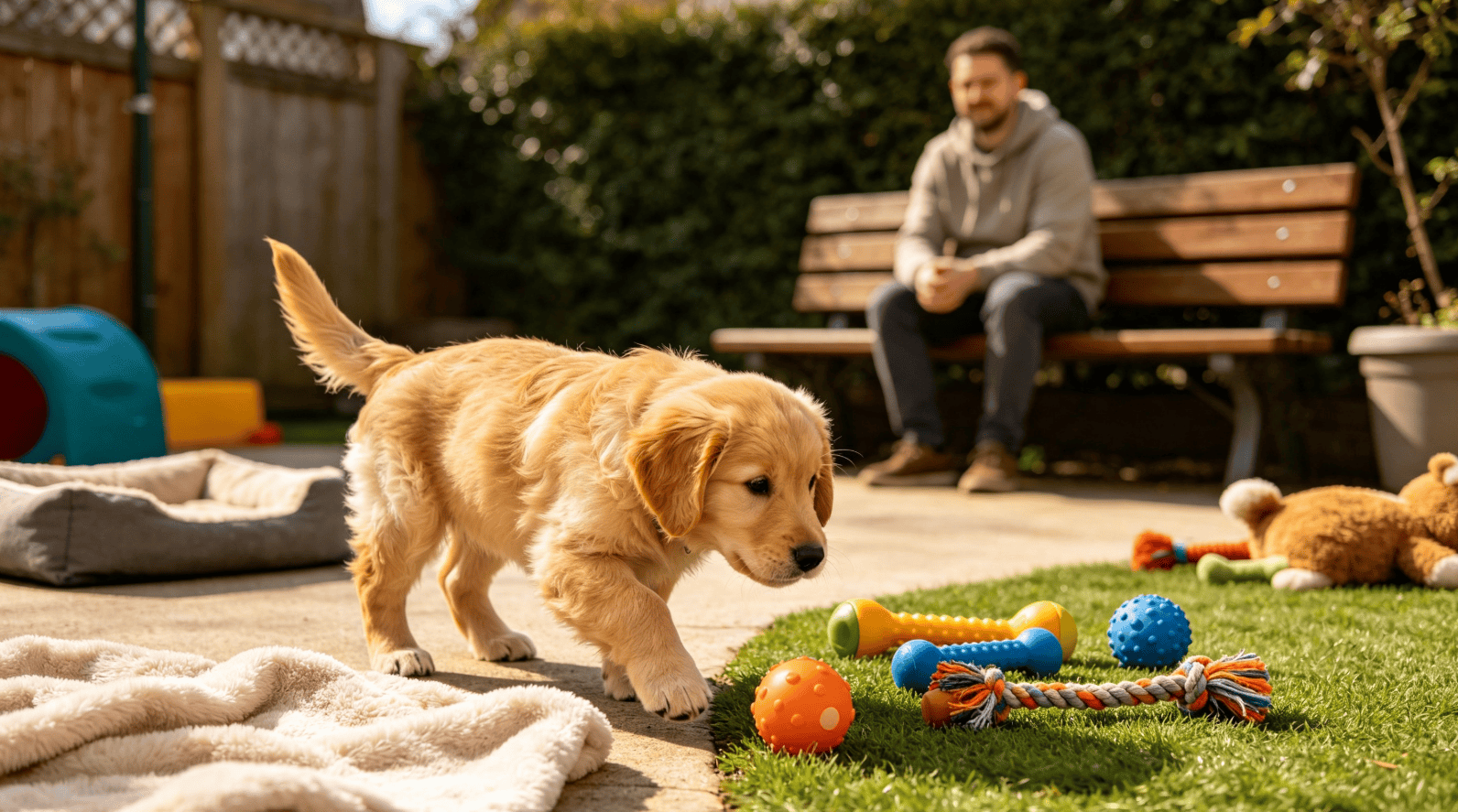
Many of the most useful socialization opportunities happen at home, especially before a puppy has completed their vaccination series. Consider:
- Inviting one or two calm, familiar people over to sit quietly and let the puppy approach on their own terms
- Playing recordings of everyday sounds (doorbells, vacuums, thunder) at a low volume, gradually increasing over several sessions
- Letting the puppy walk on different surfaces around the house and yard, such as tile, grass, gravel, or a wobbly cushion
- Introducing everyday objects like umbrellas, hats, or a rolling suitcase in a relaxed setting
- Handling paws, ears, and mouth gently and rewarding calm behavior, which helps with future grooming and vet visits
- Short car rides to build comfort with motion and travel
Once a veterinarian confirms it’s appropriate, these same principles extend outward, such as sitting on a bench outside a coffee shop or taking a quiet walk through a residential neighborhood.
How to Read Puppy Stress Signals
Recognizing early stress signals is what allows an owner to step back before a puppy becomes overwhelmed. Common signs include:
- Lip licking or yawning outside of mealtime or sleepiness
- Tucked tail or lowered body posture
- Ears pinned back
- Whale eye (showing the whites of the eyes)
- Panting when it isn’t hot or after exertion
- Trying to move away, hide, or turn their head from the trigger
- Freezing in place instead of engaging
None of these signs mean something has gone terribly wrong. They’re simply information. When a puppy shows one or two of these signals, the appropriate response is to add distance, lower the intensity, or end the session on something the puppy already finds comfortable. Pushing forward after these signs appear is often where socialization turns into flooding.
Introducing People, Dogs, Sounds, and New Places
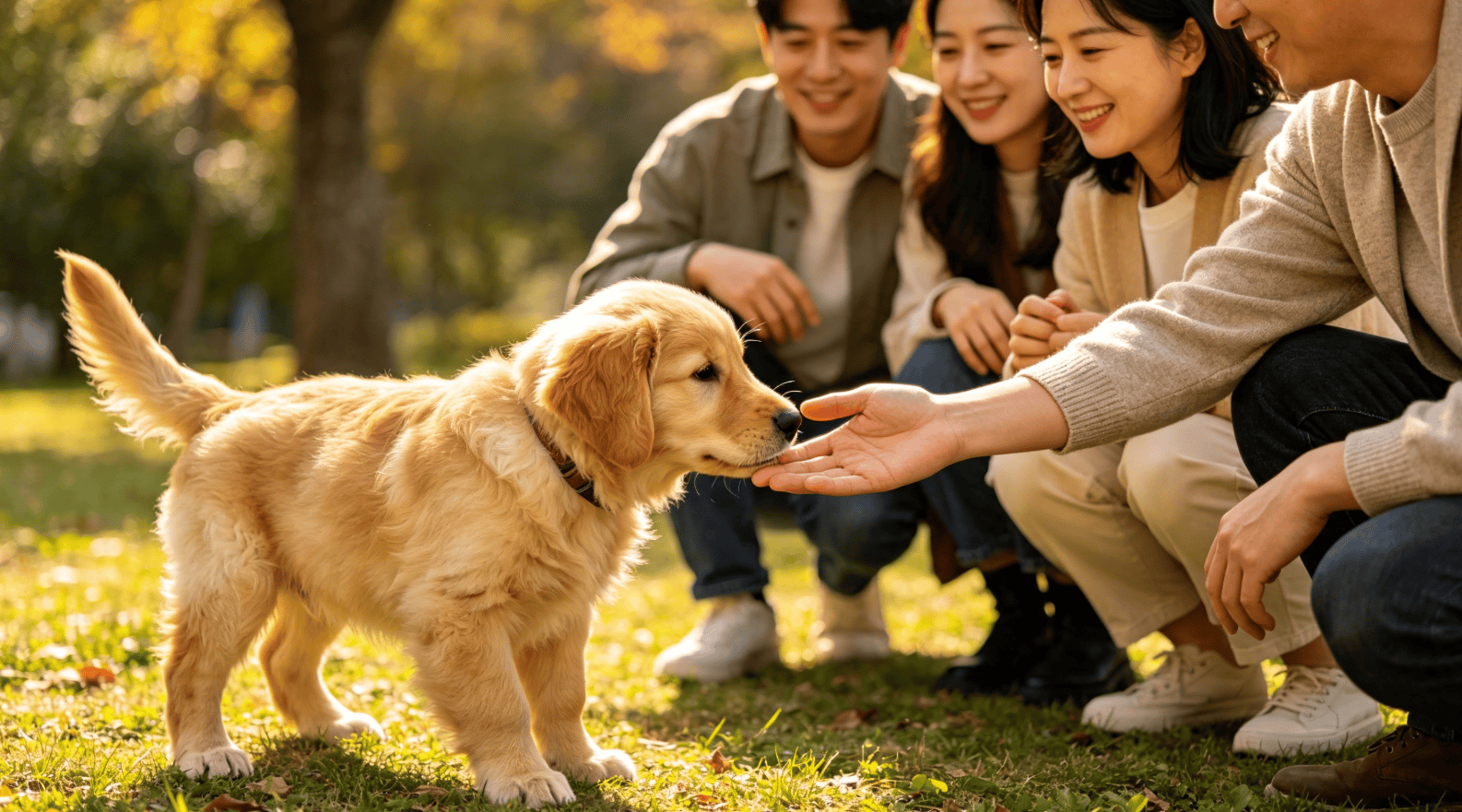
New people. Ask visitors to ignore the puppy at first and let the puppy choose to approach. Kneeling down, avoiding direct eye contact, and offering a treat from an open palm tends to feel less intimidating than a person reaching over a puppy’s head.
Other dogs. Introductions go best one dog at a time, with both dogs on a loose leash and enough space to move away if needed. A calm, well-mannered adult dog is a better first introduction than a group setting. Watch both dogs’ body language throughout, not just the puppy’s.
Sounds. Everyday household sounds and outdoor noises should be introduced gradually and at low volume, then increased only once the puppy stays relaxed. Pairing sound with food is one of the simplest ways to build a positive association.
New places. Rotate locations rather than repeating the same walk daily. A quiet park, a friend’s driveway, or a different block all offer variety without requiring a high-stimulation environment like a crowded event.
Surfaces and objects. Puppies benefit from experiencing a variety of textures underfoot and objects in their space. Letting a puppy investigate at their own pace, rather than placing them directly on an unfamiliar surface, builds trust.
Throughout all of these, the same routine applies: short exposure, positive association, and a clear exit if the puppy needs one.
Common Puppy Socialization Mistakes to Avoid
Even well-intentioned owners run into a few recurring issues:
Flooding. Taking a puppy straight into a crowded festival, a busy dog park, or a loud event “to get it over with” usually overwhelms rather than builds confidence.
Forcing interactions. Holding a puppy still so a stranger or unfamiliar dog can approach, even when the puppy is trying to pull away, teaches the puppy that they have no control over what happens to them.
Skipping the vaccination conversation. Public exposure to unknown dogs before a puppy has appropriate protection carries real health risk. A veterinarian can advise on when and where it’s safe to expand outings.
Assuming socialization ends at 16 weeks. While the early window is important, ongoing exposure and consistency throughout the first year matter just as much for maintaining puppy confidence.
Confusing exhaustion with calm. A puppy who is worn out and shut down from an overwhelming outing isn’t relaxed. They’re overwhelmed. True calm exposure leaves a puppy tired in a good way, not shaken.
Inconsistent handling. Socialization works best as part of a steady routine. A puppy who gets occasional, unpredictable exposure has a harder time generalizing that new things are safe.
Puppy Socialization Tips for Albany Owners
Albany, NY offers a mix of environments that work well for gradual socialization, from quiet residential streets to busier downtown sidewalks. This variety makes it easier to control intensity. A new puppy can start with calm neighborhood walks before working up to areas with more foot traffic, and seasonal changes across the Capital Region (rain, snow, fall leaves, different surfaces) offer natural opportunities to build comfort with new sensations without needing to seek out anything unusual.
For owners who want structured guidance through this process, puppy training support is available locally to help build a solid foundation during these early months.
When to Get Professional Help
Some puppies socialize easily with a bit of patience and consistency. Others show more persistent fear, avoidance, or reactivity, even with a careful approach. If a puppy consistently shuts down, growls, or struggles to recover from mild exposure, it’s worth involving a professional rather than continuing to guess.
A qualified trainer can assess what’s actually happening, whether it’s a lack of exposure, an underlying fear response, or something else, and build a plan around it. This is also where broader dog obedience training can help, since foundational skills like calm leash manners and basic focus commands make socialization outings easier to manage.
Final Thoughts
Puppy socialization isn’t a checklist to rush through. It’s a gradual process built on calm exposure, positive reinforcement, and paying close attention to how a puppy is actually responding. Short sessions, appropriate distance, and consistency will do more for long-term confidence than any single ambitious outing.
If you’d like support building a socialization routine, working on leash manners, or addressing early behavior habits before they become harder to change, feel free to contact a trainer to talk through what your puppy needs.
FAQs
What is the best age to start socializing a puppy? Socialization can begin as soon as a puppy comes home, often around 8 weeks old. The sensitive period runs through roughly 16 weeks, making early months the most valuable time to build positive associations, though socialization remains useful well beyond that age.
Can I socialize my puppy before they’re fully vaccinated? Yes, with some precautions. Controlled exposure at home, with vaccinated and healthy dogs, or in low-risk settings can happen before a puppy completes their full vaccine series. A veterinarian can offer specific guidance based on your puppy’s vaccination schedule.
How long should a puppy socialization session last? Most puppies do best with sessions of around 10 to 15 minutes. Short, focused exposure tends to be more effective than long outings, since puppies tire quickly and become less able to handle new stimulation as they get fatigued.
What are signs my puppy is overwhelmed? Common signs include lip licking, yawning, a tucked tail, pinned ears, panting, or trying to move away from whatever triggered the reaction. When these signs appear, it’s best to add distance or end the session on a positive note.
Is a dog park a good idea for a young puppy? Generally, dog parks are better suited for slightly older, more socially confident puppies who are fully vaccinated. Early introductions go more smoothly with one calm, familiar dog at a time rather than a large, unpredictable group setting.