

Your Puppy’s First 30 Days: A Step-by-Step Training Checklist
Bringing a new puppy home is exciting, and it can also feel overwhelming once the reality of potty breaks, crate training, and chewed-up shoes sets in. A clear puppy training checklist for the first 30 days can take a lot of the guesswork out of those early weeks.
This guide walks through what to focus on day by day and week by week, from the first night home through building basic commands and confidence. Whether you just brought your puppy home in Albany, NY or you are preparing for one, this plan is designed to keep things simple and manageable.
Key Takeaways
- The first 30 days shape how your puppy learns, trusts, and settles into household routines.
- Consistency in potty breaks, feeding, and sleep matters more than any single training trick.
- Short, positive training sessions work better than long or forceful ones.
- Basic commands like sit, down, come, and place build focus and communication.
- Socialization should be gradual and controlled, not overwhelming.
- Professional guidance can help when progress stalls or behavior issues persist.
Why the First 30 Days Matter for Puppy Training
Puppies are absorbing information constantly during their first month in a new home. Early experiences such as calm routines, gentle handling, and predictable schedules can influence a puppy’s confidence and comfort as they mature.
This is also the stage where habits form quickly, for better or worse. A puppy who is consistently taken outside after meals learns to associate that pattern with success. A puppy who is allowed to jump or nip without redirection learns that behavior gets attention, even if it is not the attention you intended to give.
Structure early on does not mean rigid rules. It means giving your puppy a predictable environment so they can figure out what is expected of them. That predictability is the foundation every good puppy schedule is built on.
First Day Home: Set Up Safety, Routine, and Trust
The first day is about helping your puppy settle in, not cramming in training. Keep introductions calm and limit the number of new people and spaces your puppy is exposed to at once.
Set up a designated area with a crate or pen, water, and a few safe chew toys. Puppy-proof the space by removing loose cords, small objects, and anything chewable within reach.
Take your puppy outside frequently, ideally every hour while awake, and immediately after eating, drinking, playing, or waking from a nap. Praise calmly when they go potty outside. This early pattern is the starting point for potty training success over the following weeks.
Avoid overwhelming your puppy with visitors, car rides, or long outings on day one. A quiet first day helps build trust and gives your puppy a sense that home is safe.
First Week: Start Potty Training, Crate Training, and House Rules
During the first week, focus on three things: a consistent potty schedule, comfortable crate time, and a few simple house rules everyone in the household agrees on.
Potty training works best with a predictable routine. Take your puppy to the same spot outside each time, use a consistent cue word, and reward the moment they finish. Supervise closely indoors, and use a crate or gated area when you cannot watch them directly to reduce accidents.
Crate training should be introduced gradually and positively. Feed meals near or inside the crate, toss in a treat or toy to build positive associations, and avoid using the crate as punishment. Start with short periods and build up as your puppy becomes comfortable.
This is also the time to decide on house rules, such as whether your puppy is allowed on furniture or which rooms are off-limits, and stay consistent from day one. Puppies do not generalize well, so a rule that applies only sometimes is confusing rather than helpful.
Begin light handling practice too. Gently touch paws, ears, and mouth for a few seconds at a time, pairing it with praise. This makes future grooming and vet visits easier.
Weeks 2 to 3: Introduce Basic Puppy Commands
Once your puppy has settled into a routine, weeks 2 and 3 are a good time to introduce basic commands. Keep sessions short, five minutes or less, and end on a successful repetition rather than pushing until your puppy loses interest.
Start with name recognition and engagement. Say your puppy’s name in a happy tone, and reward eye contact or turning toward you. This builds the foundation for focus and, later, recall.
From there, introduce:
- Sit, often the easiest first command and useful before meals, greetings, or doorways
- Down, taught by luring with a treat from a sit position toward the floor
- Come, practiced indoors first in a distraction-free space, using an upbeat tone and rewarding every return
Keep training sessions positive and low-pressure. Positive reinforcement, rewarding what you want to see more of, builds a puppy who is eager to work with you rather than one who is anxious about getting it wrong.
This is also a reasonable time to introduce a leash indoors for short, supervised periods, letting your puppy get comfortable with the feel of it before adding outdoor distractions.
Week 4: Build Confidence, Manners, and Focus
By week four, your puppy may still be working through their vaccination series, so socialization should stay safe, brief, and controlled. This does not mean waiting for every vaccine before introducing the world. It means following your veterinarian’s guidance while using low-risk exposure, such as calm handling, safe surfaces, new household sounds, short car rides, friendly people, and known healthy, vaccinated dogs.
Continue reinforcing sit, down, and come, and begin introducing the place command, teaching your puppy to go to and remain on a mat or bed. This is a valuable skill for building calm behavior around mealtimes, guests, or doorways.
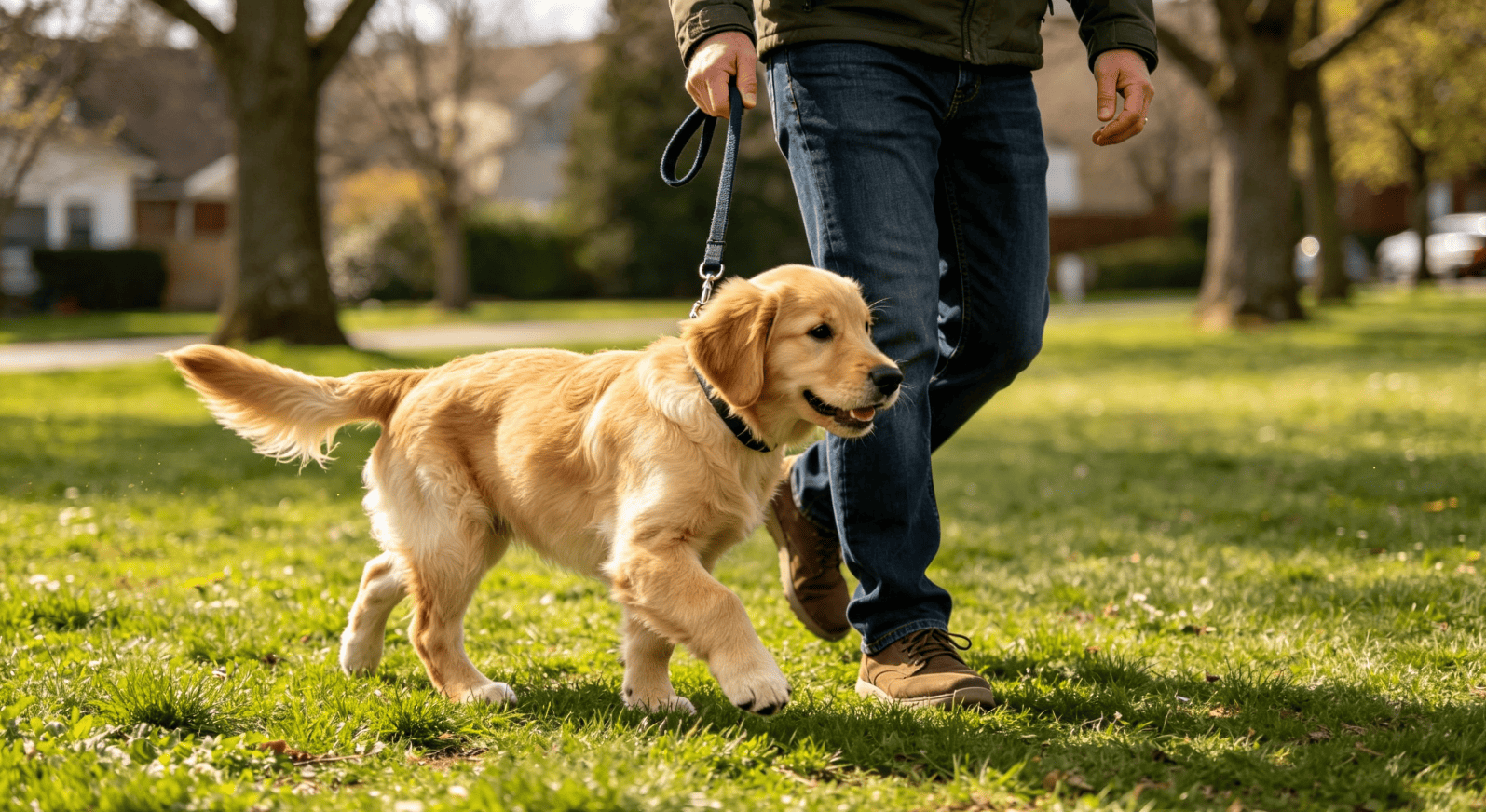
Start practicing leash manners in low-distraction outdoor settings, such as a quiet yard or driveway, before working up to short walks around the neighborhood. Keep early leash sessions brief and reward loose-leash walking rather than pulling.
Puppy socialization during this stage should be gradual and controlled. Rather than crowded parks, dog parks, or busy events, aim for calm, positive exposure: new household sounds, different safe surfaces, short car rides, a quiet view of neighborhood activity from a safe distance, or brief interaction with a friendly, healthy, vaccinated dog. The goal is confidence, not overstimulation, and your veterinarian’s guidance should shape where your puppy goes before the vaccine series is complete.

Puppy Training Checklist for the First 30 Days
Use this puppy training checklist as a quick-reference guide as you move through the month.
Day 1
- Set up a safe, puppy-proofed space with a crate or pen
- Begin frequent potty breaks, roughly every hour while awake
- Keep introductions and outings low-key
Week 1
- Establish a consistent potty schedule and reward outdoor successes
- Introduce crate training with positive associations
- Set 2 to 3 house rules and stay consistent
- Begin gentle handling practice
Weeks 2 to 3
- Practice name recognition and engagement daily
- Introduce sit, down, and come in short sessions
- Begin short, supervised indoor leash practice
- Maintain a steady feeding and potty schedule
Week 4
- Reinforce sit, down, and come with more distractions
- Introduce the place command
- Practice leash manners in low-distraction outdoor areas
- Begin brief, controlled socialization opportunities
- Continue supervision to prevent jumping, biting, chewing, and accidents
Following a checklist like this does not guarantee a finished, fully trained dog by day 30. It gives your puppy a consistent, supportive structure for learning during an important stage of early development.
Common First-Month Puppy Training Mistakes
A few patterns tend to slow down progress during the first month:
- Inconsistent house rules. Allowing behavior sometimes and correcting it other times confuses puppies and slows learning.
- Training sessions that run too long. Puppies have short attention spans. Sessions beyond 5 to 10 minutes often lead to frustration rather than progress.
- Too much socialization too soon. Crowded, chaotic environments can overwhelm a young puppy instead of building confidence.
- Inconsistent supervision. Accidents, chewing, and jumping are far more likely when a puppy is left unsupervised in open spaces before house rules are established.
- Punishing mistakes after the fact. Puppies do not connect delayed correction with the original behavior. Calm redirection in the moment works better than scolding.
Puppy Training Tips for a Smoother First Month
- Keep training sessions short and end on a positive note.
- Use the same cue words consistently across everyone in the household.
- Reward calm behavior, not just commands. A puppy sitting quietly deserves praise too.
- Supervise closely rather than assuming good behavior will happen on its own.
- Build routine around meals, naps, and potty breaks so your puppy knows what to expect.
- Celebrate small wins. Progress in the first month is rarely linear.
When to Get Professional Help
Some puppies pick up routines quickly, while others need more structured guidance, especially around potty training setbacks, leash frustration, fear around new environments, or persistent jumping and nipping. If you feel stuck despite consistent effort, that is a normal part of raising a puppy, not a sign you are doing something wrong.
Working with a professional can help you build a more structured approach to puppy training and stay consistent as your puppy grows. Albany’s Online Puppy Course covers potty training, crate comfort, confidence building, basic commands, and common puppy problems. For puppies 8 weeks to 5 months old, the Clicker Training Program includes four private lessons covering Come, Sit, Down, Place, Heel, and Break. As your puppy gets older and meets age and vaccination requirements, more structured options like board and train may be worth discussing with a professional trainer.
Final Thoughts
The first 30 days with a new puppy set the tone for everything that follows. A steady puppy training checklist, built around potty training, crate training, basic commands, and gradual socialization, gives your puppy the structure they need to learn faster and feel secure in their new home.
Progress will not always be perfectly consistent, and that is normal. What matters most is staying patient and sticking with the routine, even on the harder days.
If you want support building out a training plan, working through potty habits, crate training, or early behavior routines, contact a trainer to talk through what your puppy needs during this stage.
FAQs
How many times a day should I train my puppy during the first month?
Two to three short sessions a day, around 5 minutes each, tend to work well for young puppies. Shorter, more frequent sessions hold their attention better than one long session and help prevent frustration for both of you.
When should potty training start showing results?
Many puppies begin to show progress within the first couple of weeks when the schedule is consistent, though full reliability can take longer and varies by puppy. Accidents during the first month are common and do not mean training is failing.
Is it too early to start basic commands in the first week?
It is not too early to begin simple engagement exercises like name recognition, but most owners find it easier to introduce structured commands like sit and come once their puppy has settled into a routine, typically by week two.
How much socialization is appropriate in the first 30 days?
Keep early socialization brief, calm, and controlled rather than crowded or overstimulating. Short, positive exposures to new people, sounds, and safe environments are generally more effective than large group outings this early.
What if my puppy is not responding to training yet?
It is common for puppies to need more repetition and patience than expected, especially in the first month. If progress stalls despite consistency, a professional trainer can help identify what adjustments might help.