
Introduction
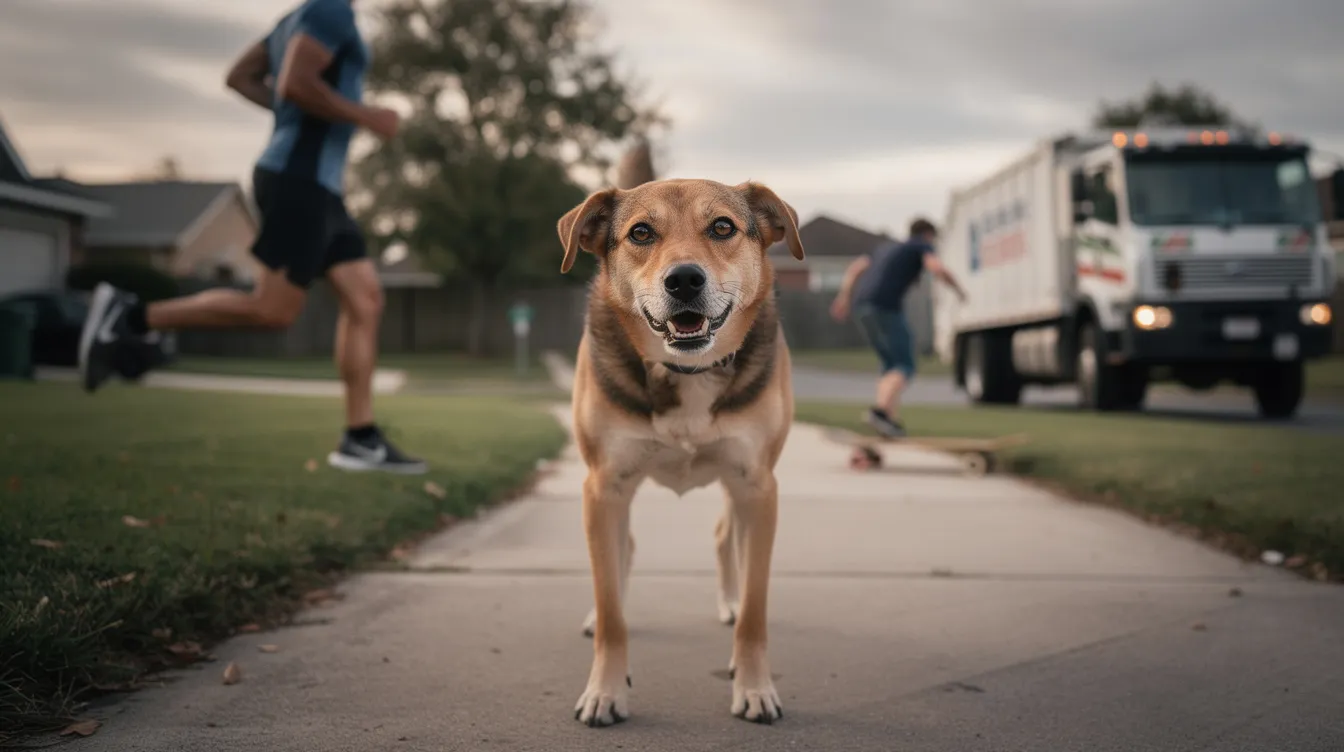
Trigger stacking refers to the accumulation of multiple stressors that overwhelm a dog’s ability to cope, resulting in sudden reactive behaviors like barking, lunging, snapping, or shutting down entirely. If your dog has ever seemed fine one moment and then exploded at something seemingly minor-a passing cyclist, a barking dog across the street, or a stranger reaching toward them-trigger stacking is very likely the explanation.
This guide covers everything Albany, NY area dog owners need to know about understanding trigger stacking in dogs: how to identify it, how to prevent it, and how to manage it using practical, proven strategies. Whether you’re dealing with reactive dogs on walks, sudden aggression toward unfamiliar people, or behavioral changes that seem to come out of nowhere, this content is for you. If your dog’s stress levels have been climbing and you’re not sure why their behavior is deteriorating, this guide will help you connect the dots.
Trigger stacking occurs when multiple stress-inducing events happen close together without sufficient recovery time, pushing a dog beyond their emotional threshold and producing a behavioral response far more intense than any single trigger would cause on its own. Each trigger adds stress, increasing the likelihood of a reaction that may seem disproportionate to the final stressor.
By the end of this guide, you will:
- Understand what triggers are and how they accumulate physiologically in your dog
- Recognize early stress signals before they escalate to reactive outbursts
- Implement environmental management strategies to avoid trigger stacking
- Build your dog’s stress resilience through targeted training techniques
- Know when to seek professional help for persistent reactivity issues
Understanding Trigger Stacking
Trigger stacking is a concept used by trainers and behaviorists to describe what happens when a dog experiences too many triggers in a short period without enough time to recover between each one. Think of it as a cumulative load problem: a single stressor might be perfectly manageable, but when stressful events pile up in short succession, the dog’s coping system gets overwhelmed.
This concept connects directly to behavioral modification approaches used in professional dog training. Threshold work-gradually exposing a dog to low-level stressors and building tolerance-only works when the dog isn’t already overloaded. Understanding trigger stacking is essential before any training plan can succeed because a dog that is already over threshold simply cannot learn.
What Are Triggers
Triggers are any environmental, situational, or physiological stressors that cause a heightened emotional response in a dog. What counts as a trigger varies from one individual dog to the next based on temperament, breed characteristics, socialization history, health, and past experiences.
Common triggers include:
- Environmental: Other dogs, loud noises (construction, thunder, fireworks), traffic, crowds, busy or unpredictable environments
- Situational: Veterinary visits, car rides, grooming sessions, being approached by unfamiliar people, doorbell ringing
- Physiological: Pain, illness, fatigue, hunger, hormonal changes
- Social: Resource guarding situations, unfamiliar dogs in close proximity, a dog park with too much activity
For example, a herding breed may be highly sensitive to sudden movement, while a guarding breed might find strangers approaching the home deeply stressful. A rescue dog with unknown history may have triggers that are difficult to predict. Understanding your dog’s triggers-and recognizing that every dog finds stressful things differently-is the essential first step. Changes in routine can be a significant stressor for dogs, even when the change seems minor to you.
How Stress Accumulates
When a dog encounters something it finds stressful, the body activates the hypothalamic-pituitary-adrenal (HPA) axis, releasing cortisol and other stress hormones. A single trigger causes a cortisol spike that typically peaks within 15–30 minutes. Under normal circumstances, cortisol levels return to baseline within hours, and the dog recovers.
The problem arises when multiple stressors happen close together. Cortisol levels rise when dogs face multiple stressors in succession, and if a second or third trigger hits before the dog has recovered from the first, cortisol compounds. Each stressor adds to the load rather than being processed independently.
The most helpful way to visualize this is the “bucket analogy.” Every dog has a stress bucket with limited capacity. Each individual trigger pours water into the bucket. Small triggers add a little; big triggers add a lot. When the bucket overflows, the dog reacts-sometimes explosively. The overflow isn’t caused by the last trigger alone; it’s the cumulative weight of everything that came before it. Some dogs react after just one or two triggers, depending on temperament, while others have deeper buckets that take more to fill.
This directly connects to threshold training concepts: professional trainers work to keep dogs below their threshold during exposure exercises, gradually building the dog’s capacity to handle more. But if stacking has already occurred before a training session, even gentle exposure can push a dog over the edge.
Recognizing Trigger Stacking in Your Dog
The key to preventing trigger stacking is catching it early-before your dog reaches the point where they can no longer cope. For Albany area dog owners dealing with reactive dogs, learning to read body language is one of the most impactful skills you can develop.
Early Warning Signs
Dogs communicate stress through subtle signals long before they escalate to overt reactivity. Subtle signs of stress in dogs include yawning or lip licking, even when they’re not tired or eating. These displacement behaviors indicate the dog is processing something uncomfortable.
Other early stress signals to watch for:
- Excessive sniffing (using the ground as avoidance)
- Turning away or avoiding eye contact
- Panting when not hot or exercised
- Flattened ears or a tucked or excessively curled tail
- Slight trembling or body tension
- Pacing or an inability to settle
- Dilated pupils, which can indicate a dog is experiencing stress even when other signs are minimal
These signs are easy to miss, especially in busy or unpredictable environments where you’re focused on navigating the situation rather than observing your pet. But each of these behaviors is your dog communicating that their stress bucket is filling.
Behavioral Escalation Patterns
When early warning signs are missed or more triggers continue to build up, a dog’s arousal escalates. Signs of trigger stacking include stiff body posture, raised hackles, whale eye (showing the whites of the eyes), and increased vocalization. Dogs may show increased panting and pacing when stacked. Common signs include whining, barking, and growling-each representing an escalation from the subtler signals above.
The progression typically looks like this: subtle displacement behaviors → body tension and avoidance → vocalization and heightened alertness → the final reaction (lunging, snapping, barking explosively, or in some cases, freezing completely). Dogs may freeze or shut down instead of becoming outwardly reactive under stress, and this response is just as concerning-it means the dog has exceeded their ability to cope.
How this progression looks varies between dogs. Herding breeds may fixate and stalk, guarding breeds may posture and bark, and smaller breeds may tremble and snap. Avoidance behavior is a sign of trigger stacking in dogs that is frequently overlooked because the dog appears to be “behaving” when they’re actually shutting down. Understanding your dog’s fear responses and how they manifest individually is critical.
Threshold Recognition
A dog is “over threshold” when they lose the ability to respond to cues, shift focus, or disengage from the trigger. At this moment, the dog’s ability to learn or process information is essentially zero. Commands that normally work will be ignored-not out of defiance, but because the dog’s brain is in survival mode.
Unexpected reactions in dogs can occur due to prior accumulated stress rather than an immediate trigger. This is why a dog might walk past a barking dog without issue on Monday but lunge aggressively at the same dog on Wednesday. The difference isn’t the trigger-it’s everything that happened before the encounter. Dogs may react explosively to minor events due to accumulated stress from a stressful day.
Recovery time after a threshold event is significant. Research suggests that cortisol peaks within minutes of a stressor, but recovery can take hours or even days for some dogs, depending on the intensity and how many triggers stacked. For moderate trigger stacking incidents, trainers generally observe that dogs need several hours to overnight before returning to baseline. For severe episodes or dogs with trauma histories, full recovery may take 24–72 hours. Training should resume slowly after a trigger stacking incident-rushing back into challenging situations risks compounding the problem.

Managing and Preventing Trigger Stacking
Preventing trigger stacking requires a comprehensive approach that combines immediate environmental management with long-term training techniques. The most effective results come when both strategies work together, which is the approach used by professional trainers working with reactive and aggressive dogs.
Environmental Management Strategies
Environmental management is your first line of defense. These are immediate, practical steps you can take starting tomorrow to reduce pressure on your dog and avoid trigger stacking:
- Assess your dog’s daily schedule for stressor clusters. Map out a typical day and identify where multiple triggers might happen close together. A morning walk early through a busy neighborhood followed by a vet appointment followed by a visitor arriving is a recipe for stacking. Spread stressful events across different days when possible.
- Modify walking routes and timing to avoid peak trigger periods. Walk early in the morning or later in the evening to avoid rush hour traffic, school drop-offs, and crowded sidewalks. Avoid routes that pass a dog park during peak hours or construction zones. Keep outings predictable to minimize stress for your dog-consistent routes help dogs know what to expect.
- Create a safe space in your home for decompression. Designate a quiet room or area where your dog feels safe and can retreat. Use sound buffering, comfortable bedding, and make this space consistently available. Provide a quiet space for your dog to relax after stress. Teaching a reliable place command gives your dog a clear protocol for settling.
- Limit challenging activities to one per day when possible. If your dog had a stressful vet visit in the morning, skip the afternoon trip to the pet store. Avoid exposing dogs to multiple triggers in quick succession. Give dogs time to decompress after stressful experiences before introducing anything new.
- Be your dog’s advocate. Change plans if your dog shows signs of stress. If you’re halfway through a walk and your dog is already lip licking and panting, turn around. Advocate for your dog in stressful situations to ensure safety-this might mean telling people not to pet your dog or leaving a situation earlier than planned.
Training Techniques for Stress Resilience
Management prevents stacking in the short term, but training builds long-term resilience by changing how your dog emotionally responds to triggers. A good trainer will incorporate these techniques into a structured training plan:
Counter-conditioning pairs a low-level trigger exposure with something the dog loves (high-value treats, play) to change the emotional association. For example, if your dog reacts to other dogs, you’d work at a distance where the dog notices but doesn’t react, and pair that moment with rewards. Over time, the trigger becomes a predictor of good things rather than a threat.
Threshold training involves systematic exposure at levels just below your dog’s reactivity threshold, gradually decreasing distance or increasing intensity as the dog builds tolerance. This must be done carefully-pushing too fast creates stacking rather than resilience.
Focus and engagement commands like “look at me” or “watch” give you a tool to redirect your dog’s attention before stress escalates. These commands help a dog shift focus away from a trigger and back to you, breaking the escalation cycle before it builds.
Calm reinforcement techniques reward relaxed states-settling on a mat, offering a calm sit, or voluntarily disengaging from a stimulus. Using treats, a clicker, and balanced training methods together provides multiple channels for communication with your dog. Chewing helps dogs self-soothe and relax after stress, so providing appropriate chew items during decompression periods supports recovery.
Management vs. Training Approaches
| Criterion | Management (Immediate) | Training (Long-Term) |
|---|---|---|
| Goal | Prevent stacking from occurring right now | Build resilience and change emotional responses |
| Tactics | Distance, avoidance, environmental control, removal | Desensitization, counter-conditioning, impulse control |
| Timeline | Effective immediately | Weeks to months for lasting change |
| When to use | Daily situations, unexpected encounters, high-stress days | Structured sessions when the dog is calm and below threshold |
| Limitations | Doesn’t change how the dog feels about triggers | Requires consistency, patience, professional guidance |
The critical insight is that management and training must work together. Management keeps your dog safe and prevents stacking while training does the deeper work of expanding your dog’s capacity. Overwhelmed dogs might redirect frustration or fear onto nearby objects or people, so management isn’t optional-it’s a safety requirement. When triggers are severe, unpredictable, or involve aggression, professional guidance is essential.
Common Challenges and Solutions
Even with a solid plan in place, real-world conditions create obstacles. Here are the most common challenges Albany area dog owners face with trigger stacking and how to address them.
Unexpected Trigger Combinations
Albany’s urban environment-busy downtown streets, seasonal construction, weather changes, and popular parks-creates situations where triggers combine unpredictably. Your dog might handle the walk fine until a snowplow passes while another dog approaches from across the street and a car horn sounds simultaneously.
Solution: Develop flexible management plans that include “emergency exits” from any situation. Before every walk or outing, identify escape routes-side streets, quiet parking lots, building alcoves-where you can move your dog quickly. Practice u-turns and direction changes so your dog is comfortable with sudden route changes. In Albany’s denser neighborhoods, walk early or late to reduce the density of unpredictable stimuli.
Inconsistent Reactions from Your Dog
One day your dog walks past three other dogs without issue; the next day, a single dog across the street triggers a full meltdown. This inconsistency is confusing, but it almost always points to stacking that happened before the walk-a restless night, a delivery person ringing the doorbell, construction noise from the house next door.
Solution: Keep a simple daily log tracking your dog’s experiences: what happened that day, stress levels observed, how the dog slept, any unusual events. Over a few weeks, patterns emerge. You’ll start seeing that bad days correlate with prior stressful events you might not have connected. This data makes your dog’s behavior predictable rather than random and helps you anticipate when a dog has a lower threshold on a given day.
Family Members Using Different Approaches
When one person in the household avoids triggers, and another pushes the dog through them, or when children interact with the dog differently than adults, the inconsistency itself becomes a stressor. Dogs need predictability-conflicting approaches undermine progress.
Solution: Establish clear, written household rules: how to respond when the dog shows stress signals, which situations to avoid, what commands to use, and when to remove the dog from a situation. Everyone who interacts with the dog should understand the basics of recognizing reactivity and the management protocols. Professional training sessions that include the whole family ensure consistent execution.
Conclusion and Next Steps
Trigger stacking in dogs is preventable, manageable, and ultimately addressable through the combination of vigilant observation, strategic environmental management, and targeted training. The concept is straightforward-too many triggers in a short period overwhelm your dog’s coping capacity-but applying it consistently requires practice and commitment.
Here are your immediate next steps:
- Tomorrow’s walk: Observe your dog for subtle stress signals (lip licking, yawning, body tension) and note how many triggers your dog encounters. If you see signs of stacking, cut the walk short and return to a place where your dog feels safe.
- This week: Review your dog’s daily routine and identify where stressful events cluster. Rearrange the schedule to space out challenging experiences and build in recovery time.
- Practice one focus command (“look at me” or “watch”) in a low-distraction environment. Build this skill so it’s available when you need to help your dog shift focus away from a trigger.
If your dog’s reactivity is escalating, if you’re seeing aggression, or if trigger stacking is happening despite your best management efforts, professional behavioral consultation can accelerate progress significantly. Albany Off Leash K9 Training offers specialized programs for reactive and aggressive dogs that combine management protocols with structured training to expand your dog’s threshold and build lasting resilience.
Related topics worth exploring include why dogs react to other dogs on walks, proper socialization techniques, and understanding what drives dog aggression.
Frequently Asked Questions
How long does it take for stress hormones to clear a dog’s system after trigger stacking?
Cortisol peaks within 15–30 minutes of a stressor, but returning to baseline takes considerably longer. For moderate trigger stacking, recovery can take hours or even days for some dogs. Dogs need time to decompress after trigger stacking-research on cortisol in dogs confirms that repeated stacking without full recovery increases basal stress levels and reduces the threshold for future reactions. After a significant stacking event, provide rest in a low-stimulus environment and avoid introducing new challenges for at least 24 hours.
Can trigger stacking cause long-term behavioral problems if not addressed?
Yes. Chronic stress from unaddressed trigger stacking is linked to increased anxiety, escalating aggression, immune suppression, and digestive problems. Studies on dogs in chronically stressful environments show sustained behavioral changes including repetitive behaviors, persistent vocalization, and postural changes associated with elevated cortisol. Over time, a dog’s baseline stress level rises, meaning it takes fewer and fewer triggers to produce a reaction. Early intervention prevents this cycle from becoming entrenched.
What’s the difference between trigger stacking and normal stress responses?
A normal stress response involves a single trigger causing a proportional reaction, followed by recovery. Trigger stacking occurs when multiple stressors build up before recovery happens, producing a reaction that appears disproportionate to the final trigger. The distinction matters because the dog’s behavioral response to the last trigger isn’t really about that trigger at all-it’s about the cumulative load of everything that came before. A dog that normally ignores a skateboard might lunge at one after a morning filled with loud noises, a stranger approaching, and a tense encounter with another dog.
When should Albany area dog owners seek professional help for trigger stacking issues?
Seek professional help when your dog’s reactivity is escalating in frequency or intensity, when stacking results in aggression toward people or other dogs, when management alone isn’t reducing incidents, or when you’re unable to identify your dog’s triggers reliably. A good trainer can assess how many triggers your dog can handle, build a structured desensitization protocol, and teach you to read your dog’s signals more accurately. Professional guidance is especially important in cases involving aggression or resource guarding.
Are certain dog breeds more susceptible to trigger stacking than others?
Breed does influence susceptibility. Herding breeds tend to be more reactive to movement and environmental changes. Guarding breeds may have lower thresholds for unfamiliar people or perceived territorial intrusions. Smaller breeds can be more easily overwhelmed by loud noises and physical handling. However, individual temperament, early socialization, health status, and life experiences are often more determinative than breed alone. Any individual dog-regardless of breed-can experience trigger stacking, and any dog can benefit from management and training to increase their resilience in stressful situations.