Introduction
Basic dog training typically takes 4–6 months of consistent practice to achieve reliable results, while advanced skills like off-leash reliability require 12–18 months of progressive work. The exact timeline depends on your dog’s age, breed, temperament, and how consistently you reinforce behaviors between sessions.
This guide covers realistic training timelines from puppies through adult dogs, spanning basic obedience through advanced off-leash control. It does not dive deep into service dog certification specifics, though those timelines are referenced for context. Whether you’re a first-time pet owner or an experienced handler looking to sharpen your young dog’s skills, understanding how long does it take to train a dog prevents frustration and sets both you and your dog up for success.
Direct answer: Basic obedience training takes 4 to 6 months with consistent weekly lessons and daily home practice. Advanced training-including distraction-proofed recall and off-leash reliability-typically requires 12–18 months of ongoing reinforcement.
Here’s what you’ll take away from this guide:
- Realistic timelines for each training phase, from foundational skills through advanced obedience
- The key factors that shorten or extend how long training takes for your individual dog
- How different program formats (board and train vs. private lessons) compare in duration and outcomes
- Practical solutions for common setbacks like adolescent regression and plateau periods
- Evidence-based insights on session frequency and duration for optimal progress
Understanding Dog Training Phases
Dog training unfolds across three main phases, each building on the previous foundation. Skipping or rushing a phase almost always creates gaps that slow progress later. Understanding your dog’s developmental stage helps you set appropriate expectations and recognize when it’s time to advance.
Foundation Phase (Weeks 1–8)
The foundation phase covers basic commands-sit, stay, come, down-along with house training and crate training basics. Puppy training usually starts around 8 weeks old, when young puppies have enough neurological maturity to begin learning substrate preferences and inhibition. According to the AAHA behavioral development guidelines, puppies at approximately 8.5 weeks can begin meaningful housetraining.
During this window, puppies learn faster than older dogs due to their adaptability, but they also have shorter attention spans. Puppies benefit from 3–5 minute micro-sessions rather than long training sessions. Basic crate training alone can take 2 weeks to 3 months depending on the individual dog. Daily practice sessions for dog training should last 5 to 15 minutes, and most dogs respond best to 5–10 minute sessions during this early stage.
This foundation determines everything that follows. Dogs that develop solid basic skills here-responding to their name, accepting handling, beginning potty training-move into the development phase with far fewer behavioral issues to correct later.
Development Phase (Months 2–6)
Once your dog has foundational skills, the development phase introduces loose leash walking, impulse control, and beginning distraction work. Intermediate training typically lasts 4–6 months after basics are established. During this period, you’re teaching your dog to generalize behaviors-performing a reliable “sit” not just in your kitchen but also at the park, on walks, and around other dogs.
Your dog’s breed plays a significant role here. Certain breeds like border collies learn quickly due to high drive and focus, while german shepherds bring strong working instincts that channel well into structured skill development. Breed maturity timelines also matter: larger breeds develop impulse control more slowly, with attention span and self-regulation building gradually between months 3–9.
Puppies typically learn foundational skills in 3 to 4 months, making the transition into this development phase feel natural. Consistent practice yields faster training results-daily reinforcement at home accelerates retention, while inconsistent training can confuse dogs and slow progress significantly.
Advanced Phase (Months 6–18)
The advanced phase targets off-leash reliability, complex behavioral modification, and proofing behaviors in public settings with real-world distractions. Advanced training can take 6 months to 1 year to master, and in unpredictable environments with distance, multiple handlers, and high stress situations, this timeline can stretch to 12–18 months or more.
This phase is where training methods and your dog’s ability to maintain focus under pressure are truly tested. Dogs must demonstrate reliable recall around other animals, people, and environmental triggers. For context, K9 training can take 12 to 24 months for operational readiness, and service dogs require about 120 hours of training-illustrating just how much work goes into advanced-level reliability.
Training is a lifelong process for dogs. Even after reaching advanced proficiency, dogs need ongoing reinforcement to retain learned behaviors. Skills that aren’t practiced regularly tend to deteriorate, which is why this phase naturally transitions into maintenance rather than having a firm endpoint.
Key Factors That Influence Training Duration
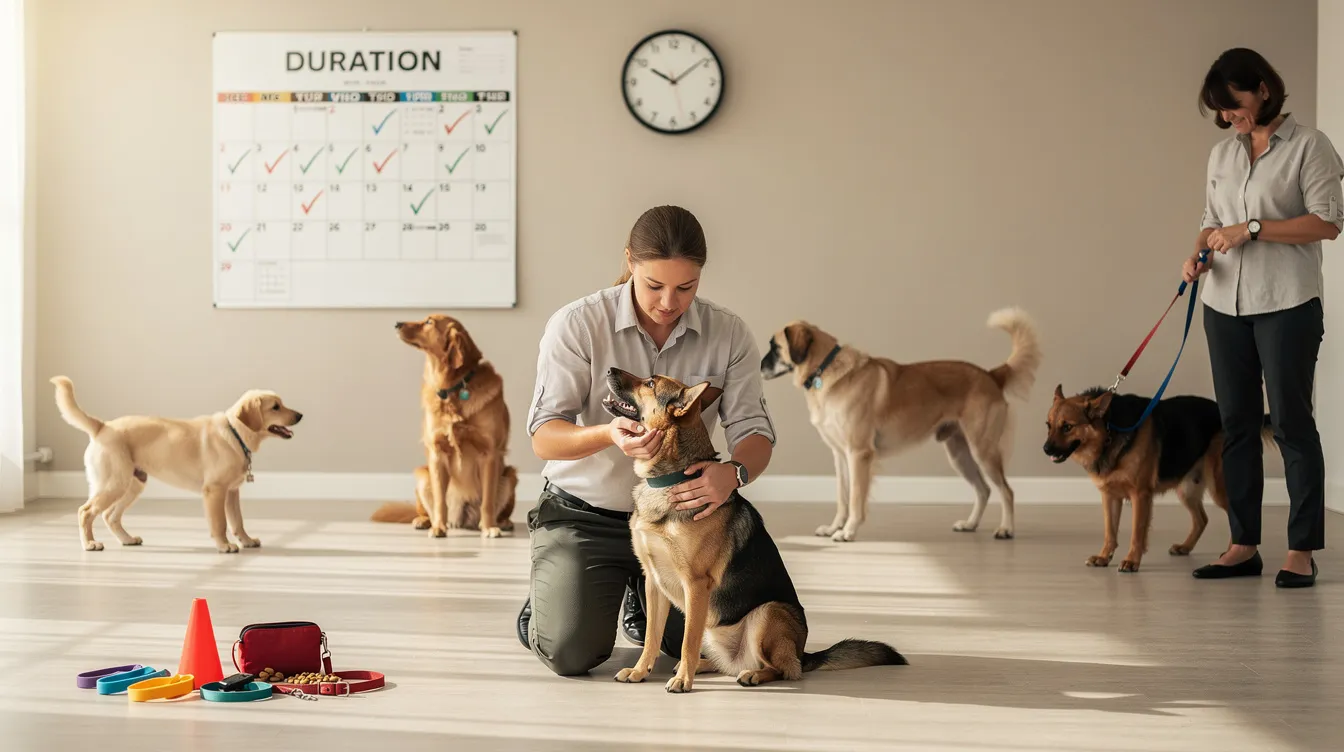
No two dogs follow the same general timeline. The difference between a dog that achieves reliable recall in six months and one that needs fourteen months often comes down to a handful of specific variables. Understanding these helps you calibrate expectations for your individual dog.
Dog-Specific Factors
Age and developmental stage create the most obvious variation. Young puppies absorb new behaviors rapidly but have limited attention spans-puppies have shorter attention spans than older dogs, making short sessions essential. Adult dogs can learn quickly if they have no prior training, but those with entrenched habits may need longer to unlearn incorrect behaviors before building new skills. Senior dogs can learn behaviors but may require adjusted pacing due to physical limitations.
Breed characteristics shape both the dog’s focus and energy levels. Working breeds with strong drive learn faster during training, while lower-energy breeds may progress more slowly but retain behaviors with less ongoing reinforcement. Your dog’s breed influences not just speed but also what types of training activities engage them most effectively.
Previous training history and behavioral issues can dramatically extend timelines. Training effectiveness can be affected by a dog’s past trauma or anxiety. Dogs with fear, reactivity, separation anxiety, or aggression often require behavior modification interventions that add months-behavioral training can take 3 to 6 months for moderate issues, while behavior modification for serious issues can take several months to over a year. Behavior problems can take weeks to months to change, especially if established long-term.
Training Approach Factors
Professional vs. DIY training impacts both speed and reliability. A skilled dog trainer provides structured progression, catches errors early, and adjusts methods to your dog’s learning style. Training methods influence the timeline and effectiveness of dog training substantially.
Method consistency matters as much as method choice. Positive reinforcement methods are recommended for dog training-research has shown that reward-based methods build trust and strong habits in dogs, achieving comparable or better outcomes for recall and obedience compared to aversive tools. That said, a balanced approach under professional guidance can accelerate specific goals like off-leash reliability when applied correctly.
Session frequency and quality have surprising nuances. A University of Copenhagen study found that dogs trained 1–2 times per week with one session each time showed better acquisition than those trained daily or with multiple back-to-back sessions. Weekly dog training sessions yielded fewer total sessions required for mastery, though daily training sessions compressed the calendar timeline. Daily training should total 30–60 minutes, spread out across the day. Short sessions prevent mental fatigue and maintain enthusiasm, and training sessions should end when focus drops or stress appears.
Importantly, that same study found retention four weeks after acquisition was good regardless of schedule-once dogs learn a behavior reliably, it sticks even without daily practice.
Environmental Factors
Home environment and family consistency are often underestimated. If family members use conflicting cues or training practices, dogs receive mixed signals that slow or reverse gains. Every person who interacts with the dog needs to follow the same protocols.
Socialization opportunities and distraction levels determine how well behaviors transfer from controlled environments to the real world. Dogs trained only in calm settings struggle when moved into high-stimulus environments. Proofing under distractions typically happens later in the timeline but is essential for real-world reliability. Training environments affect how quickly skills transfer-a dog that performs flawlessly at home but falls apart at the park hasn’t truly learned the behavior yet.
Albany Off-Leash K9 Training Programs and Timelines
Understanding the factors above helps you choose the right program format. Different structures suit different dogs, schedules, and goals-and each comes with its own realistic timeline for results.
Board and Train Programs
Board and train programs provide intensive, immersive training where your dog lives with a professional dog trainer for a set period. These programs compress months of weekly lessons into focused daily work.
- 2-week basic program: Covers basic obedience commands, leash manners, and impulse control. Dogs show measurable behavior changes across multiple core competencies, but owners must maintain consistent practice afterward.
- 3-week advanced program: Builds toward off-leash reliability with distraction proofing and recall work. This format works well for pet owners who want faster progress on specific skills.
- 4-week program: Designed for dogs with serious behavioral issues-reactivity, aggression, severe anxiety-where longer immersion and structured behavior modification are needed.
Post-program maintenance is critical. Even after intensive programs, lifetime support and home reinforcement are required. Basic obedience programs typically last 4 to 8 weeks, but the real work continues at home. Dogs must receive ongoing reinforcement, or the investment diminishes over time. Most departments that maintain working dogs require at least 16 hours of monthly training to sustain proficiency, and the same principle applies to pet dogs at a smaller scale.
Private Lesson Progression
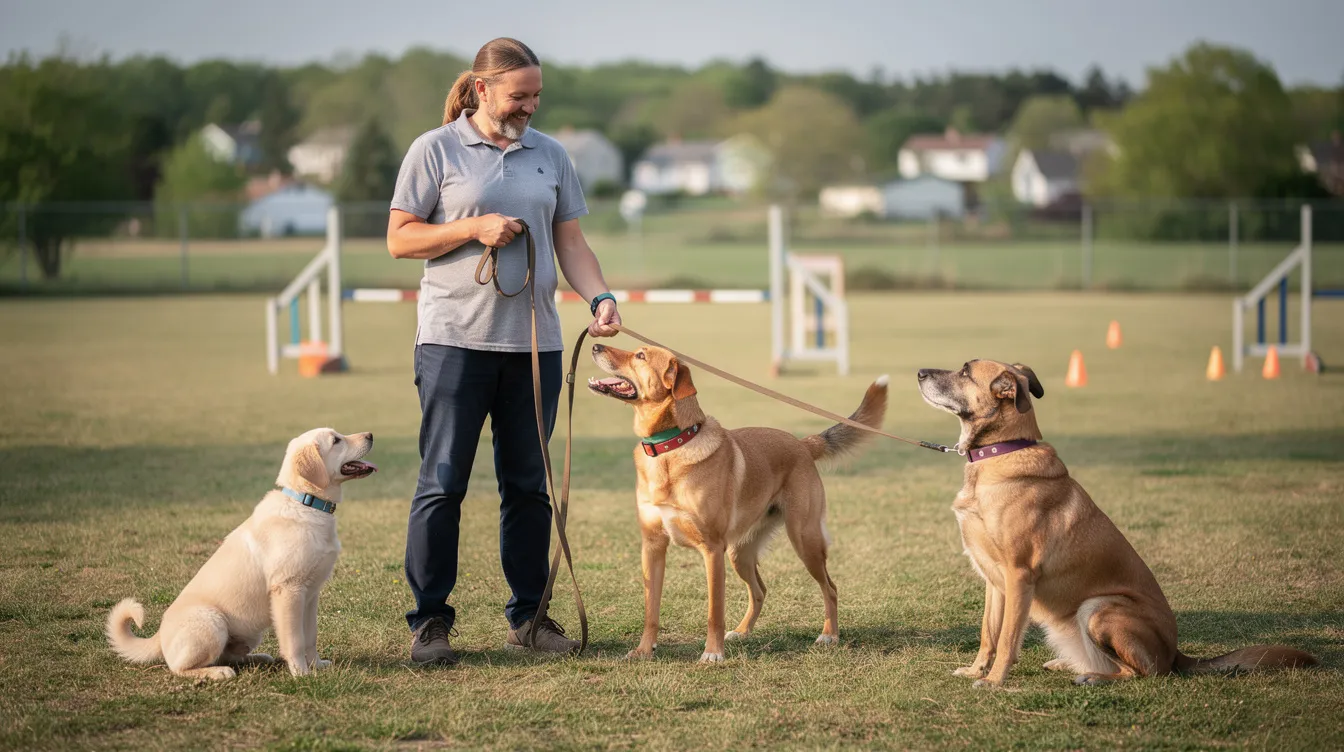
Private lessons follow a weekly lesson structure, typically one session per week with daily homework between appointments. This format lets both the dog and owner learn together, building the handler’s canine psychology knowledge alongside the dog’s new behaviors.
- 4–6 lessons (basic obedience timeline): Covers sit, down, stay, come, and beginning leash work. Basic obedience training takes 4 to 6 weeks to complete at this pace. Outcomes depend heavily on how consistently owners incorporate training into daily routines at home.
- 8–12 lessons (advanced progression): Introduces off-leash work, distraction proofing in public settings, and distance commands. This phase builds the dog’s ability to perform reliably when it matters most.
- Ongoing lessons (behavioral modification): For dogs with fear, reactivity, or aggression, open-ended lesson packages allow for gradual progress with professional guidance at each stage.
Private lessons give experienced handlers and new owners alike the advantage of real-time coaching-correcting timing, body language, and technique issues that slow progress when training alone.
Training Method Comparison
| Factor | Board and Train | Private Lessons |
|---|---|---|
| Duration | 2–4 weeks intensive | 4–12+ weeks (one session/week) |
| Owner Involvement | Minimal during program; critical after | High throughout; builds handler skills |
| Results Timeline | Faster initial results; requires transfer | Gradual but integrated into daily life |
| Best For | Busy schedules, specific behavioral goals, faster progress on obedience | Owners wanting hands-on learning, dogs needing owner-specific bonding |
| Mental Stimulation | High (daily structured training activities) | Moderate (weekly session + home practice) |
| Long Term Success | Depends on owner follow-through | Built into owner’s habits from day one |
The right choice depends on your situation. Board and train delivers rapid skill development but requires a long term commitment to maintenance. Private lessons build more slowly but create stronger owner-dog communication from the start. Many pet owners benefit from combining both-starting with a board and train foundation, then transitioning to periodic private lessons to refine and expand skills. You can explore all available services to find the right fit.
Common Training Challenges and Solutions
Even with the best program and a willing dog, setbacks happen. Expecting them and knowing how to respond keeps training on track.
Plateau Periods
Progress often stalls around month 3–4, when the initial excitement of teaching new tricks fades and remaining goals require more nuanced work. This is normal. Dogs have mastered the basics but haven’t yet built the reliability needed for advanced obedience. The solution is to increase environmental difficulty gradually-practice known commands in slightly more distracting settings rather than introducing entirely new behaviors. Keep sessions fun and vary your training activities to sustain your dog’s enthusiasm. Reinforcement timing also matters enormously here: a delay of even a few seconds between a behavior and its reward can increase errors and slow acquisition.
Regression During Adolescence
Many dogs show significant behavioral setbacks between 6–18 months as hormonal changes, physical growth, and increasing independence shift their focus and energy. A young dog that had reliable recall at five months may suddenly seem to forget everything at eight months. This isn’t a training failure-it’s developmental.
Maintain consistency through this period. Continue daily training sessions even when progress feels reversed. Dogs with strong drive learn faster during training, and adolescence is when that drive often spikes, making it both a challenge and an opportunity. Avoid the temptation to abandon structure; this is precisely when understanding why dogs misbehave becomes most valuable.
Inconsistent Family Training
When different family members use different cues, reward different behaviors, or enforce different rules, dogs receive contradictory information that slows learning dramatically. Inconsistent training can confuse dogs and slow progress across every phase.
The solution is a household training plan: agree on specific command words, reward criteria, and rules (is the dog allowed on furniture? who feeds the dog?). Post a simple reference sheet where everyone can see it. When every interaction reinforces the same expectations, dogs learn that good behavior produces positive experiences regardless of which person is present.
Conclusion and Next Steps
Training a dog is a lifelong learning journey, not a one-time project. Most dogs achieve basic training-reliable sit, stay, down, loose leash walking, and recall in low-distraction settings-within 4–6 months of consistent work. Advanced obedience with off-leash reliability in real-world environments takes 12–18 months. Behavioral modification for serious issues requires at least 3–6 months and sometimes extends to a year or more.
To get started:
- Assess your dog’s current level. Identify which phase-foundation, development, or advanced-matches where your dog is right now.
- Choose the right program format. If you need faster progress or have a busy schedule, consider a board and train program. If you want to build your own handling skills alongside your dog, private lessons are the better fit.
- Commit to consistency. Daily reinforcement at home-even just 5–15 minutes of focused practice-is what separates dogs that retain skills from those that regress.
If you’re dealing with specific challenges like leash pulling, reactivity, or an out-of-control dog, targeted resources and professional guidance can accelerate your timeline significantly.
Frequently Asked Questions
Can you speed up dog training safely? You can compress timelines with more intensive formats like board and train, but shortcuts that skip foundational phases create gaps. Research from the University of Copenhagen shows that spacing sessions out (1–2 times per week) actually produces better per-session learning than daily back-to-back sessions. The safest way to accelerate is better session quality-not more volume. Reward-based methods build trust and strong habits in dogs without the risks associated with rushed or aversive approaches.
How long does puppy training take compared to adult dog training? Puppies learn faster due to neurological adaptability, typically mastering foundational skills in 3–4 months. However, their shorter attention spans mean sessions must be brief-3–5 minute micro-sessions work best. Adult dogs can learn quickly if they have no prior training, but those with established behavior problems may need additional months of modification work. Senior dogs can still learn new behaviors but may require adjusted pacing due to physical limitations.
What’s the difference between basic obedience and off-leash training timelines? Basic obedience-sit, down, stay, come in controlled environments-takes roughly 4–6 months. Off-leash training requires your dog to perform these same commands reliably amid real-world distractions at distance, which demands an additional 6–12 months of progressive proofing. The gap between “knows the command” and “performs the command anywhere” is where most of the advanced timeline lives.
How many training sessions per week are optimal? Scientific evidence suggests that weekly training sessions with a professional, supplemented by short daily practice at home, produce the most efficient learning. Daily training should total 30–60 minutes spread across multiple short sessions. Overloading with long training sessions or multiple back-to-back sessions in one day reduces effectiveness. Dogs must periodically demonstrate proficiency in trained skills, so regular practice matters more than marathon sessions.
When should I consider board and train vs private lessons? Board and train works best when you need faster initial results, have a busy schedule, or your dog has behavioral issues requiring intensive daily work from a professional. Private lessons are better when you want to develop your own handling skills, your dog’s challenges are moderate, or you prefer to be directly involved in every stage of learning. Both formats require ongoing home reinforcement-the training doesn’t end when the program does.