
If your dog is scratching, licking, or avoiding their bed, look at both the bedding and their overall health. This guide explains what to check, how to establish a cleaning routine, and when veterinary advice matters.
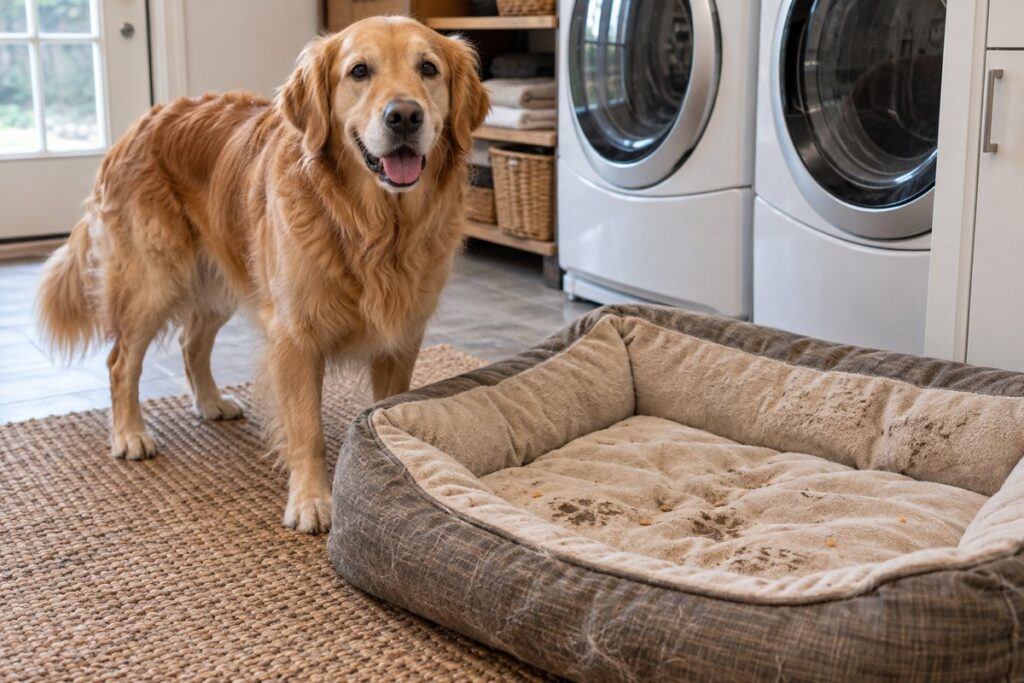
Dog Bed Allergies: What Actually Causes Problems?
Allergens and germs are different. An allergen triggers a reaction in a susceptible animal, while certain germs can cause infection. Finding dirt or bacteria on bedding does not establish that either caused your dog’s symptoms.
VCA Animal Hospitals explains canine environmental allergies, including reactions to dust mites, molds, and pollen. Dogs with these allergies commonly develop itchy skin. Scratching can also contribute to secondary skin infections.
Your dog’s bed is one part of their environment. Food allergies, parasites, and other skin conditions can also require investigation. Replacing bedding alone is not a reliable way to identify the cause of persistent itching.
Signs That Deserve Veterinary Attention
Contact your veterinarian if your dog has persistent scratching, hair loss, irritated skin, repeated ear problems, or excessive licking. Describe when the symptoms started and whether you recently changed bedding, detergent, or household products.
Bring useful observations rather than a diagnosis. Does the itching happen elsewhere? Have you noticed a seasonal pattern? Is another pet affected? These details can help your veterinarian decide what to investigate.
Avoid assuming that improvement after washing proves a bedding allergy. Record changes and follow the recommended treatment plan. Cleaning supports care but cannot replace an examination when symptoms continue.
How Often Should You Wash a Dog Bed?
The CDC’s pet-supply cleaning guidance recommends cleaning beds and blankets weekly, or more often when dirty or smelly. Follow the manufacturer’s instructions.
For washable bedding:
- Check which components can be washed.
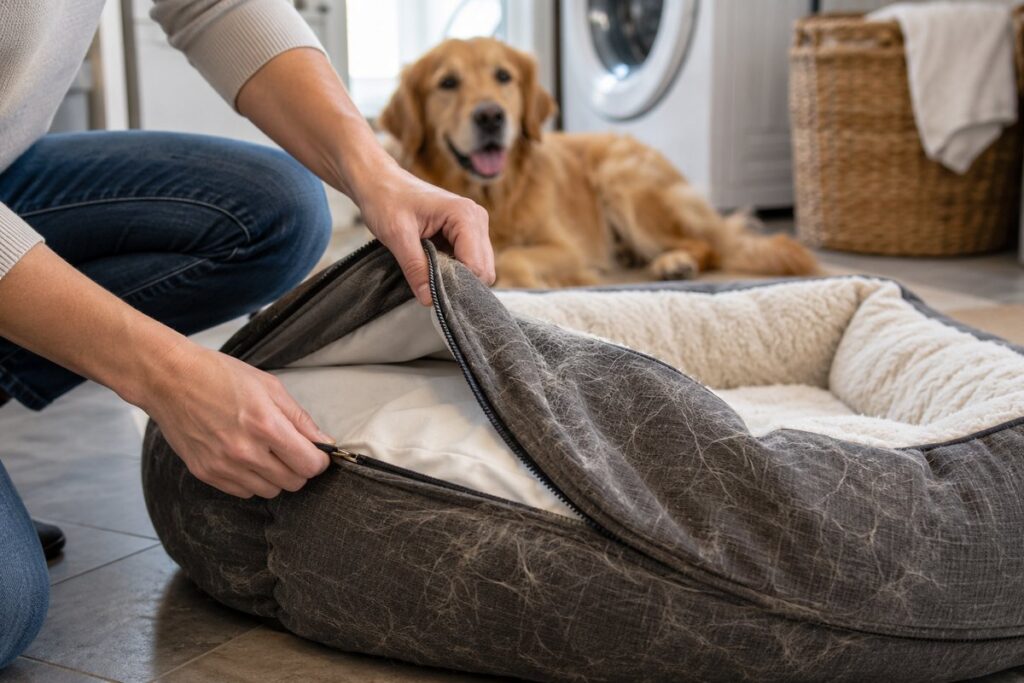
- Remove the cover and loose hair.
- Use detergent and the cycle appropriate for the fabric.
- Consider detergent without dyes or fragrance for sensitive skin.
- Dry according to the care label before reuse.
Cleaning removes dirt and germs; disinfecting kills germs. Routine cleaning is usually sufficient. Illness, urine or fecal contamination, or vulnerable household members may require additional disinfection. Follow product labels, keep pets away during use, and never mix cleaning chemicals.
Keep a spare cover so laundry does not interrupt your dog’s sleeping routine.
Choosing Bedding You Can Maintain
Before purchasing a bed, check its care label rather than relying on the word “hypoallergenic.” No label establishes that a particular bed will suit your dog’s individual medical needs.
Ask practical questions: Does the cover unzip easily? Will it fit your washer? Can you buy a replacement cover? Are the filling and cover cleaned differently?
Choose an appropriate size and an accessible design. If your dog has mobility problems, ask your veterinarian about suitable support. Memory foam may be a comfort choice, but that does not establish an allergy benefit.
When Should You Replace Your Dog’s Bed?
Use condition and cleanability to guide replacement instead of an automatic yearly deadline. Inspect the cover, seams, filling, and base when you do laundry.
Consider replacement if the bed has exposed stuffing, damage that makes cleaning difficult, or contamination you cannot adequately remove. Ask the manufacturer about replacement parts before discarding an otherwise usable bed.
If your dog repeatedly chews bedding, choose their sleeping setup with safety in mind and seek advice about the behavior. A new bed will not resolve the underlying reason for chewing.

What If You Suspect Fleas?
Cleaning bedding is only one part of addressing a suspected flea problem. Ask your veterinarian about treatment for your pet and management of their surroundings.
The EPA’s flea and tick guidance emphasizes following product labels and choosing products for the correct species, age, and weight. Do not apply a pesticide to your dog’s bed unless that use is specifically permitted.
Can Dog Bedding Affect People?
NIEHS explains that dog allergens occur in dander and other materials, including saliva. They can spread through a home and affect people with pet allergies.
If someone has allergy symptoms or asthma, discuss exposure reduction with their clinician. Keeping pets out of that person’s bedroom is one recommended strategy.
Sharing your mattress with a dog is a separate decision involving sleep quality and personal health. Washing the dog’s bed does not answer whether sleeping together suits your household.

Building a Consistent Sleeping Routine
Place the bed somewhere your dog can rest comfortably. Reward voluntary approaches and short periods of settling, then gradually build duration. Provide another resting option during washing.
Meet Alex, Albany’s co-owner and head trainer, who has trained with OLK9 since 2014. For help with settling and household manners, explore Albany dog obedience training or contact the team. Bring ongoing itching or discomfort to your veterinarian.
A Simple Weekly Bed Check
Choose a regular day to inspect bedding so the task becomes part of your household routine. Take off the cover, look underneath the bed, and check whether the care label is still readable. Keep the washing instructions somewhere accessible if the label fades.
For homes with several dogs, note which bed belongs to each dog and which covers fit. A simple reminder on your phone can help you stay consistent throughout the entire year. If maintenance becomes difficult, prioritize a design you can realistically care for rather than one that looks appealing.
Frequently Asked Questions
Will Washing the Bed Cure My Dog’s Allergies?
No, washing the bed will not cure an underlying allergy. Cleaning may reduce exposure to allergens, but persistent symptoms need veterinary assessment and an individualized care plan.
Must I Replace the Bed Every Year?
There is no universal yearly replacement schedule. Inspect the bed regularly and consider replacing it when damaged or when contamination cannot be adequately removed.
Is a Washable Cover Enough?
A washable cover makes routine cleaning easier, but the filling and base also need attention. Check the entire bed and follow the manufacturer’s cleaning instructions for each component.
How Often Should I Clean My Dog’s Bed?
Clean your dog’s bed weekly, or more often if it becomes dirty or smells bad. Follow the care label’s washing and drying instructions before returning it to your dog.
What Should I Look for in an Easy-to-Clean Dog Bed?
Look for a removable, washable cover and clear care instructions for the filling and base. Check that washable components fit your washing machine and that replacement covers are available.
Help Your Dog Settle Comfortably at Home
A clean bed provides a resting space, while consistent training helps your dog learn when and where to settle. Albany Off Leash K9 Training offers obedience instruction to support these everyday household skills.
Co-owner and head trainer Alex has worked with OLK9 since 2014. Learn about her background on our trainer page, or explore obedience training in Albany. Call (518) 788-9487 or contact our team for training guidance. If discomfort or itching prevents your dog from resting, consult your veterinarian.