
Introduction
Puppy training regression is the temporary loss of reliability in previously learned behaviors like housebreaking, recall, leash manners, and basic obedience commands. Your pup knew “sit” last month. Now they stare at you and bolt toward the nearest squirrel. This is a normal part of canine development, not a sign that your training failed.
This article covers what puppy regression looks like, the most common causes behind it, the specific age windows when regressions happen, and step-by-step recovery strategies. It’s written for dog owners who are feeling discouraged because their puppy suddenly seems to have forgotten everything. If your once-reliable pup is having accidents indoors, ignoring cues, or pulling on the leash again, this content is for you.
Puppy regression typically occurs between 6 and 18 months of age, driven by adolescence, hormonal changes, and environmental stress. It resolves with consistent reinforcement, structured management, and a return to foundational training.
After reading, you’ll be able to:
- Identify what’s causing your puppy’s regression based on age, breed, and circumstances
- Distinguish between normal developmental setbacks and behavior that requires veterinary attention
- Apply a structured recovery plan using short, consistent training sessions
- Use management tools like crates, gates, and leash supervision to prevent rehearsal of unwanted behavior
- Know when to seek professional help from a trainer or veterinary behaviorist
Understanding Puppy Training Regression
Training regression means a puppy temporarily loses reliability in skills they had previously demonstrated. A dog who was fully potty trained starts having indoor accidents. A puppy who responded to “come” every time now acts as though they’ve never heard the word. This differs from initial learning difficulties because regression implies the behavior was once learned and performed; the puppy isn’t starting from scratch.
Behavior changes during developmental periods do not mean training failed. They mean the puppy’s brain, body, or environment shifted in a way that interferes with reliable recall or impulse control. Dogs experience key developmental stages throughout their lives, and training regressions are common during these phases.
Normal Developmental Regression
During adolescence (typically between 6 and 18 months), a puppy’s prefrontal cortex, the brain region responsible for impulse control and decision-making, undergoes reconstruction. This region matures more slowly than the limbic system, which processes emotion and sensory input. The result: a puppy with high emotional reactivity and still-developing self-regulation. Your pup physically cannot exercise the same impulse control they’ll have at two years old.
Hormonal shifts compound the problem. In males, rising testosterone influences marking behaviors, independence, and reactivity. In females, the first estrus cycle (around 6 to 12 months depending on breed) shifts attention and increases distractibility. Regressions can happen due to these hormonal shifts during adolescence, even in puppies with solid early training.
Growth spurts in large breeds create additional complications. Skeletal changes affect coordination, and muscle strength often lags behind body size, contributing to fatigue and irritability. A puppy whose body aches after a long walk is less likely to focus on obedience than one who feels comfortable.
Environmental and Stress-Related Regression
Environmental changes can trigger behavioral regressions in dogs at any age, but adolescent puppies are especially vulnerable. Routine changes like a new work schedule, a household move, or a new family member can overwhelm a developing puppy’s coping capacity. Puppies may revert to previous behaviors during stress or change, even when those behaviors seemed long resolved.
New environments present a related challenge. A puppy who responds to every command in your living room may fall apart at the park. Increasing distractions can cause previously learned behaviors to falter because the pup’s still-developing prefrontal cortex cannot filter competing stimuli. This is why training should involve gradual exposure to increased distractions and challenges rather than jumping from quiet rooms to busy environments.
Understanding these triggers leads to a practical question: when exactly do regressions tend to hit, and what does each regression period look like?
Critical Periods and Regression Triggers
The developmental factors above don’t strike randomly. They cluster around specific age windows, and recognizing these windows helps owners prepare rather than panic.
6-8 Month Adolescent Phase
This is the peak regression period. Puppy regression typically occurs between 6 and 18 months, but the 6 to 8 month window is where most owners first notice trouble. Sexual maturity is beginning. Hormonal changes can affect a dog’s sensitivity and tolerance. The puppy’s growing confidence makes them less dependent on their owner for security, which translates into selective hearing and boundary pushing.
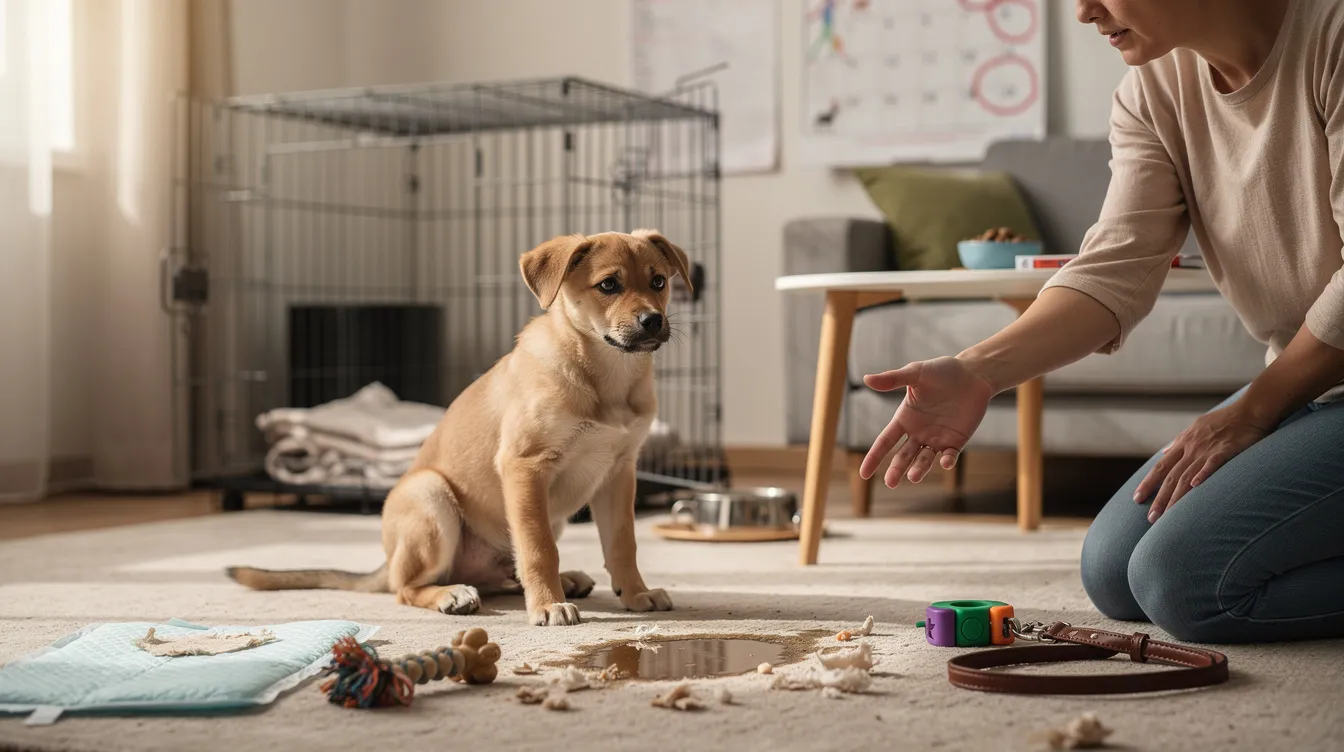
Does this sound familiar? Your pup sits on command at home but ignores you entirely at the park. They were housetrained for months, then start having accidents after naps. Common regression signs include house-training accidents and ignoring known cues.
Breed size affects timing. Small breeds (under 20 pounds) may enter this phase around 5 to 6 months and exit by 12 to 14 months. Medium breeds (20 to 50 pounds) typically experience it between 6 and 8 months through 14 to 18 months. Large and giant breeds (over 50 pounds) may not begin adolescent regression until 8 to 12 months, with adolescence continuing until 24 to 36 months.
12-18 Month Secondary Regression
A second wave often arrives as puppies reach social maturity. Confidence rises. Risk-taking increases. Behaviors like leash reactivity, slower response times to commands, and increased independence become more pronounced. This secondary regression is especially noticeable in large breeds, where adolescence stretches past the two-year mark.
Developmental regressions are common during these major life transitions. The puppy isn’t rebelling; their brain is reorganizing. The skills are still in there. Consistent reinforcement is what keeps them accessible.
External Stressors and Life Changes
Beyond developmental changes, stressful events can trigger potty training regression in puppies and broader behavioral setbacks. Moving homes disrupts spatial habits and bathroom routines. A new pet shifts social dynamics. Illness or pain recovery changes a dog’s threshold for stress and cooperation.
Seasonal changes matter too. Shorter days reduce outdoor time and socialization opportunities. A puppy who exercised freely in summer may lose structure in winter, and that loss of routine affects behavior.
These factors frequently compound. A 9-month-old puppy going through adolescence, adjusting to a new apartment, and recovering from a spay procedure faces three overlapping stressors. Each one alone might cause mild regression. Together, they can produce weeks of setbacks.
This brings us to practical assessment: how do you evaluate what’s happening and build a recovery plan?
Assessing and Recovering from Training Setbacks
Once you understand why regressions happen, the next step is systematic evaluation followed by targeted action. The goal is not to start over but to go back to basics and rebuild reliability in a structured way.
Step-by-Step Regression Assessment
Before changing anything in your training approach, run through a four-point evaluation:
- Document behavior changes. Write down which skills regressed (potty training, recall, leash walking, stay) and rate each on a scale of how reliable they were before versus now. This prevents the common mistake of assuming everything fell apart when only one or two areas actually declined.
- Rule out medical issues. Medical issues may cause sudden regressions or changes in behavior. Urinary tract infections mimic potty training regression. Dental pain reduces willingness to hold objects or respond to commands. A vet check should come before any training changes if regression appeared abruptly. Health issues can cause sudden potty training setbacks.
- Audit the environment. List any routine changes, new stressors, or schedule shifts from the past two to four weeks. Puppies may regress in potty training due to routine changes that seem minor to humans but feel disorienting to a developing dog.
- Evaluate training consistency. Inconsistent training can lead to puppy regression. Are all household members using the same commands? Has the reinforcement schedule drifted? Did training sessions drop off once the puppy seemed “trained”?
Training Modification Strategies
Recovery starts with returning to foundation exercises. This is not failure; it is the standard protocol for managing a regression period.
Use high-value rewards to rebuild motivation. Using high-value rewards can enhance learning and motivation in puppies, especially when their attention is split by adolescent distractibility. Training sessions should be kept short (five to ten minutes) to maintain the puppy’s attention and interest; three short sessions per day produce better retention than one long one.
Increase structure through consistent daily routines and clear boundaries. Management strategies like crate training and supervision prevent unwanted behaviors from being rehearsed. Every time a puppy practices an undesirable behavior (indoor elimination, counter surfing, bolting out the door), that behavior gets stronger. Crates, baby gates, and leash supervision inside the house reduce these rehearsal opportunities.
Adjust your expectations without abandoning your standards. A puppy in the middle of adolescence needs more support, not lower standards. Practice commands in low-distraction settings first, then gradually increase complexity. During fear periods, do not force puppies toward frightening stimuli; instead, let them approach at their own pace while rewarding confidence.
Recovery Timeline and Approach Comparison
How long recovery takes depends on the type and severity of regression, combined with breed size and training consistency.
| Regression Type | Mild Setbacks | Moderate Regression | Severe Setbacks |
|---|---|---|---|
| Timeline | 1-2 weeks | 3-6 weeks | 2-3 months |
| Training Intensity | Daily practice, short sessions | Multiple short sessions per day | Professional guidance recommended |
| Management Level | Minimal extra supervision | Increased structure with gates/crate | Constant supervision, restricted access |
| Typical Causes | Single environmental change | Adolescent phase + stressor overlap | Multiple compounding factors or medical issue |
Mild regressions (a few accidents after a schedule change, for example) often resolve in one to two weeks with increased supervision and consistent reinforcement. Moderate setbacks tied to peak adolescence typically take three to six weeks of back to basics work. Severe or compounding regressions, where multiple triggers overlap or medical issues are involved, may persist for two to three months and benefit from professional support.
With these timelines in mind, let’s address the specific regression areas that cause the most frustration.
Common Challenges and Solutions
Three regression areas generate the most calls to trainers: potty training setbacks, leash behavior, and ignoring commands. Each requires a slightly different approach.
Housebreaking and Potty Training Setbacks
Potty training regression can occur between 6 and 18 months, and it’s one of the most common causes of owner frustration. A 2022 study of 1,023 dogs found that puppies trained at 6 months or younger had lower odds of aggressive behavior (odds ratio 0.71) and destructive behavior (0.60), but higher odds of house soiling (1.56) compared to untrained peers. This suggests that even well-trained puppies remain vulnerable to potty training regression.
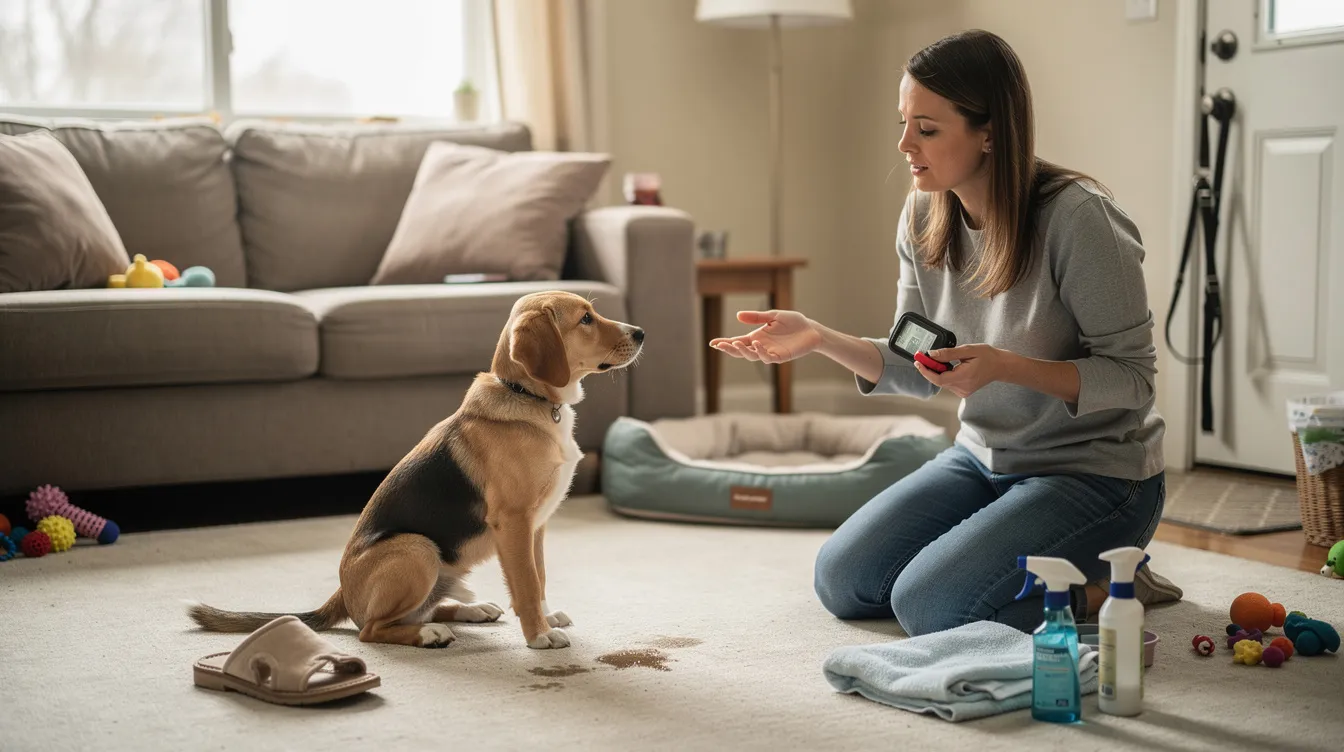
Return to a crate training schedule with frequent potty breaks every two to three hours. Reinforcing outdoor elimination with treats immediately after the dog goes in the right spot rebuilds the association. Eliminate free access to the house; increasing supervision prevents accidents from becoming habits. Do not punish accidents. Punishment after the fact creates anxiety without teaching the puppy where to go; instead, clean the same spot with enzymatic cleaner and increase outdoor opportunities.
If accidents appeared suddenly with no environmental trigger, rule out urinary tract infections or digestive issues before assuming behavioral regression.
Leash Pulling and Walk Behavior Regression
A puppy who walked nicely on leash at four months may start pulling, lunging, or refusing to walk at eight months. This coincides with rising confidence and increased environmental awareness during adolescence.
Restart loose leash training in the lowest-distraction environment available, even if that means practicing in your hallway. Reward heel position with treats and verbal praise. A front-clip harness provides additional control during the retraining period without the aversive associations of correction-based tools. Practice “sit” and “wait” at the door before every walk; this builds impulse control at the moment when arousal is highest.
Ignoring Commands and Selective Hearing
Selective hearing peaks during adolescence because the limbic system (excitement, novelty-seeking) is outrunning the prefrontal cortex (self-regulation). Your puppy hears you. They are choosing not to respond because the competing stimulus is more rewarding than compliance.
The fix is to make compliance more rewarding, not to repeat the command louder. Give each command once. If the puppy doesn’t respond, guide them into position physically or use a long line for recall rather than repeating the cue. Repeating commands teaches the dog that the first three don’t count.
Practice in progressively challenging settings. Start where the puppy can succeed (quiet room, no distractions), then add one variable at a time (one other person present, then outdoors on a quiet street, then a busier area). According to one training survey, 74 percent of dog owners report needing to retrain behaviors at some stage, so this pattern of rebuilding skills from the ground up is standard practice, not a sign that something went wrong.
Conclusion and Next Steps
Puppy training regression is temporary. It reflects normal developmental changes, not permanent skill loss. Short, consistent training sessions paired with increased structure and patience resolve most setbacks within a few weeks.
To get back on track right now:
- Identify which specific behaviors regressed and document them
- Schedule a vet visit if regression appeared suddenly or involves pain, elimination changes, or lethargy
- Return to foundational training in low-distraction settings with high-value rewards
- Increase management (crate, gates, leash indoors) to prevent rehearsal of unwanted behaviors
- Contact a professional trainer if regression persists beyond the expected timeline for your puppy’s breed and age
If you’re navigating adolescence with a puppy who seems to have forgotten everything, you’re on the right track just by seeking information. The other side of this regression period is a more mature, reliable dog, provided you stay consistent through the rough patches.
Additional Resources
- Albany Off Leash K9 Training’s puppy programs offer structured training for puppies at every developmental stage, including adolescent regression recovery
- For persistent or compounding regressions, board-and-train programs provide immersive daily training with professional oversight
- Albany Off Leash K9 Training uses balanced methods including positive reinforcement with treats, clicker training, and e-collar work; this flexibility allows trainers to adjust reinforcement strategies based on what motivates each individual dog during their regression period
- If your puppy’s regression includes reactivity or aggression toward people or other dogs, a behavioral consultation can identify whether the issue is developmental or requires specialized intervention