
Introduction
Dog ear body language is one of the most immediate and reliable ways your furry friend communicates emotional states – from curiosity and calm to fear and aggression. A dog’s ears shift position dozens of times in a single interaction, broadcasting signals that most owners either miss entirely or misread. Understanding dog ear positions gives you a direct window into what your dog is feeling before behavior escalates.
This guide covers the full spectrum of dog ear language: what each ear position means, how breed anatomy changes the signals, how to integrate ear positions with other body language like tail, eyes, and posture, and how to apply this knowledge in real training and safety situations. It’s written for dog owners, trainers, and anyone who wants to communicate more effectively with dogs – whether you’re raising a puppy, working with a reactive dog, or simply trying to understand your companion better.
The direct answer: A dog’s ear position acts as a key emotional barometer. Ears forward indicate the dog feels alert or curious. Flattened ears suggest fear or submission. Ears held loose and neutral show a calm mood. Ears dropped sideways can mean nervousness or happiness. But ear position should always be read together with the eyes and body posture – no single signal tells the complete story.
By the end of this article, you will be able to:
- Recognize the core dog ear positions and what each one means
- Understand how ear positions differ across breeds with erect ears, floppy ears, and semi-erect ears
- Integrate ear signals with tail, facial expressions, and body posture for accurate readings
- Identify early stress and aggression signals before they escalate
- Apply ear-reading skills in training, socialization, and everyday interactions
Understanding Canine Ear Communication
Dog ear language is a primary form of non-vocal communication. Dogs communicate emotional states, intentions, and responses to their environment through body movements – and the ears are among the fastest-moving, most visible indicators available. Whether your dog is paying attention to a squirrel, feeling nervous around other dogs, or relaxed on the couch, ear position communication happens continuously and often involuntarily.
For trainers and owners, learning to read canine body language – starting with the ears – improves safety, strengthens bonding, and makes training more effective. Recognizing a fearful dog’s signals early can prevent bites. Noticing when a calm dog shifts to alert mode lets you redirect attention before reactivity kicks in. This is especially valuable in off-leash and obedience work where subtle cues matter most.
The Science Behind Ear Movement
Dogs have around 18 muscles in their ears, allowing independent movement of each ear in multiple directions – forward, backward, sideways, and rotated. These muscles attach through a structure called the scutiform cartilage, giving dogs remarkably fine control over ear orientation. Dogs can hear sounds at frequencies 10 times higher than humans, and that auditory sensitivity is matched by equally sensitive ear mobility.
The connection between emotional state and ear positioning is partly involuntary. When arousal increases – whether from excitement, fear, or aggression – the brain activates ear muscles as part of the autonomic response. Higher arousal or vigilance tends to push ears forward and up. Fear, anxiety, or appeasement pushes ears back or flattened against the head. These changes correlate with physiological markers like elevated heart rate and stress hormones, as documented in research on canine visual communication.
Ear Positions as Emotional Indicators
A dog’s ear position can indicate various emotional states like contentment or fear, and those positions change rapidly as the dog processes its environment. A rapidly changing ear position usually indicates heightened attention – the dog is actively gathering information and deciding how to respond.
The relationship between arousal and ear movement follows a general pattern: ears indicate attention and arousal, while the rest of the body helps determine the emotional context. Forward-facing ears on a relaxed dog mean something very different from forward-facing ears on a stiff, leaning dog. This is why reading the whole body – not just the ears – is essential for accurate interpretation.
With that foundation in place, let’s examine the specific ear positions you’ll encounter and what each one means.
Essential Dog Ear Positions and Their Meanings
Each ear position reflects a distinct emotional state or combination of states. Learning to recognize these positions – and understanding when they signal positive versus concerning states – is the foundation of reading dog ear expressions accurately.
Alert and Forward Ears
When a dog’s ears are erect and facing forward, with visible tension at the base, the dog is directing full attention toward something. Forward-facing ears signal alertness and interest – the dog has noticed a stimulus and is actively processing it. Erect ears indicate alertness or potential aggression, depending entirely on what the rest of the dog’s body is doing.
When this position appears alongside a relaxed body, slightly open mouth, and loose tail wag, it typically means curiosity or excitement. Your dog heard something interesting, spotted a person approaching, or noticed movement. This is normal, healthy engagement.
However, erect ears indicate alertness or aggression when combined with a stiff body, tight mouth, fixed eye contact, and a tail held high and rigid. In this combination, the forward ear position signals a potential challenge or aggressive response. Most dogs display this sequence before escalation – making forward ears an early warning sign worth noticing.
Relaxed and Neutral Ears
Ears held in a natural resting position indicate a relaxed dog. There’s no tension at the ear base, no pulling forward or backward – the ears simply rest where they naturally fall. Neutral or loose ears show a calm mood, and this is the baseline position every owner should learn to recognize in their own dog.
A calm dog with relaxed ears will also display a soft gaze, loose body posture, and may have a gently wagging tail or a mouth that appears slightly open and relaxed. Happy dogs in comfortable environments spend most of their time with ears in this neutral position.
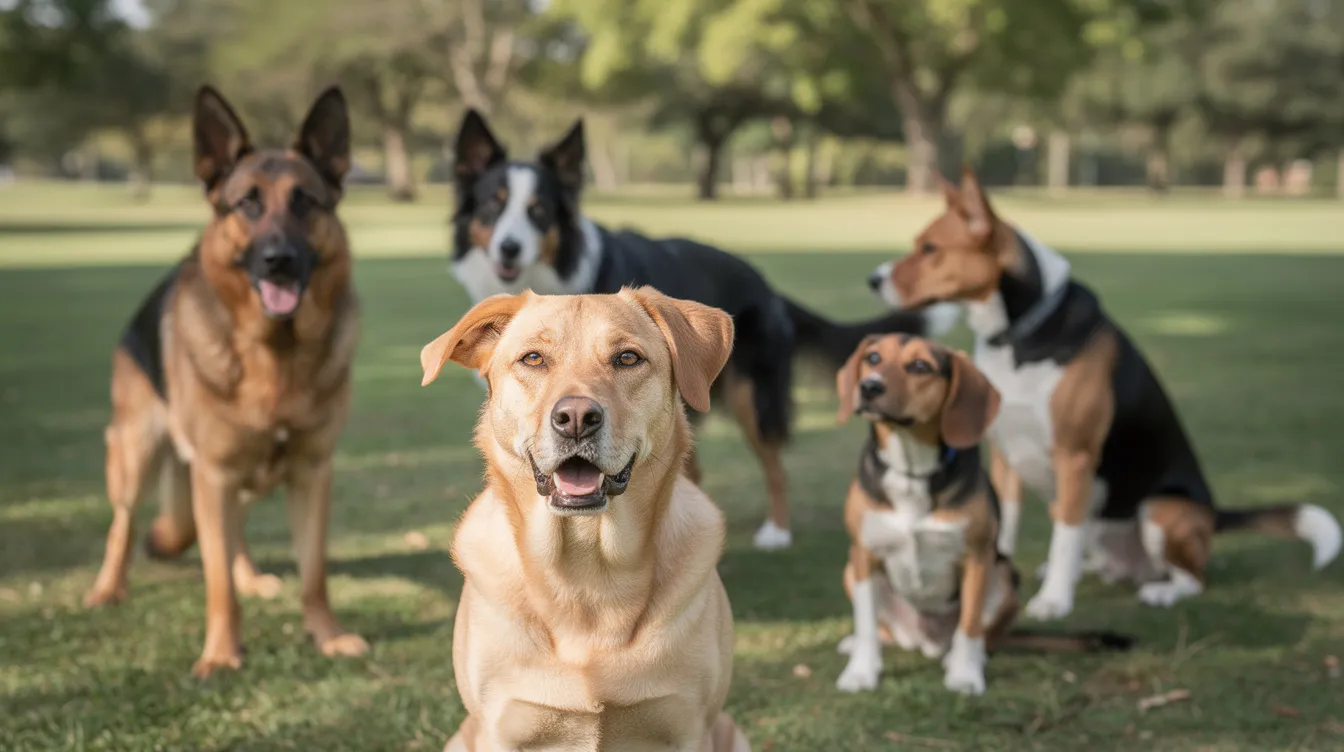
How this position looks varies dramatically by breed type. A German Shepherd’s neutral ear is fully upright – prick ears at rest. A Beagle’s neutral position is pendulous and drooped. Basset hounds have heavy, long ears that hang low in virtually all emotional states. Knowing what “relaxed” looks like for your specific dog is critical, because every deviation from that baseline carries meaning.
Pinned Back and Flattened Ears
When a dog pulls its ears back against its head – sometimes so flat they nearly disappear – it signals a significant emotional shift. Tightly flattened or pinned-back ears indicate fear or submission. Ears pulled back signals fear, anxiety, or deep submission, and the degree of flattening often corresponds to the intensity of the emotion.
This is where context becomes essential. Ears pulled flat back or pinned tight often mean the dog is scared or stressed – but pinned ears during a greeting, accompanied by a wagging tail, soft dog’s eyes, and wiggly body, usually indicate affectionate submission or trust. Many dogs pin ears back when being petted on the head, which is a sign of comfort with the person, not distress.
The concerning version: flattened ears combined with wide eyes (whale eye), dilated pupils, a tucked tail, and lowered body posture signals a fearful dog that may escalate to defensive aggression if pushed further. A dog showing these combined signals is communicating clearly – respect its personal space and reduce pressure immediately.
Swiveling and Mobile Ears
Swiveling ears show the dog is processing environmental sounds – one ear might rotate toward a noise on the left while the other tracks something behind. Swiveling ears indicate curiosity or concern, and this rapid, independent movement is one of the most fascinating aspects of dog ear expressions.
Swiveling ears show a dog is concerned or curious, often seen during walks in new environments, during socialization experiences, or when the dog encounters conflicting stimuli. Puppies frequently display this alongside “airplane ears” – ears splayed outward to the sides – as they explore novel situations. Dogs with dropped ears may be nervous or happy during these moments, depending on accompanying body language.
This mobile, searching ear behavior is distinct from the fixed positions described above. It represents active information gathering rather than a settled emotional state. Once the dog processes the input, ears typically settle into one of the other positions – forward, neutral, or pinned – reflecting the conclusion the dog has reached about the stimulus.
With individual ear positions understood, the next step is learning to read them as part of the complete body language picture.

Reading Ear Positions Within Complete Body Language Context
No ear position exists in isolation. Dogs communicate through their entire body simultaneously – ears, tail, eyes, mouth, posture, and weight distribution all contribute to the message. Ear position should always be read together with the eyes and body posture to avoid misinterpretation. The most common mistakes in reading dog body language dogs make come from fixating on a single signal.
Integration with Tail Signals
The dog’s tail and ears work as a coordinated system. Here’s how they combine:
- Forward ears + tail high and stiff = Assertive alertness or potential aggression. The dog is confident, aroused, and focused. If accompanied by a stiff body and direct stare, this combination warrants immediate attention.
- Forward ears + wagging tail with loose body = Excitement, curiosity, or play readiness. The tail wag here is loose and sweeping, not stiff or rapid.
- Pinned ears + tucked tail = Fear or submission. The dog is trying to make itself small and non-threatening. A dog displaying this combination needs space and reassurance, not correction.
- Relaxed ears + gently wagging tail = Contentment. This is the combination most owners see at home with a happy, comfortable dog.
- Swiveling ears + tail low or horizontal = Uncertainty. The dog is gathering information and hasn’t committed to an emotional response yet.
As the AKC notes in its body language guide, the tail’s height, speed, and stiffness dramatically change the meaning of any ear position.
Facial Expression Combinations
A dog’s eyes, mouth, and lips add crucial detail to what the ears are broadcasting.
Eye contact and eye shape matter significantly. Soft, relaxed eyes paired with neutral ears confirm a calm dog. Wide eyes with visible whites – known as whale eye – combined with pinned ears indicate stress or fear. Dilated pupils alongside forward ears and a fixed stare suggest high arousal that could tip toward aggression.
Mouth position is equally telling. A relaxed, slightly open mouth with neutral ears means comfort. A tight mouth with lips pulled back, showing teeth, combined with forward ears and a stiff head orientation creates the full picture of an aggressive dog. Lip-licking and yawning frequently appear alongside airplane ears or pinned ears as stress signals – these are calming signals the dog uses to self-soothe or communicate non-threat to other dogs.
Body Posture Assessment
The dog’s body posture provides the frame that gives ear positions their definitive meaning:
| Ear Position | Body Posture | Likely Meaning |
|---|---|---|
| Forward | Stiff, leaning forward, weight on front legs | Aggressive alertness or challenge |
| Forward | Relaxed stance, loose body movements | Curious attention or interest |
| Pinned back | Cowering, low, belly near ground | Fear or submission |
| Pinned back | Tense, rigid, ready to strike | Defensive aggression |
| Neutral | Loose, balanced weight distribution | Calm contentment |
| Swiveling | Shifting weight, head turning | Active assessment, uncertainty |
The critical takeaway: an aggressive dog and a fearful dog can both show forward ears or pinned ears – the body posture is what separates the two. A forward lean with stiff legs, forward ears, and direct stare signals a dog preparing to challenge. A crouched body with pinned ears and a tucked tail signals a dog preparing to flee – or to bite defensively if escape isn’t possible.
Dogs also frequently send conflicting signals: ears forward but tail low, or ears pinned but body leaning toward a stimulus. These mixed messages indicate internal conflict and uncertainty. Recognizing this prevents the common mistake of labeling a conflicted dog as purely aggressive or purely submissive.
Understanding these combinations prepares you to handle the most common interpretation challenges owners and trainers face.
Common Challenges and Solutions
Even with solid knowledge of dog ear positions, several factors complicate accurate reading in real-world situations.
Breed-Specific Ear Shape Limitations
Ears’ shape affects how dogs express emotions, and breed anatomy creates significant visibility differences. German Shepherds have more expressive ear positions than Beagles simply because their erect ear structure allows the entire ear to move visibly. Dogs with erect ears can signal a wider range of emotions through clearly observable changes in position.
Floppy-eared dogs like Cocker Spaniels show different ear positions than Beagles, and both differ from prick-eared breeds. Dogs with floppy ears may express emotions less clearly through ear tip movement because the heavy, pendulous pinna masks much of the motion. Ear conformation influences how easily dogs communicate emotions.
Solution: For floppy-eared breeds like Golden Retrievers, basset hounds, and Beagles, focus on ear base movement rather than tip position. Watch for tension, lifting, or pulling at the point where the ear meets the head. Supplement ear reading with heightened attention to other body language signals – tail, facial expressions, and overall body posture become even more important for these breeds. When ear signals are ambiguous, the whole body tells the story.
Misreading Single Signals
The most dangerous interpretation error is treating one signal as the complete message. Pinned ears alone don’t confirm fear – the dog may be showing affectionate submission during a greeting. Forward ears alone don’t confirm aggression – the dog may simply be curious about a new sound.
Solution: Always assess the complete body language picture. Before making any judgment about a dog’s emotional state, check at minimum: ear position, tail position and movement, body posture and weight distribution, eye shape and direction, mouth tension, and the environmental context. If ear signals conflict with other signals, interpret the overall picture as uncertainty or conflict – and proceed with caution.
Confusing Excitement with Aggression
High arousal states – whether from excitement or aggression – can look similar at first glance. Both may feature forward ears, high tail, and intense focus. This confusion leads owners to either punish excited dogs unnecessarily or dismiss warning signs from genuinely aggressive dogs.
Solution: Look for the quality of body movements. Excited dogs display loose, bouncy movement – a play bow, a wiggly body, a mouth that’s open and relaxed. An aggressive dog displays stiff, controlled movement – rigid legs, a tight mouth, hard eye contact, and body weight shifted forward. The distinction is in fluidity: excitement flows, aggression locks. A dog may show forward ears in both states, but the rest of the body tells you whether to grab a ball or create distance.
Additionally, always consider medical causes when ear positions seem abnormal. A veterinary technician or veterinarian should evaluate any dog whose ears are suddenly held differently than usual – ear infections, hematomas, or injuries can alter ear carriage independently of emotional state, creating misleading signals.
Conclusion and Next Steps
Dog ear positions are among the fastest, most accessible signals your dog offers – but they’re most valuable when read as part of complete canine body language. Relaxed ears indicate a comfortable and content dog. Forward ears signal engagement that could be positive or concerning. Flattened ears suggest fear or submission that demands a thoughtful response. Swiveling ears show a dog actively processing its world. In every case, the ears tell you something is happening – the tail, eyes, mouth, and body tell you what.
To start applying this knowledge immediately:
- Establish your dog’s baseline. Photograph or video your dog’s ears in a calm, relaxed state at home. This becomes your reference point for detecting changes.
- Practice whole-body reading. During walks, at the dog park, or during training sessions, consciously check ears + tail + posture + facial expressions together before interpreting any single signal.
- Document patterns. Notice which situations produce which ear positions in your dog. Over time, you’ll recognize your dog’s specific vocabulary of ear signals.
- Respond to stress signals early. When you notice pinned ears, airplane ears, or rapid ear movement combined with stress signals, intervene with distance, a break, or redirection – before the dog escalates.
For deeper exploration, consider topics like reactive dog training, proper socialization techniques, and structured behavioral modification – all areas where accurate body language reading directly improves outcomes.
Additional Resources
- Professional training consultation: If your dog shows persistent stress, fear, or aggression signals, Albany Off Leash K9 Training offers behavioral modification programs tailored to dogs displaying these signals.
- Puppy development: Early socialization helps puppies learn proper communication with other dogs. Learn about age-appropriate training milestones in our puppy training schedule guide.
- Socialization for adult dogs: Dogs that missed early socialization can still develop better communication skills. Explore how socialized dogs are safer and happier for evidence-based approaches.